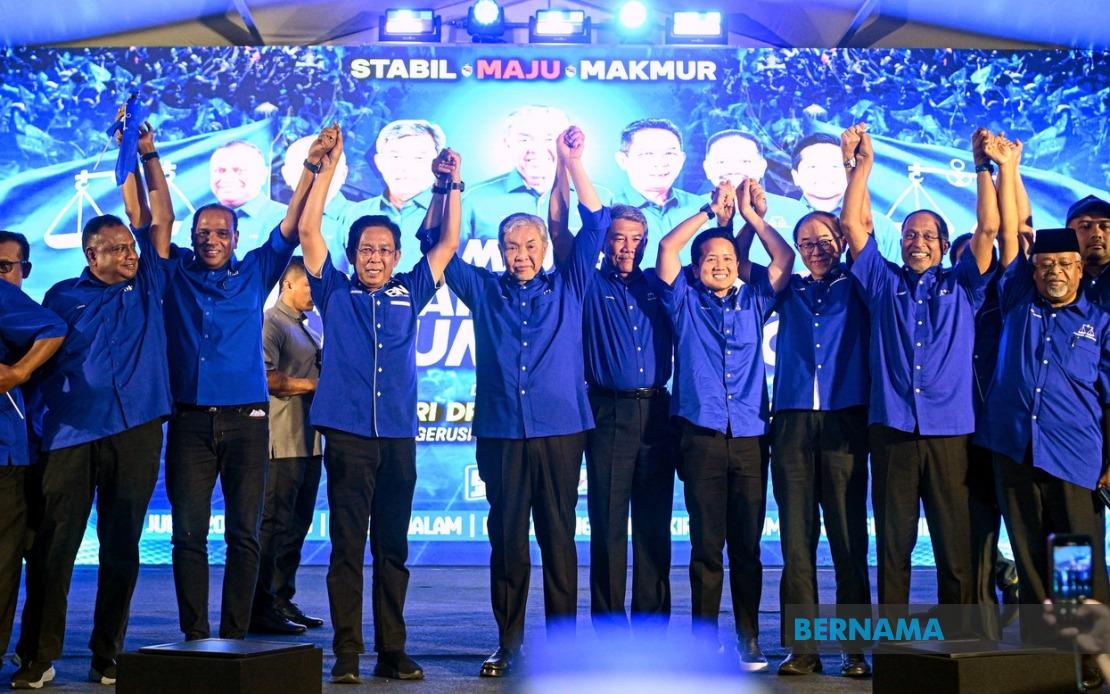
Barisan Nasional moved to solidify its position in Negeri Sembilan by announcing a 25-strong candidate roster for the state's forthcoming election, balancing the retention of veteran lawmakers with fresh political blood. The coalition's strategy became clear during the formal launch event held at Tuanku Abdul Rahman Stadium in Paroi, where party leaders mapped out their electoral roadmap for reclaiming ground in a state that has witnessed shifting political fortunes over recent election cycles.
At the helm of BN's Negeri Sembilan machinery, Datuk Seri Mohamad Hasan confirmed his continued stewardship of the Rantau constituency, a seat he has occupied since 2004. His two-decade tenure in the state assembly underscores BN's reliance on experienced political operatives in critical constituencies. Mohamad's retention signals confidence from UMNO's top hierarchy, with party president Datuk Seri Dr Ahmad Zahid Hamidi endorsing his candidacy during what party insiders view as a pivotal electoral moment for the peninsular state.
Alongside Mohamad's continuation, the coalition moved to preserve institutional knowledge in other key seats. Datuk Seri Jalaluddin Alias, who chairs the Negeri Sembilan UMNO Liaison Committee and represents Jelebu federally, will retain the Pertang state seat he has held since 2013. This decision reflects BN's broader strategy of deploying experienced figures in constituencies where incumbency advantage and personal networks remain potent political assets. The retention of such prominent figures also suggests the coalition is preparing for a competitive election environment where familiar faces may prove decisive.
The candidate list distributed to media confirmed that several other sitting assemblymen secured BN's nomination to contest again. Datuk Mohd Faizal Ramli will defend Linggi, whilst Datuk Mustapha Nagoor seeks another term representing Palong. These decisions suggest BN assessed these representatives as electoral assets capable of delivering their constituencies, a calculation rooted in local performance metrics and grassroots sentiment within each division.
However, the coalition's readiness appears incomplete in substantial portions of the state. Eleven state seats remain without finalised candidates, a gap that raises questions about internal party negotiations and the timeline for filling vacant spots. These unsettled constituencies include Klawang, Serting, Lobak, Sikamat, Ampangan, Bukit Kepayang, Mambau, Paroi, Lukut, Bagan Pinang, and Gemas—a geographically dispersed collection spanning the state's different administrative zones.
The delay in finalising candidates across nearly a quarter of Negeri Sembilan's electoral map presents both logistical and strategic challenges for BN. In competitive state elections, late candidate announcements can disrupt campaign momentum and limit grassroots mobilisation time. For voters in these constituencies, the absence of confirmed candidates weeks before the election may generate uncertainty about which party representatives will champion their interests. This uncertainty could inadvertently benefit opposition parties that have completed their selections earlier.
Negeri Sembilan's electoral landscape has become increasingly contested territory in recent years. The state's experience with alternating coalition control and shifting voter preferences means no party can take any constituency for granted. BN's mixed announcement—confirming strong candidates in some seats while delaying decisions in others—suggests the coalition may be navigating complex internal negotiations over nominations. Such delays sometimes reflect disputes over seat allocations between BN's component parties or efforts to balance competing factions within UMNO itself.
For Malaysian and Southeast Asian political observers, Negeri Sembilan represents a strategic testing ground for BN's electoral viability. The coalition's performance in the state will likely influence broader narratives about whether BN can sustain electoral competitiveness following its historic 2018 federal election defeat and the subsequent turmoil that reshaped Malaysian politics. A strong showing could bolster BN's national credentials ahead of future national polling, whilst a disappointing result would reinforce questions about the coalition's long-term durability.
The state election also occurs amid Malaysia's complex power-sharing arrangements and recurring coalition negotiations. BN's candidate strategy in Negeri Sembilan reflects the careful calculations required to maintain coalition coherence while preparing for electoral contests. The retention of established figures like Mohamad Hasan and Jalaluddin Alias suggests party planners believe continuity and experience matter to voters fatigued by political instability.
Looking ahead, BN's announcement serves as an interim checkpoint rather than a complete picture. The coalition's leadership indicated that the outstanding 11 seats would eventually receive nominations, though no timeline was specified. Political analysts in the region will watch whether these delayed announcements suggest BN faces genuine difficulties in persuading quality candidates to contest certain constituencies, or whether the party is simply maintaining strategic flexibility in marginal seats where candidate selection might shift based on emerging political dynamics.
The broader implication for Malaysian politics is that state elections continue functioning as crucial intervals for coalition renewal and electoral rehearsal. BN's mixed readiness in Negeri Sembilan—confident in certain quarters, incomplete in others—captures the coalition's current state as it attempts to reestablish dominance following years of political turbulence. How effectively the party executes its campaign in this state will provide early signals about whether BN's revitalisation efforts are translating into meaningful electoral strength, or whether deeper structural challenges persist beneath surface-level campaign machinery.

