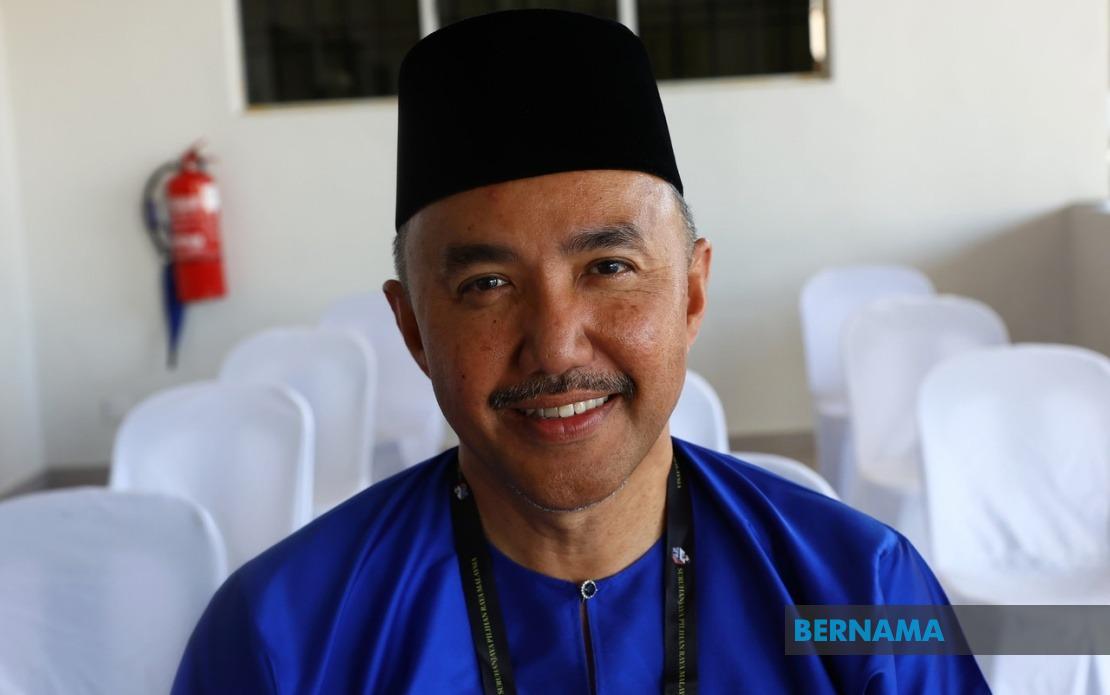
Barisan Nasional is banking heavily on the backing of Federal Land Development Authority (FELDA) communities to secure victory in the Kulai parliamentary constituency during the 16th Johor state election scheduled for July 11. The coalition's leadership in the region believes recent government initiatives addressing longstanding grievances have positioned them to recapture what was once considered a reliable voting bloc in the coalition's portfolio.
Four major FELDA settlements lie within the Kulai constituency, collectively representing nearly 7,000 voters who could prove decisive in the closely contested races. These settlements—FELDA Taib Andak, FELDA Inas, and FELDA Bukit Permai within the Bukit Permai state seat, alongside FELDA Bukit Batu in the identically named state constituency—have traditionally been courted by all competing parties. The concentration of these communities within the parliamentary constituency underscores their electoral significance and explains why Barisan Nasional has placed considerable emphasis on demonstrating its responsiveness to their concerns.
Datuk Mohd Jafni Md Shukor, who chairs the Kulai BN division and is defending the Bukit Permai state seat against three challengers, attributed the coalition's optimism to the Johor government's track record of addressing FELDA-specific issues under Menteri Besar Datuk Onn Hafiz Ghazi. The relationship between Kuala Lumpur's federal government and Johor's state administration has remained stable within the Barisan framework, allowing both levels to coordinate approaches to constituency challenges. This alignment has enabled the state to implement programmes that directly target FELDA settler concerns, distinguishing Johor's governance approach from competing administrations.
The coalition acknowledges past electoral setbacks within FELDA communities, particularly during the 2018 general election when dissatisfaction among smallholder settlers contributed to broader losses for Barisan Nasional across multiple constituencies. However, Jafni highlighted modest recovery in the 2022 election cycle, suggesting that intensive constituency-level engagement and policy interventions have begun reversing earlier losses. This incremental improvement forms the foundation for the coalition's confidence heading into July's contest.
A cornerstone of Johor's FELDA strategy has been the resolution of land title issues that have plagued settlers for decades. The state government reports achieving a 99.9 per cent settlement rate on land ownership applications, a breakthrough that addresses one of the most persistent grievances among FELDA communities across Malaysia. For settlers whose land claims remained in bureaucratic limbo, formal ownership recognition represents not merely a technical administrative change but fundamental security over their primary productive and residential assets. This accomplishment carries symbolic weight beyond its practical significance, demonstrating governmental capacity to resolve complex inherited problems.
Beyond land matters, the Johor government has channeled various support mechanisms to FELDA communities, particularly through educational assistance administered by the Johor Education Foundation (YPJ). Access to secondary and tertiary education has become increasingly critical for FELDA families seeking economic mobility for their children, making education subsidies a tangible benefit that directly affects household welfare calculations. The state's investment in human capital development within FELDA settlements positions education support as a competitive advantage in attracting settler voters during campaign season.
Jafni's appeal for renewal of Barisan Nasional's mandate extends beyond Bukit Permai, encompassing the two other state constituencies within the Kulai parliamentary area: Bukit Batu and Senai. The coalition's broader strategic objective involves not merely retaining the Bukit Permai seat that Jafni currently holds but capturing or recapturing all three state seats that collectively form the Kulai parliamentary district. This three-pronged approach reflects confidence in the resonance of state government achievements across the entire region rather than reliance on single-constituency electoral dynamics.
The Bukit Permai race itself presents a four-cornered contest featuring Jafni against Muhammad Aidil Riduan Mohd Yusof representing Parti Bersama Malaysia, Mohamad Shafwan Ani of the Pakatan Harapan opposition coalition, and M. Lina Manoh fielding Perikatan Nasional's banner. The fragmentation of opposition and alternative political forces potentially benefits the incumbent, who enters the contest with the machinery and resources of Malaysia's largest political coalition. However, the presence of four candidates dilutes any single challenger's ability to consolidate anti-establishment votes or present a unified alternative vision.
The previous electoral cycle, held in 2022, saw Jafni secure the Bukit Permai seat with a majority of 4,755 votes over his nearest rival, a performance that established a baseline for competitive expectations. Defending such margins in multi-cornered contests requires not merely replicating previous support levels but expanding them to account for vote splitting among competing challengers. The concentration of FELDA voter populations potentially amplifies the impact of targeted messaging and constituency-level service delivery that addresses immediate community concerns.
Early voting is scheduled for July 7, providing several days before the official polling date to gauge both campaign momentum and shifting voter sentiment. The timing enables campaign organizations to adjust final-phase messaging based on early voting patterns, though the compressed timeline limits opportunities for substantial strategic recalibration. For Barisan Nasional, early voting trends in FELDA-heavy areas will serve as crucial indicators regarding the coalition's success in translating development achievements into electoral support.
The Johor state election campaign occurs within a broader context of Malaysian political realignment, with coalition partnerships and opposition configurations continuing to evolve. The presence of Parti Bersama Malaysia and Perikatan Nasional candidates in the Bukit Permai contest reflects the continued fragmentation of Malaysia's political landscape beyond the traditional Barisan-Pakatan binary. This fragmentation has simultaneously advantaged and constrained incumbent parties depending on how effectively they mobilize their traditional voter bases.
For Barisan Nasional strategists, FELDA communities represent not merely a regional consideration but a test case of whether targeted governance interventions can reverse electoral deterioration that began during the 2018 general election. The coalition's ability to demonstrate tangible improvements in FELDA settler welfare, particularly through land title resolution and education support, carries implications extending beyond Johor constituencies. State governments in other Malaysian regions where FELDA settlements exist will observe whether similar policy approaches can rebuild settler confidence in Barisan stewardship. Success in Kulai could reinvigorate coalitional efforts to recapture FELDA-concentrated constituencies nationwide, while setbacks might suggest that grievances within smallholder communities run deeper than development initiatives alone can address.

