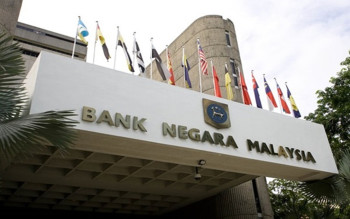
Bank Negara Malaysia has clarified the basis of its oversight engagement with Tabung Haji, positioning such advisory activities as a core responsibility flowing from its statutory financial stability mandate under the Central Bank of Malaysia Act 2009. The central bank's involvement with the pilgrimage fund reflects broader obligations extending beyond traditional banking supervision to encompass systemic risk monitoring across the entire financial ecosystem.
The central bank's formal role draws from provisions requiring it to identify and monitor threats to the stability of Malaysia's financial system as a whole. This monitoring remit encompasses major non-bank financial institutions that possess substantial linkages with the broader financial infrastructure, even when those entities are not direct subjects of BNM regulatory authority. Tabung Haji, as a significant institutional player managing billions in assets on behalf of millions of Malaysian pilgrims, falls squarely within this category of systemically important organisations.
To operationalise this mandate, BNM established the Financial Stability Executive Committee under the same legislative framework. This committee structure enables the central bank to conduct comprehensive surveillance across financial markets and institutions, identifying emerging vulnerabilities before they crystallise into broader systemic problems. When such surveillance uncovers risks or vulnerabilities, the FSEC framework permits BNM to extend advisory guidance to relevant boards and government overseers as a preventive measure.
The central bank's engagement with Tabung Haji exemplifies how this framework functions in practice. Although TH operates outside BNM's formal supervisory perimeter, the central bank has issued multiple warning letters to the fund's leadership and the Minister of Religious Affairs highlighting growing divergences between asset and liability positions. Such interventions aim to arrest deteriorating financial conditions before they threaten systemic implications for the broader financial system and public confidence in Malaysian financial institutions.
This proactive advisory approach gained additional weight when the Auditor-General independently raised concerns about TH's financial position in the 2017 Financial Statements Report, validating BNM's earlier warnings. The convergence of warnings from both the central bank and the auditor-general's office underscored the seriousness of the fund's financial trajectory and underlined the legitimacy of BNM's engagement despite the absence of formal supervisory authority.
The broader context for this clarification involves the Royal Commission of Inquiry into TH, established by government in 2021 following mounting public concern about the fund's management and financial health. The RCI members were formally appointed in January 2022, and the commission subsequently presented its findings to the Yang di-Pertuan Agong in August 2022. Throughout this investigative process, questions arose about the extent of BNM's involvement and the precise basis for its advisory interventions.
BNM's latest statement addresses these questions directly, emphasising that its counsel to TH represents a prudent exercise of its mandated financial stability responsibilities rather than any overreach beyond its authority. By framing its guidance within the statutory architecture of the Central Bank of Malaysia Act 2009, the central bank establishes clear legal and institutional grounding for its engagement with non-supervised entities that pose systemic significance.
For Malaysian stakeholders, this clarification carries important implications regarding financial system resilience. It demonstrates that BNM possesses both the legal authority and institutional mechanism to intervene in deteriorating situations affecting major financial players outside its direct purview. This capability provides an additional safeguard against systemic crises that might otherwise go unaddressed until they reach crisis proportions. The early-warning system embedded in the FSEC framework represents a form of financial system insurance against cascading failures.
The multi-layered oversight evident in the TH case also reflects international best practices in financial stability management. Major central banks globally have increasingly adopted macroprudential frameworks that extend beyond individual institution supervision to encompass systemic risks. BNM's approach aligns Malaysia with these international standards while remaining adapted to the specific institutional landscape of the Malaysian financial system.
However, the distinction between advisory capacity and enforcement authority remains significant. Unlike banks under BNM supervision, the central bank cannot compel TH to implement recommendations. This reality underscores the importance of government responsiveness to BNM guidance and the need for strong coordination between the central bank, relevant government ministries, and the target institutions themselves. The effectiveness of such preventive approaches ultimately depends on political will and institutional cooperation beyond the central bank's direct control.
Looking ahead, BNM's clarification of its financial stability mandate may influence how policymakers approach other systemically significant non-bank institutions in Malaysia. As the financial landscape continues evolving with the emergence of new intermediaries and players, the central bank's expansive interpretation of its surveillance and advisory role could extend to other entities that were previously considered peripheral to financial system stability. This represents both an evolution in central banking practice and a potential template for managing future systemic vulnerabilities in Malaysia's increasingly complex financial ecosystem.

