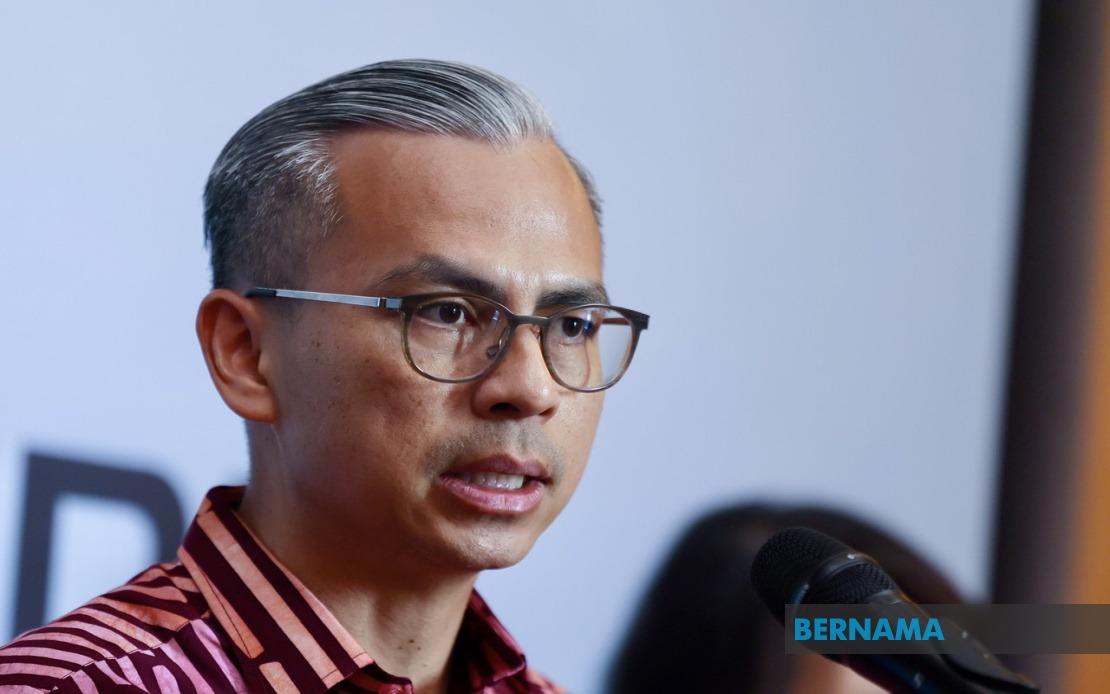
Communications Minister Datuk Fahmi Fadzil has urged bank customers who continue to face RM1 charges for interbank cash withdrawals at bank-owned automated teller machines to file formal complaints with Bank Negara Malaysia, signalling that the central bank stands ready to enforce compliance with the newly implemented fee waiver. Speaking at the Communications Ministry's weekly press conference in Kuala Lumpur on July 2, Fahmi indicated that BNM possesses the regulatory authority to pursue corrective measures against any financial institution that fails to abide by the RM1 fee exemption, which commenced on July 1.
The minister's statement underscores growing concerns that despite the official policy change, some customers remain subject to charges that should no longer apply. By directing dissatisfied customers toward BNM rather than their respective banks, Fahmi has effectively positioned the central bank as the enforcement agency responsible for monitoring industry compliance. This administrative approach allows BNM to gather real-world evidence of violations while simultaneously empowering consumers to become watchdogs for the policy's proper implementation across Malaysia's banking sector.
According to Fahmi, BNM had previously issued clarification that the fee waiver applies exclusively to automated teller machines owned and operated by banking institutions that participate in the shared ATM network framework. This distinction proves crucial for understanding the policy's actual scope and implications. The shared network arrangement enables customers to conduct cash withdrawals from machines operated by participating banks without encountering the RM1 surcharge, fundamentally changing the cost dynamics for interbank transactions that previously burdened consumers seeking convenient access to their funds outside their home bank's proprietary machines.
The waiver's reach encompasses approximately 84 percent of all bank-owned ATMs operating nationwide, translating to roughly 16,000 machines across the country. This comprehensive coverage represents a significant victory for consumer advocates who have long challenged the fairness of ATM fees, particularly given Malaysia's well-developed banking infrastructure and the prevalence of automated service points. The substantial proportion of machines now offering fee-free withdrawals suggests that the policy modification addresses the vast majority of customer interactions, though notable gaps remain in certain geographic areas or among specific banking groups.
The remaining 16 percent of ATMs, according to Fahmi, operate under the management of non-bank private sector companies functioning under distinct commercial arrangements independent of the shared network. These third-party-operated machines will maintain the RM1 withdrawal fee structure, as they fall outside the scope of the regulatory framework governing bank-owned infrastructure. The distinction between bank-operated and non-bank-operated machines introduces a layer of complexity for consumers navigating the financial landscape, potentially creating confusion at the point of withdrawal if customers fail to distinguish between the two categories of machines.
To prevent customer confusion arising from the policy's nuanced implementation, Fahmi advised the public to identify bank-owned ATMs by examining the logos displayed on machine facades rather than relying on location assumptions or other identifying factors. This practical guidance acknowledges that visual differentiation remains the most accessible method for ordinary consumers to determine whether a particular machine falls within the fee waiver's parameters. The advice essentially places responsibility on customers to conduct due diligence before initiating withdrawals, a reasonable expectation given the prominence of bank branding on these machines throughout Malaysian cities and towns.
Fahmi noted that public inquiries circulating across social media platforms had prompted BNM's clarification regarding the fee waiver's implementation scope, indicating that initial consumer confusion justified official intervention. The proliferation of questions on digital channels suggests that the policy rollout, while well-intentioned, required supplementary explanation to ensure public comprehension. The minister's acknowledgement of this communication gap demonstrates official responsiveness to grassroots concerns while highlighting the importance of clear messaging when introducing financial policy changes that directly affect consumer behavior and household expenses.
The Association of Banks in Malaysia and the Malaysian Islamic Banking and Financial Institutions Association have committed to issuing a joint statement detailing further implementation specifics, according to Fahmi's announcement. This coordinated industry communication represents an effort to provide unified guidance across Malaysia's diverse banking ecosystem, encompassing both conventional and Islamic financial institutions. The forthcoming joint statement signals an attempt to standardize customer experience and clarify ambiguities that may have emerged during the initial implementation phase, potentially preempting additional complaints or regulatory referrals.
Beyond the ATM fee discussion, Fahmi highlighted Malaysia's emerging attractiveness to foreign financial technology investors, citing an international fintech company's establishment of a Global Development Centre at Tun Razak Exchange as evidence of renewed investor confidence. The company's decision to locate its facility in Malaysia, marking its first such centre globally, reportedly reflects positive sentiment regarding the nation's political environment and economic direction. Fahmi attributed this development to perceived stability under the MADANI Government and the policy consistency characterizing the current administration's approach to economic governance and digital innovation promotion.
The fintech investment announcement carries particular significance for Malaysia's broader ambitions to position itself as a regional digital finance and innovation epicenter. By attracting multinational financial technology enterprises to establish major operational centres, Malaysia expands its capacity to cultivate technical talent, foster innovation ecosystems, and participate in emerging domains such as Agentic AI applications within financial services. The convergence of policy reforms affecting traditional banking services alongside fresh foreign direct investment in advanced financial technologies suggests a comprehensive reimagining of Malaysia's financial sector architecture.
Fahmi's framing of the fintech investment as validation of government policy consistency and political stability reflects broader messaging priorities for the MADANI administration, particularly in an environment where regional competitors vie for identical investor attention and capital allocation decisions. The minister's public emphasis on these foreign investor endorsements serves both domestic and international audiences, reassuring domestic stakeholders of economic progress while simultaneously signalling to prospective investors that Malaysia offers the combination of regulatory predictability, infrastructure capability, and talent availability necessary for major financial technology operations.
The ATM fee policy change, while modest in nominal terms, represents a tangible consumer benefit emerging from government intervention in financial markets. By compelling banking institutions to absorb previously customer-facing charges across a substantial proportion of the ATM network, the policy effectively redistributes costs within the financial sector while enhancing accessibility to banking services. For Malaysian consumers, particularly those conducting frequent interbank transactions or managing finances across multiple institutions, the elimination of RM1 charges accumulates into meaningful annual savings while reducing friction in everyday financial interactions.
Moving forward, the success of the ATM fee waiver implementation depends significantly on banking sector compliance and customer awareness regarding which machines fall within the policy's boundaries. The public complaint mechanism directed toward BNM provides a feedback channel for identifying non-compliance while creating accountability mechanisms that extend beyond voluntary industry adherence. As the policy settles into routine operation, monitoring systems developed through customer reports will generate valuable data regarding implementation effectiveness across Malaysia's diverse banking landscape.

