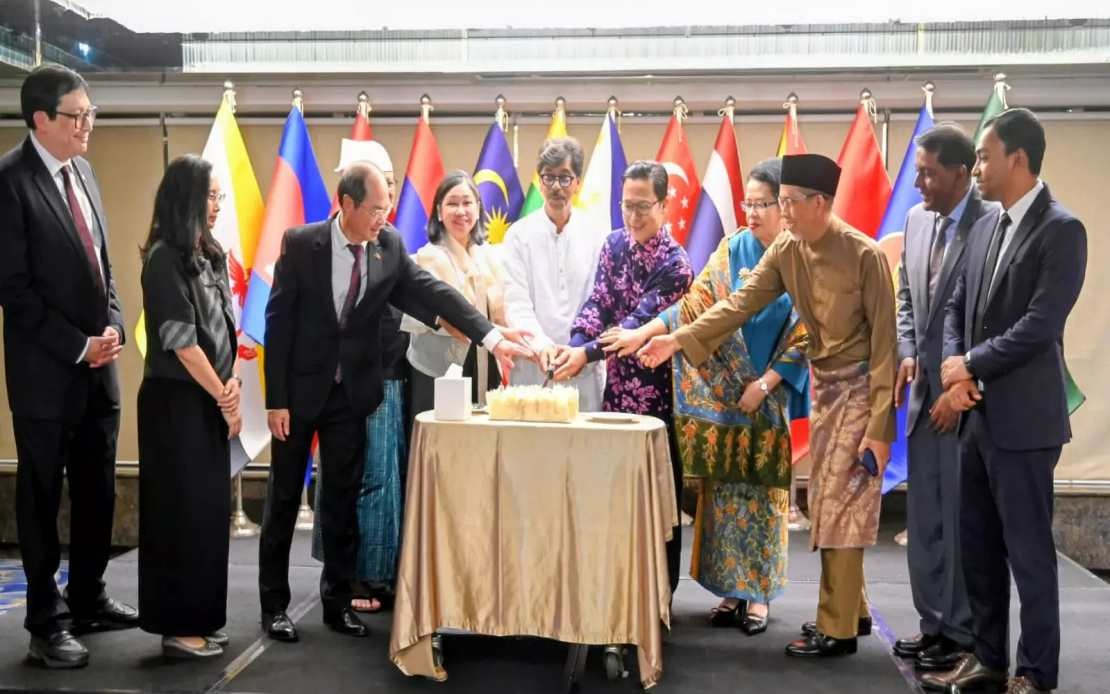
Bangladesh's government has signalled its determination to strengthen institutional ties with ASEAN, positioning the ten-member regional bloc as a cornerstone of its foreign policy under Prime Minister Tarique Rahman's administration. During remarks at a reception marking the 59th ASEAN Day in Dhaka, Fisheries, Livestock and Agriculture Minister Mohammed Aminur Rashid underscored the government's commitment to deepening multifaceted engagement across the region, emphasising that ASEAN ranks among the world's most successful regional organisations and that formalising a closer association with its members would yield significant dividends for Bangladesh.
The centrepiece of Bangladesh's ASEAN strategy is its formal application to become a Sectoral Dialogue Partner, a status that would institutionalise regular consultations and cooperation frameworks across specific economic and social domains. This designation represents a structured pathway for Bangladesh to participate in ASEAN's decision-making architecture while falling short of full membership, a model increasingly favoured by neighbouring states seeking influence within the regional framework without the comprehensive commitments that full accession demands. For Malaysian policymakers and regional observers, Bangladesh's pursuit of this status reflects broader trends in Southeast Asian diplomacy, where dialogue partnerships have become crucial vehicles for states seeking integration into ASEAN's multilateral mechanisms.
Minister Aminur highlighted the historical foundations underpinning Bangladesh-ASEAN relations, rooting contemporary partnership aspirations in shared cultural heritage, mutual strategic interests, and deepening economic interdependence. He specifically referenced the government's emphasis on expanding land and maritime connectivity, a priority that carries particular resonance for Bangladesh given its position as a Bay of Bengal littoral state with significant stakes in regional trade corridors and maritime security arrangements. The expansion of people-to-people contacts and trade relations constitutes a parallel track in Bangladesh's ASEAN engagement, recognising that sustainable regional partnerships require foundations extending beyond governmental channels into business communities and civil society networks.
Prime Minister Tarique Rahman's selection of Malaysia for his first official foreign visit carries symbolic and practical significance for Bangladesh's broader ASEAN ambitions. The choice signals priority placement for Malaysia within the government's diplomatic hierarchy and reflects recognition of Malaysia's historical leadership role within ASEAN and its specific strategic importance for Bangladesh as a major trading partner and regional anchor. This decision suggests that the Bangladesh government views deepening ties with Malaysia as foundational to its success in securing broader ASEAN partnership arrangements and advancing sectoral cooperation initiatives.
The sectoral initiatives currently under development span multiple domains, reflecting the breadth of potential Bangladesh-ASEAN cooperation. A US$1 million Bangladesh-ASEAN Cooperation Project on Fisheries and Aquaculture, implemented through Minister Aminur's ministry, addresses shared interests in sustainable resource management and food security—sectors of mutual concern across Southeast Asia where climate vulnerability and competing maritime claims create incentives for cooperative frameworks. Additional initiatives in tourism, information and communications technology, and cultural exchange represent complementary pathways through which ASEAN states and Bangladesh can develop expertise-sharing arrangements and people-to-people networks.
The reception itself, hosted by the ASEAN Dhaka Committee comprising heads of diplomatic missions from the ten ASEAN member states, served as a platform for Bangladesh to advance its institutional objectives. Malaysian High Commissioner Mohammad Shuhada Othman's presence as committee chair reflects Malaysia's continuing regional diplomatic prominence and its pivotal role in coordinating ASEAN representation in Bangladesh. The attendance of Philippine Ambassador Neena Padilla Cinglet and other senior diplomatic figures underscored the breadth of ASEAN engagement in Bangladesh, suggesting receptivity among multiple member states to Bangladesh's partnership overtures.
Minister Aminur explicitly solicited the active support of ASEAN envoys in advancing Bangladesh's sectoral dialogue partner aspirations, transforming the reception from a ceremonial occasion into a diplomatic venue for advocacy. This direct appeal to diplomatic representatives reflects understanding that individual member-state endorsement strengthens Bangladesh's candidacy and that building consensus among ASEAN capitals constitutes a prerequisite for securing formal status. The minister's engagement with ASEAN leadership signals that Bangladesh views the sectoral dialogue partnership as achievable within a defined timeframe, provided coordinated diplomatic effort is sustained.
The culinary presentation at the reception merits analytical attention as an instrument of soft power diplomacy. The servicing of traditional Bangladeshi dishes featuring Black Bengal Goat—a globally recognised Geographical Indication product—and biryani prepared with indigenous Kalijira rice functioned as edible assertions of Bangladeshi cultural and agricultural distinctiveness. This gastronomic diplomacy reinforced narratives of Bangladesh's rich heritage and contemporary agricultural capabilities, subtly advancing the nation's credentials as a partner worthy of serious institutional engagement. For Malaysia and other ASEAN states, such cultural assertions through diplomatic entertainment represent common strategies for cementing relationship bonds and highlighting areas of mutual interest.
Bangladesh's ASEAN engagement must be understood within the context of broader regional geopolitical currents affecting Southeast Asia and the Bay of Bengal. The nation's pursuit of formalised partnership arrangements with ASEAN occurs amid shifting great power competition in the Indian Ocean region, evolving maritime disputes, and recalibration of regional alignment preferences. For ASEAN member states, including Malaysia, Bangladesh's application for sectoral dialogue status presents an opportunity to strengthen ties with a nation of over 170 million people that occupies a strategic position along critical maritime trade routes and shares overlapping interests in navigational freedom, climate resilience, and sustainable resource management.
The timing of Bangladesh's ASEAN outreach, concurrent with the Prime Minister's prioritisation of regional diplomacy, suggests calculated sequencing of diplomatic initiatives aimed at positioning Bangladesh as an indispensable partner within Asian regionalism. By emphasising shared values, cultural affinity, and complementary economic interests, the government seeks to overcome any perception that Bangladesh constitutes a peripheral actor in regional arrangements. The sectoral dialogue partnership framework provides Bangladesh with mechanisms for participation in ASEAN consultations on fisheries, tourism, and digital cooperation—domains where the nation possesses substantive capabilities and interests aligned with regional priorities.
Successful acquisition of sectoral dialogue partner status would represent a significant diplomatic achievement for Bangladesh, signifying ASEAN's recognition of the nation as a legitimate stakeholder in regional mechanisms and cooperation frameworks. Such recognition carries practical implications for Bangladesh's ability to influence ASEAN positions on maritime issues affecting the Bay of Bengal, transnational challenges requiring regional coordination, and economic partnerships serving mutual interests. For ASEAN members like Malaysia, accepting Bangladesh as a sectoral dialogue partner reflects pragmatic recognition that regional prosperity and stability increasingly depend upon inclusive frameworks accommodating significant neighbouring states with shared strategic concerns.

