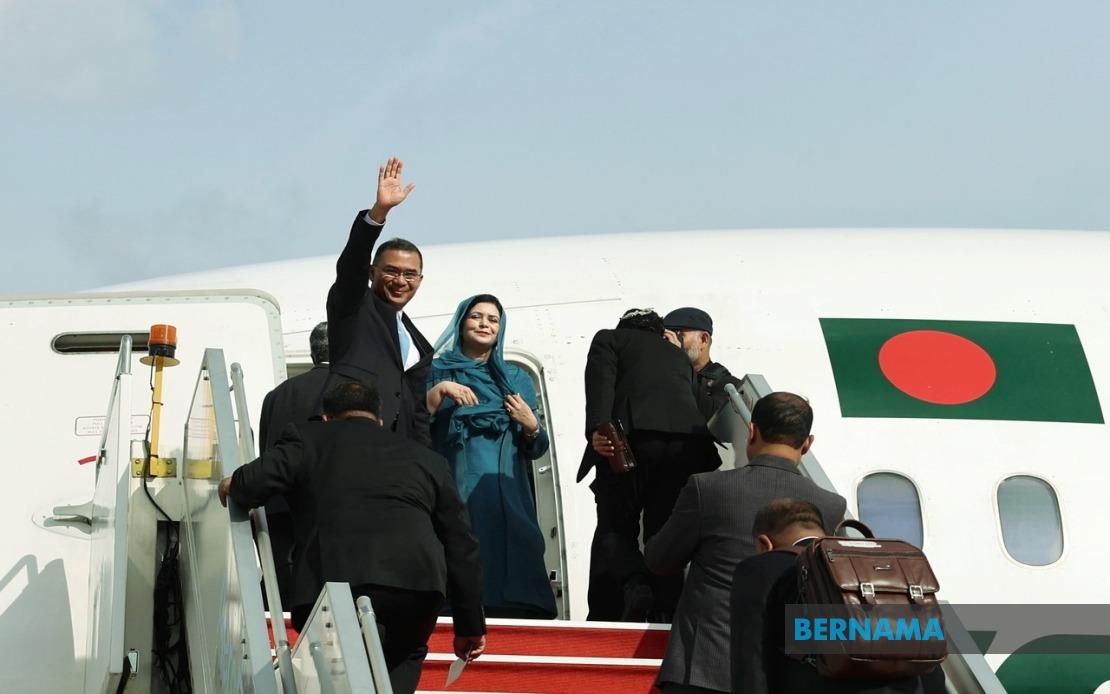
Bangladesh Prime Minister Tarique Rahman departed Malaysia on Saturday afternoon, concluding a two-day official visit that saw substantive discussions with Malaysian leadership on deepening bilateral ties across multiple sectors. The special aircraft carrying the Bangladesh premier and his delegation lifted off from Kuala Lumpur International Airport at 5 pm, following a ceremonial send-off that included a guard of honour from the First Battalion of the Royal Ranger Regiment. The departure marked the end of what proved to be a significant engagement for Malaysia with one of South Asia's key economic players.
The visit represented Tarique's first bilateral official journey abroad since assuming office in February 2026, underscoring the strategic importance Malaysia and Bangladesh place on their relationship. Throughout his stay, the Bangladesh leader engaged with senior Malaysian officials on matters ranging from trade architecture to security cooperation. Minister in the Prime Minister's Department (Religious Affairs) Dr Zulkifli Hasan represented the Malaysian government at the ceremonial departure, alongside a delegation that included Tarique's spouse Dr Zubaida Rahman and senior Bangladeshi officials.
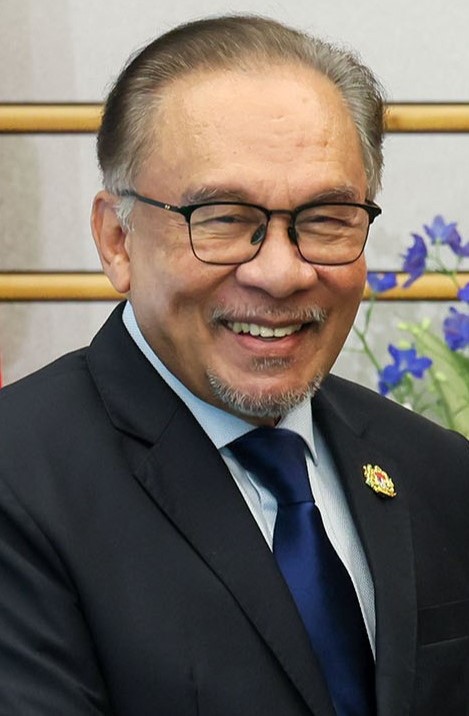
On his final day in Malaysia, Tarique met with Prime Minister Datuk Seri Anwar Ibrahim at the Perdana Putra Complex to discuss pressing regional and international challenges facing both nations. The bilateral meeting went beyond standard courtesies to explore concrete opportunities for economic collaboration, with particular emphasis on emerging sectors that align with both countries' development priorities. Officials from both sides identified semiconductors, renewable energy, agricultural modernisation and educational exchange as promising areas for expanded partnership, reflecting a shared vision of technology-enabled growth.
The two leaders also discussed governance frameworks to facilitate increased business activity, recognising that Malaysia and Bangladesh maintain significant complementarities in their respective economies. Malaysia's established position as a regional financial and manufacturing hub, combined with Bangladesh's growing manufacturing capabilities and vast labour force, creates natural synergies that both governments see as underutilised. The discussions laid groundwork for accelerating investment flows and reducing trade frictions between the two nations.
A cornerstone achievement of the visit was the signing of three formal instruments aimed at institutionalising cooperation. The Memorandum of Understanding on Cultural Cooperation reflects both nations' commitment to people-to-people engagement and soft power dimensions of the bilateral relationship. Simultaneously, two Exchanges of Notes were inked covering Counter-Terrorism Research and Investment Promotion and Facilitation, areas increasingly vital to regional stability and economic growth. These instruments provide legal scaffolding for cooperation that extends beyond traditional diplomatic channels.
Among the most significant undertakings from the visit was a commitment by both governments to pursue a fast-track free trade agreement, a development that could substantially reshape commercial dynamics between the two countries. Currently, Malaysia-Bangladesh trade remains modest relative to the countries' respective economic scales, with 2025 figures showing total bilateral commerce of RM12.18 billion. Such an agreement would likely accelerate merchandise flows and service integration, benefiting consumers and businesses in both nations. Additionally, both sides identified the halal industry as a sector ripe for joint development, leveraging Bangladesh's manufacturing capacity and Malaysia's established position as a global halal standards and certification leader.
Bangladesh signalled its ambitions to deepen engagement within the regional architecture, formally reiterating its aspiration to achieve ASEAN Sectoral Dialogue Partner status. The nation also expressed keen interest in acceding to the Regional Comprehensive Economic Partnership, the massive trade bloc encompassing the ten ASEAN member states plus China, Japan, South Korea, Australia and New Zealand. Malaysian officials welcomed these moves, recognising that Bangladesh's integration into regional economic structures would benefit the broader Indo-Pacific ecosystem and create additional platforms for Malaysia-Bangladesh cooperation.
The bilateral agenda extended significantly into global affairs, demonstrating that both nations align on major international questions. Tarique and Anwar found common ground on Palestinian rights and the humanitarian dimensions of the Gaza conflict, consistent with both nations' historical positions favouring justice and sustainable peace in the Middle East. Both also shared perspectives on the imperative for stability in the Persian Gulf and around Iran, an issue of strategic concern across Asia given energy supply dependencies and maritime security considerations. This alignment on global issues suggests potential for Malaysia and Bangladesh to coordinate more closely within multilateral forums such as the United Nations.
A particularly pressing issue commanding joint attention was the longstanding Rohingya refugee crisis, with both nations agreeing to intensify efforts through ASEAN mechanisms to broker a lasting resolution. Bangladesh, which hosts nearly one million Rohingya refugees in camps in Cox's Bazar, faces enormous humanitarian and development pressures from this displaced population. Malaysia, which has historically supported asylum seekers, increasingly recognises the unsustainability of the current situation and the necessity for international action to enable safe, dignified returns. Both leaders acknowledged that progress requires sustained engagement with Myanmar authorities and coordination among ASEAN member states, reflecting a pragmatic understanding that unilateral action cannot resolve transnational displacement crises.
The numerical dimensions of Malaysia-Bangladesh trade reveal both the current relationship's scale and untapped potential. In 2025, merchandise commerce totalled RM12.18 billion, with Malaysian exports accounting for RM10.08 billion, predominantly petroleum products. This trade structure reflects Malaysia's position as an energy exporter to an energy-importing nation undergoing rapid industrialisation. Bangladesh's exports to Malaysia, valued at RM2.10 billion, centre on textiles, apparel and footwear—sectors where the nation holds competitive advantages due to labour costs and manufacturing infrastructure. Notably, Bangladesh ranked as Malaysia's 28th-largest trading partner globally in 2025 while representing the second-largest trading relationship in South Asia after India, demonstrating that despite absolute trade volumes, the pairing's importance within regional commerce justifies strategic attention.
Tarique's onward journey to China follows a pattern increasingly common among South Asian leaders, reflecting the multidimensional nature of contemporary statecraft. Bangladesh's relationship with Beijing encompasses infrastructure development, manufacturing investment and security considerations, making China an unavoidable component of any South Asian nation's strategic calculations. Malaysia, which maintains its own complex engagement with China across trade, investment and security matters, implicitly understands the necessity for regional partners to cultivate multiple partnerships. The progression of Tarique's visit—Malaysia first, then China—suggests a deliberate sequencing that positions both relationships as integral to Bangladesh's external engagement architecture, rather than as competitive alternatives.