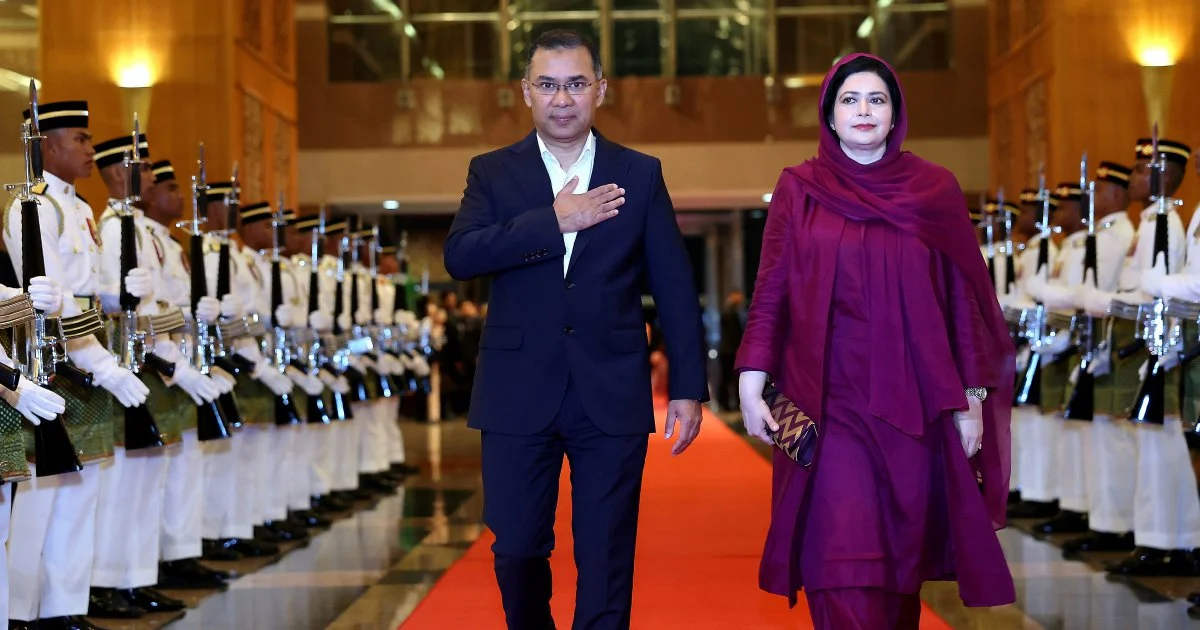
Bangladesh's Prime Minister Tarique Rahman has extended a formal invitation to Malaysian enterprises to participate in the country's economic expansion, underscoring emerging investment opportunities across multiple sectors as the nation works to strengthen its competitive position within South Asia's rapidly evolving business landscape.
The overture comes at a strategic moment for Malaysia-Bangladesh bilateral relations, with both nations seeking to deepen trade and investment ties beyond traditional channels. Rahman's call specifically targets Malaysian industrialists and entrepreneurs who have demonstrated capacity for scaling operations across Southeast Asia, suggesting that Bangladesh views its Malaysian counterparts as partners capable of bringing technological expertise and management acumen to local ventures.
Bangladesh's macroeconomic fundamentals have undergone significant transformation in recent years. The nation's working-age population continues to expand, creating substantial domestic demand across consumer goods, real estate, and services sectors. This demographic dividend presents particular appeal for Malaysian manufacturers seeking to relocate production facilities from higher-cost jurisdictions or establish regional distribution hubs serving South and Southeast Asian markets simultaneously.
The textile and apparel industries, traditionally the backbone of Bangladesh's export economy, are experiencing gradual diversification. While labour-intensive manufacturing remains central, the country is simultaneously nurturing electronics assembly, pharmaceutical production, and light engineering sectors where Malaysian firms possess established supply chains and technical capabilities. This sectoral transition creates natural alignment between Malaysian industrial expertise and Bangladesh's development priorities.
Infrastructure development has accelerated substantially, with ongoing projects including port expansion at Chittagong and Mongla, new special economic zones offering tax incentives and streamlined customs procedures, and improving connectivity through the Padma Bridge. These physical investments lower operational costs and transit times for foreign investors, addressing historical logistical constraints that once discouraged regional manufacturers from establishing Bangladeshi operations.
The regulatory environment has evolved markedly, with Bangladesh implementing updated investment frameworks designed to facilitate foreign participation while protecting domestic industries. New policies addressing intellectual property rights, dispute resolution mechanisms, and profit repatriation have reassured international investors about long-term stability and market accessibility. Malaysian investors familiar with navigating Southeast Asian regulatory systems should find Bangladesh's mechanisms increasingly transparent and predictable.
Energy security remains a significant challenge for Bangladesh's industrial development, though government initiatives promoting natural gas development and renewable energy expansion are gradually improving power availability. Malaysian expertise in energy management and efficiency, particularly within manufacturing contexts, could prove valuable as Bangladesh works toward meeting growing industrial demand while transitioning toward cleaner fuel sources.
For Malaysian investors specifically, Bangladesh offers geographical proximity and cultural familiarity lacking in more distant investment destinations. The shared Islamic heritage, established trading patterns, and existing Malaysian diaspora create informal networks facilitating business operations and reducing transaction costs associated with market entry. Many Malaysian firms operating in Bangladesh report smoother operational experiences compared to entirely new geographic markets.
The timing of Rahman's invitation reflects Bangladesh's broader strategy to attract quality foreign investment rather than maximising investment volume indiscriminately. The government increasingly differentiates between investors capable of contributing technology transfer, skills development, and value-chain advancement versus those seeking purely short-term profit extraction. Malaysian firms' reputation for responsible corporate practices aligns with these selection criteria.
Regional competition for Malaysian investment capital remains intense, however. Vietnam, Indonesia, and Thailand all maintain sophisticated investor recruitment strategies with established track records attracting significant Malaysian capital. Bangladesh must therefore emphasise its distinct competitive advantages rather than merely replicating initiatives successful elsewhere. The nation's lower labour costs, untapped market potential, and genuine openness to strategic partnerships represent genuine differentiation points in regional investment competition.
For Malaysia's business community, Bangladesh represents a promising frontier market combining immediate investment opportunities with medium-term growth potential. Sectors including food processing, electrical components manufacturing, pharmaceuticals, and financial services each present viable entry points requiring varying capital commitments and risk profiles. The diversification benefits of Bangladesh exposure could prove attractive to Malaysian portfolio investors currently concentrated in more saturated Southeast Asian markets.
Government-to-government engagement supporting bilateral investment has strengthened materially, with both nations signing agreements facilitating technology exchange, skills training, and joint infrastructure development. These frameworks reduce uncertainty surrounding cross-border business operations and signal political commitment to sustaining commercial partnership momentum beyond individual business transactions.