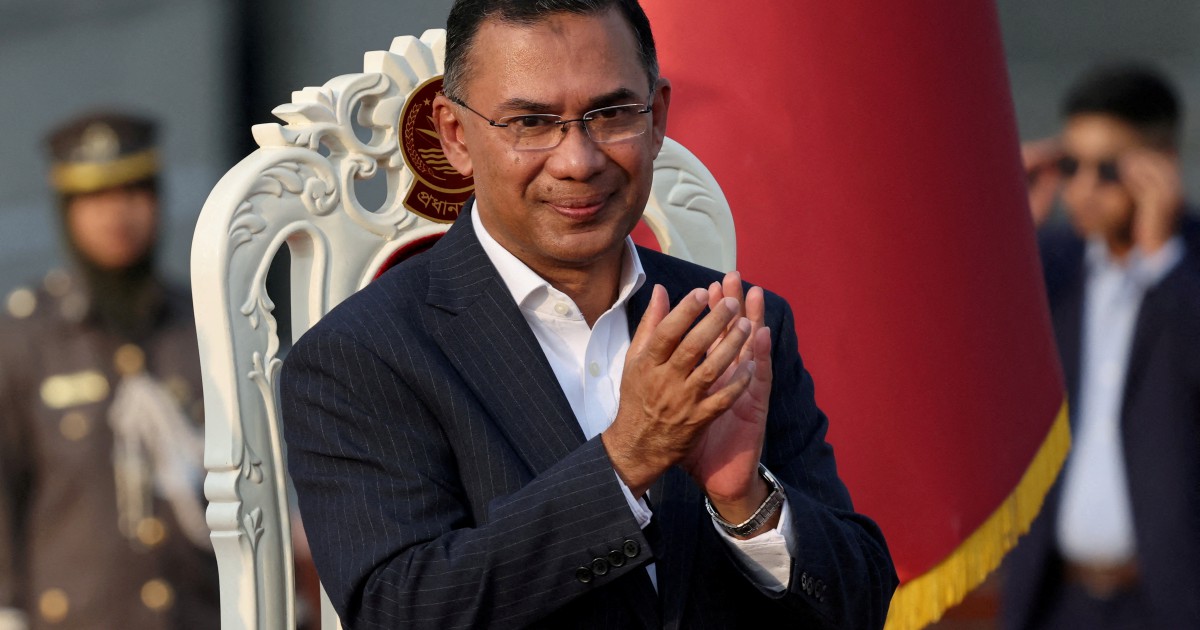
Bangladesh's interim government has issued a firm diplomatic stance, announcing that Prime Minister Tarique Rahman will not undertake an official visit to India unless the Indian government agrees to extradite Sheikh Hasina, the former Bangladeshi premier who sought refuge across the border during the tumultuous 2024 uprising that forced her from power. The announcement, made on Sunday, underscores the escalating tension between Dhaka and New Delhi over Hasina's status and represents a significant diplomatic condition that Bangladeshi leadership has set for normalising high-level bilateral engagements.
Sheikh Hasina's departure from Bangladesh in August 2024 marked a dramatic conclusion to her second period in office, which had grown increasingly contentious amid widespread public protests. The uprising that precipitated her flight reflected deep discontent among segments of Bangladesh's population over governance, economic conditions, and perceived authoritarianism during her tenure. Rather than facing the political and legal consequences of remaining in her homeland, Hasina crossed into India, where she has maintained a low profile while her political fortunes have shifted dramatically with the new administration in Dhaka. The circumstances of her escape and subsequent asylum in India have remained a flashpoint in bilateral relations.
Bangladesh's demand for Hasina's extradition reflects the new government's determination to hold its predecessor accountable for actions undertaken during her administration. The charges that could form the basis of extradition requests likely relate to governance issues and alleged wrongdoings that the transitional administration considers serious enough to warrant international legal cooperation. By conditioning the prime minister's visit on this matter, Dhaka is leveraging India's own interest in diplomatic normalcy to pressure New Delhi into taking action it might otherwise prefer to avoid, given the political sensitivities of returning a fugitive former leader to face an uncertain fate.
India's position in this matter reflects the delicate balancing act required of regional powers managing relations with neighbours undergoing political transitions. New Delhi must weigh its historical support for Hasina, whose government maintained relatively warm ties with India compared to other recent periods in Bangladesh's political history, against its relationship with the new Bangladeshi leadership. India's own domestic political considerations also factor into any decision regarding extradition, as the country's government may fear setting precedents that could affect its own officials abroad or creating domestic political complications by surrendering a prominent political figure who sought safety within its borders.
The extradition demand carries significant implications for South Asian diplomatic norms and the principle of asylum in the region. Bangladesh's insistence on this condition challenges the traditional practice of providing refuge to political figures fleeing upheaval in their home countries, a practice that has served various leaders across South Asia over decades. The stance suggests that the new Bangladeshi government prioritises accountability and legal processes over the older conventions of diplomatic sanctuary, reflecting a broader shift in how post-uprising administrations seek to establish their legitimacy through visible accountability measures.
For Malaysia and other Southeast Asian nations observing Bangladesh's political evolution, this situation offers lessons in how transitional governments navigate international law and diplomacy while consolidating domestic authority. The conditioning of high-level visits on extradition demands demonstrates how regional neighbours can be drawn into internal accountability disputes, potentially fragmenting the diplomatic cooperation that regional groupings like SAARC seek to maintain. It also highlights the vulnerability of displaced political figures in an increasingly interconnected region where traditional asylum protections face pressure from demands for accountability.
The timing of Bangladesh's announcement suggests that the interim government feels sufficiently confident in its domestic position to take a hardline stance internationally. Such declarations typically emerge after a transition authority has consolidated sufficient support and appears unlikely to face immediate challenges to its legitimacy. By articulating this condition publicly, Tarique Rahman's government sends a signal to its domestic constituency that it is neither deferential to India nor willing to compromise on holding the previous administration answerable for its record.
India's response to this ultimatum will have bearing on the broader India-Bangladesh relationship, which encompasses shared interests in border management, water sharing, trade, and security cooperation. A refusal to extradite Hasina would strain nascent ties with the new Bangladeshi government at a moment when New Delhi might benefit from stable relations with its eastern neighbour. Conversely, acceding to the demand would represent a significant reversal of India's traditional approach to providing political asylum and could affect India's international standing regarding human rights and refugee protection principles that it has historically championed.
The unresolved question of Sheikh Hasina's status in India remains a contentious diplomatic issue with no immediate resolution in sight. As Bangladesh's new government consolidates power and implements its agenda, the demand for Hasina's extradition appears likely to remain a central condition for normalising relations with New Delhi. The standoff underscores how internal political transitions in one country can reverberate through bilateral relationships and establish preconditions for diplomatic engagement that extend well beyond traditional foreign policy considerations. Both nations will need to navigate this impasse carefully to prevent it from undermining the broader regional stability that South Asia requires.

