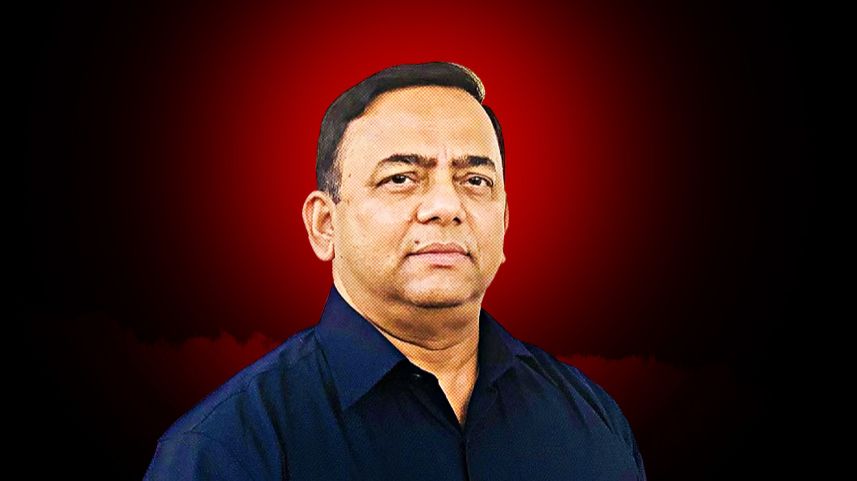
Former inspector general of police Benazir Ahmed has become the subject of an international legal tussle after being granted conditional bail in the United Arab Emirates, prompting Bangladesh's Home Minister Salahuddin Ahmed to suggest the fugitive may be holding passports issued by multiple countries. The allegation, made during a media briefing at the Secretariat in Dhaka, raises fresh questions about how a high-profile suspect managed to secure bail while facing serious charges back home and underscores the complexities of pursuing suspects across borders in South Asia.
Salahuddin Ahmed revealed that the government has instructed its legal representatives in the UAE to file a formal petition requesting the cancellation of Benazir's bail, citing suspicions that he may have obtained travel documents from nations beyond Bangladesh. The revelation suggests authorities believe the former police chief took deliberate steps to secure alternative identity documents—a move that would significantly complicate efforts to track his movements and prevent his disappearance. Such measures are sometimes employed by high-profile fugitives attempting to evade international law enforcement and avoid extradition proceedings.
The Home Minister confirmed that Bangladesh had already engaged its law firm representing national interests in the Emirates, while senior bureaucrats had initiated diplomatic channels with the UAE ambassador in Dhaka to discuss the matter at a governmental level. This multi-pronged approach reflects the seriousness with which the administration views the case and signals an attempt to leverage both legal and diplomatic pressure to reverse the bail decision. The involvement of diplomatic channels underscores how cases involving senior officials can quickly escalate beyond ordinary criminal procedures into matters requiring state-to-state negotiation.
At present, Bangladesh's government remains in the dark regarding the specific terms and conditions attached to Benazir's bail, a situation that hampers its ability to mount an effective counter-strategy. Salahuddin acknowledged that officials are actively seeking a certified copy of the bail order issued by the UAE court, a crucial document that would clarify what restrictions, if any, have been imposed on the accused's movements and activities. Without access to these details, Bangladesh's legal team operates at a significant disadvantage in formulating its next moves and understanding the grounds on which the bail was granted despite the nation's prior engagement with Emirati authorities.
The government has tasked its legal representatives with submitting comprehensive extradition-related documents to the UAE court while simultaneously petitioning for bail cancellation. This strategy reveals Bangladesh's intention to establish a clear legal foundation for demanding Benazir's return, providing the Emirati judiciary with the documentary evidence necessary to satisfy its obligations under bilateral extradition agreements. The submission of such materials is typically a prerequisite for courts in countries like the UAE to consider extradition requests seriously, ensuring that proceedings align with international legal standards and the principle that extradition should be based on solid evidence of wrongdoing.
When pressed to explain why Benazir managed to secure bail despite Bangladesh's documented efforts to facilitate his return, the Home Minister declined to offer commentary, stating that doing so without reviewing the full details of the court order would be premature and potentially counterproductive. This measured response suggests Bangladesh is adopting a cautious diplomatic posture, likely seeking to avoid public statements that might antagonise Emirati officials or complicate ongoing negotiations. Such restraint is strategically sound in bilateral disputes involving judicial systems, where inflammatory rhetoric can harden positions and reduce room for negotiation.
The Benazir Ahmed case reflects broader challenges facing South Asian nations in pursuing suspects who flee to wealthier, more stable jurisdictions. The UAE, as a major financial hub with significant global connectivity, has become an attractive destination for individuals seeking to escape legal consequences in their home countries. The bail decision—seemingly favourable to Benazir—raises questions about whether the Emirates' courts fully understand the gravity of charges against the former police chief or whether procedural differences between legal systems created opportunities for bail to be granted more readily than would occur in Bangladesh.
For Malaysia and other Southeast Asian nations, the Benazir case serves as a cautionary reminder of the importance of strengthening extradition frameworks and ensuring that bilateral legal agreements are sufficiently robust to prevent fugitives from exploiting jurisdictional gaps. The apparent ease with which a high-profile suspect can obtain bail abroad—and the complications that arise when authorities lack full information about court proceedings—highlights vulnerabilities in current regional mechanisms for pursuing transnational justice. Greater coordination among ASEAN nations and traditional receiving countries for such fugitives could improve enforcement capabilities.
Separately, the Home Minister addressed recent security concerns by noting that bomb-like objects had been recovered in Kamalapur and Ashulia, incidents he attributed to attempts by unspecified quarters to inflame communal tensions. While assuring the public there was no cause for alarm, Salahuddin credited the country's law enforcement agencies and specialised bomb disposal units with successfully managing the situations. He indicated that ongoing investigations were focused on identifying the individuals responsible, suggesting that authorities viewed the incidents as deliberate provocations rather than random criminal acts, and that comprehensive investigations are underway to determine the exact nature of the objects and their intended purpose.

