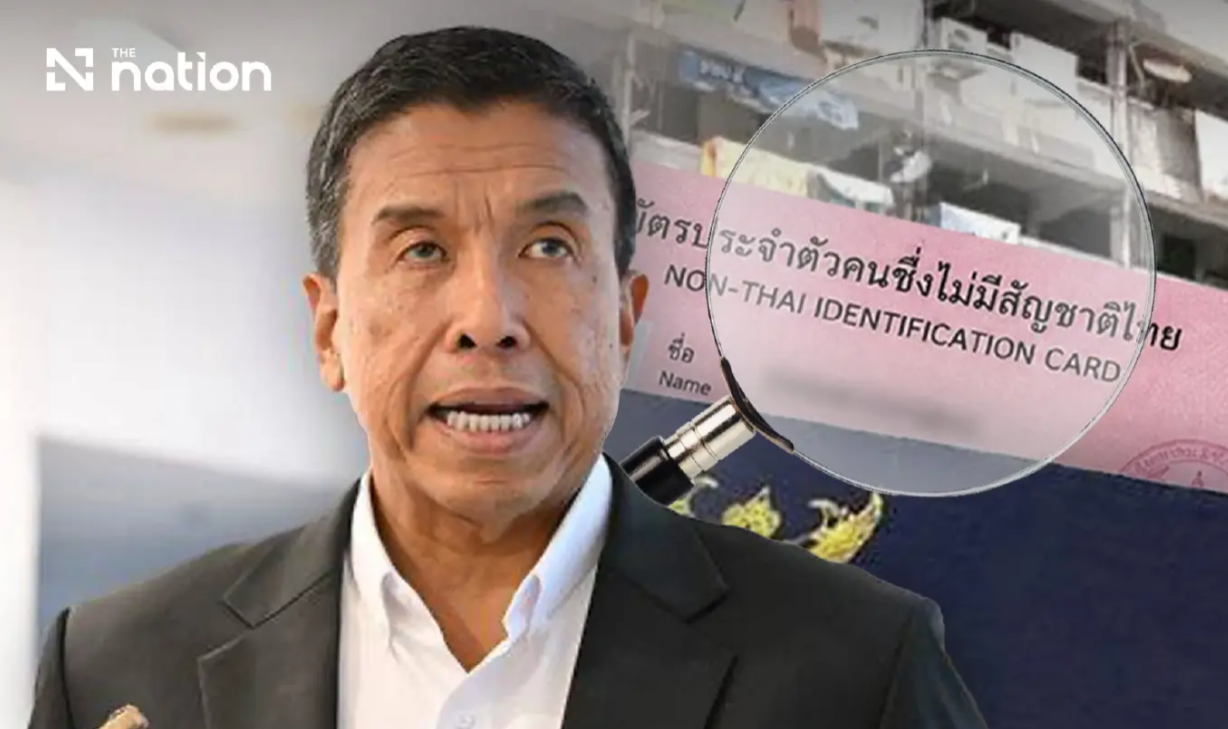
Bangkok Governor Chadchart Sittipunt has directed all 50 district offices in the Thai capital to conduct a comprehensive examination of household-registration records spanning the past decade, responding to mounting evidence of suspected irregularities in the issuance of pink cards—identification documents for people lacking Thai nationality. The audit, which began immediately with preliminary reports due by late August, represents one of the most extensive administrative reviews of Thailand's civil-registration system in recent years and signals growing concern over vulnerabilities that may have enabled widespread fraudulent documentation.
The investigation centres on alleged schemes that exploited weaknesses in how household registrations are managed and verified. According to Chadchart's account, the fraudsters employed multiple sophisticated methods to circumvent standard procedures. One particularly brazen tactic involved misusing birth certificates of children born in Thailand to foreign nationals who later relocated abroad. Although these children had left the country, their birth certificates remained on file in Thailand and were allegedly weaponised by fraudsters to establish false household registrations for unrelated individuals.
Another scheme reportedly involved transferring names between the central household register and ordinary household registrations, or fabricating fictitious family relationships between adults and children—arrangements colloquially referred to as "phantom child" and "phantom father" scenarios. These creative circumventions of standard documentation requirements underscore how vulnerable Thailand's registration infrastructure has become, particularly when motivated individuals understand the system's procedural gaps well enough to exploit them systematically.
The scope of the problem became apparent through alarming discoveries in Din Daeng district, where initial screening uncovered severe overcrowding in residential registrations. One property measuring merely 40 square metres somehow contained between 40 and 45 registered residents—a density so extreme it immediately triggered suspicion. Subsequent examination of Din Daeng's 2024 registrations alone identified more than 2,000 address transfers that appeared unusual, suggesting the fraud extended far beyond isolated incidents or a handful of corrupt officials.
Authorities estimate approximately 3,000 questionable registrations remain under review, though Chadchart cautioned that this figure has not yet been confirmed. Importantly, he noted that these suspicious registrations are likely dispersed across multiple properties rather than concentrated at single addresses, which may explain why the problem remained undetected for so long. To manage the workload efficiently, the Bangkok Metropolitan Administration will initially focus on identifying properties with at least 15 registered residents, with the screening threshold potentially lowered subsequently to enable broader random spot-checks.
The investigation has already resulted in administrative action against four Bangkok Metropolitan Administration employees linked to the suspected fraud, all from Din Daeng district. These officials have been temporarily suspended from duty pending disciplinary proceedings, though the administrative action itself does not constitute a finding of guilt. Chadchart signalled willingness to pursue investigations wherever evidence led, including into senior executives or retired officials, indicating determination to avoid the perception of protecting high-ranking figures from scrutiny.
A critical challenge confronting investigators is establishing whether financial incentives motivated the suspected irregularities. The Bangkok Metropolitan Administration is coordinating with national police to trace money flows and determine whether payments were exchanged between suspected brokers facilitating the fraudulent applications and government employees who processed them. Because the BMA lacks authority to compel external parties to disclose financial information or grant access to transaction records, police investigative powers are essential to uncover whether an organised scheme involving corrupt officials and private intermediaries was operating in parallel to the administrative fraud.
To prevent similar vulnerabilities from recurring, the Bangkok Metropolitan Administration is implementing structural reforms to its registration procedures. Approval authority for household registrations will no longer rest with individual officers; instead, district directors and section heads will share responsibility for all approvals, creating multiple checkpoints and reducing the capacity for one person to approve fraudulent applications unilaterally. Additionally, officials working in sensitive registration positions will be rotated periodically, a safeguard intended to prevent the development of entrenched relationships or situations where a single employee accumulates unchecked power over critical functions.
The administration is also reviewing and strengthening existing anti-corruption policies, with renewed emphasis on administrative affairs and civil-registration procedures. Working procedures will be updated to enhance transparency and reduce opportunities for abuse, though Chadchart acknowledged the need to ensure legitimate applicants are not unfairly penalised by heightened scrutiny resulting from the investigation. This balancing act—tightening security while preserving accessibility for genuine users—will test the competence of Bangkok's administrative apparatus in the months ahead.
For Malaysian readers, this scandal carries instructive implications about the importance of robust civil-registration safeguards. Many Southeast Asian nations employ similar household-registration systems to issue identification documents, and the structural vulnerabilities exposed in Bangkok's experience merit attention from administrators managing comparable databases. The Thai case demonstrates how procedural gaps, insufficient oversight mechanisms, and concentration of approval authority in individual officials can create openings for fraud at scale. Malaysia's own civil-registration framework relies heavily on the integrity of district-level officials, making the preventive measures Chadchart has outlined—rotation of sensitive personnel, shared approval responsibilities, and strengthened audit procedures—potentially valuable models for adaptation.
The investigation also underscores how organised fraud networks can exploit identification systems not for trivial purposes but as gateways to establishing legal residence status, accessing services, or creating documented identity. Pink cards in Thailand serve a critical function for long-term foreign residents, and compromise of the system affects both its credibility and the security of the broader administrative apparatus that relies on it. As the Bangkok Metropolitan Administration proceeds with its audit over the coming months, outcomes will likely influence how other jurisdictions in the region approach oversight of their civil-registration systems and the employment practices governing officials entrusted with their administration.

