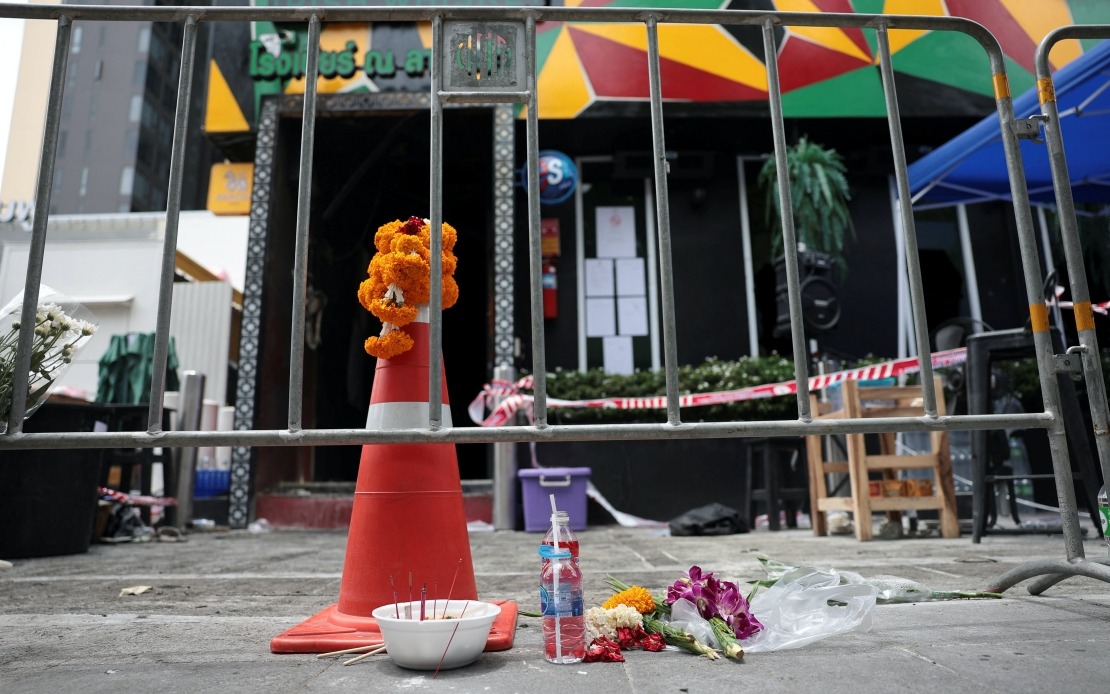
The aftermath of Monday's catastrophic fire at a Bangkok entertainment venue has revealed a grim reality: the 33 people who perished in the disaster were killed not by flames, but by the toxic fumes that engulfed the building shortly after midnight. Metropolitan Police Bureau Commissioner Police Lieutenant General Sayam Boonsom disclosed this critical finding to reporters on Thursday, marking a significant development in the investigation into what has become one of Thailand's deadliest recent incidents.
Forensic analysis completed at the fire scene in Lat Phrao district identified the lethal culprits—carbon monoxide and cyanide—both of which were detected in the victims' bodies. These gases function in particularly insidious ways, interfering with the body's ability to absorb oxygen at the cellular level. The impact is devastating: exposure to such concentrations proves fatal within minutes, giving those trapped inside mere moments to escape before losing consciousness and ultimately their lives. This distinction carries profound implications for understanding how the tragedy unfolded and what safety measures might have prevented it.
The investigation has now pivoted toward establishing accountability for the disaster. Police are preparing to pursue multiple charges against responsible parties, including causing death and injury through negligence, undertaking unauthorised building alterations, and negligently starting the fire. Remarkably, no formal charges have been filed yet, though the framework for prosecution is being constructed as the probe advances. Investigators have already conducted extensive questioning, with more than 106 witnesses interviewed to piece together the sequence of events leading to the blaze.
Technical examination of the premises has illuminated several potential causes, with electrical faults emerging as a primary line of inquiry. However, the investigation has also uncovered what appear to be serious safety violations that may have compounded the tragedy. Unauthorised structural modifications to the building and blocked emergency exits represent failures in basic fire safety protocols. These findings suggest that even had occupants detected danger quickly enough, escape routes may have been compromised, transforming what could have been a controlled evacuation into a deadly trap.
The scope of the inquiry extends beyond the immediate cause of the fire to encompass broader regulatory compliance issues. Authorities are examining whether the establishment operated beyond the parameters of its licensed operations, a concern that speaks to insufficient oversight of entertainment venues in Bangkok. Potential breaches of the laws governing such establishments are being scrutinised, raising questions about inspection regimes and enforcement mechanisms that may have failed to identify hazardous conditions before the fire occurred.
The human toll continues to mount in recovery wards across Bangkok's hospitals. As of Thursday, 44 injured survivors had been discharged, representing progress in their medical rehabilitation. However, 14 critically injured patients remained in intensive care, their conditions underscoring the severity of exposure to the toxic atmosphere. The over 70 people injured in total—in addition to those who perished—represent a staggering casualty figure from a single incident, straining medical resources and raising broader questions about disaster preparedness in urban Thailand.
For Malaysia and other Southeast Asian nations, the Bangkok incident serves as a sobering reminder of vulnerabilities in urban entertainment infrastructure. Similar venues operate throughout the region, many in older buildings that may not comply with contemporary fire safety standards. The detection of cyanide in particular raises concerns about the materials used in interior design and furnishings—a detail that warrants scrutiny from regulators across the region. Malaysian authorities managing nightlife districts in Kuala Lumpur, Penang, and other cities may need to conduct urgent audits of emergency procedures and building modifications in establishments operating under their jurisdiction.
The tragedy also highlights the distinction between death by flame and death by smoke inhalation, a medical reality that often surprises the public. In modern building fires, particularly those involving synthetic materials in furnishings and fixtures, toxic gas production frequently exceeds thermal hazard. This underscores the critical importance of smoke detection systems, adequate ventilation, and rapid-response protocols. Thailand's findings suggest that detection and early warning capabilities at the affected venue may have been inadequate, or that occupants were unable to respond effectively even if warnings were issued.
As Thai authorities continue their investigation and move toward prosecution, the case will likely become a landmark in Southeast Asian fire safety jurisprudence. The charges being prepared against responsible parties—particularly those relating to unauthorised building modifications and negligent operation—may establish precedents influencing how entertainment venues are regulated across the region. Malaysia's own regulatory framework for such establishments may face renewed scrutiny in light of the Bangkok findings, with particular attention to penalties for non-compliance and standards for emergency exit maintenance.
The investigation's focus on multiple potential offences reflects an understanding that singular blame is inadequate to explain such a catastrophic failure of safety systems. Rather, the disaster appears to have resulted from a convergence of factors: structural vulnerabilities, inadequate maintenance of escape routes, possible electrical hazards, and potentially hazardous building materials. This multifaceted analysis will be crucial not only for justice but for preventing recurrence, both in Thailand and throughout the region where similar operational and regulatory environments persist.

