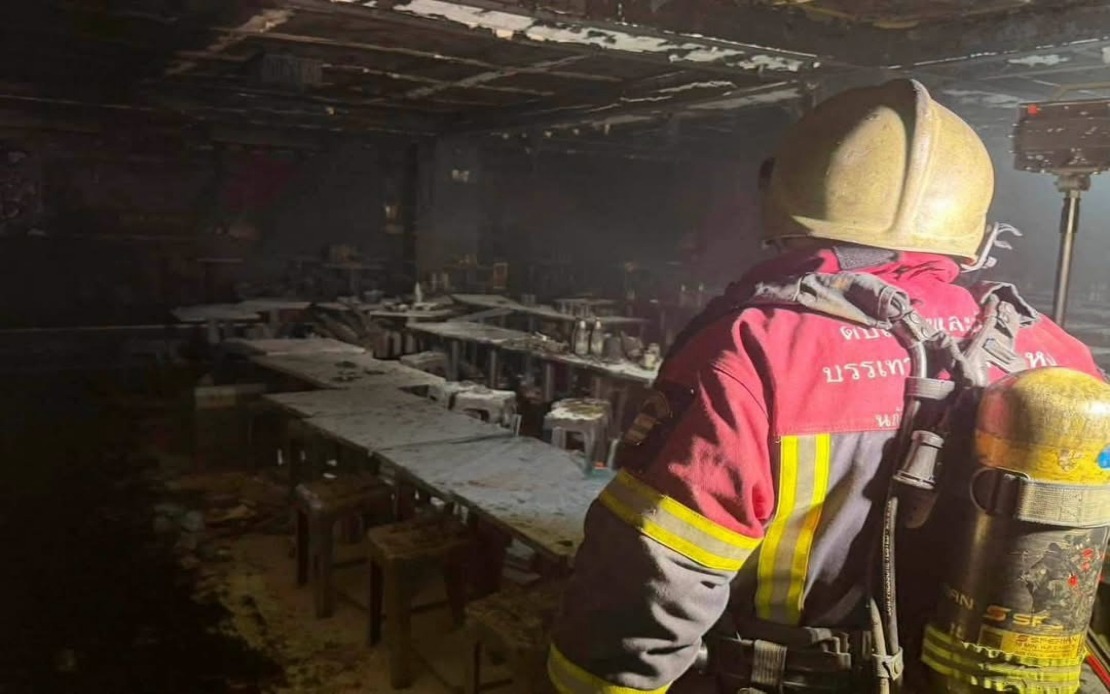
A devastating fire tore through a bar in Bangkok's Chatuchak district early Monday morning, claiming the lives of at least 27 people and injuring 18 others in what has become one of the city's deadliest recent fire incidents. The blaze erupted after midnight at the establishment in the Lat Phrao area, with Bangkok Governor Chadchart Sittipunt arriving at the scene approximately two hours and forty minutes after the initial alarm was raised. Emergency responders and forensic teams immediately secured the site to begin their investigation into the circumstances surrounding the tragedy.
The fatalities comprised nine men and 18 women, a striking gender imbalance that reflects the nature of the venue and the demographic of people present at the time of the incident. Among the injured, eight sustained critical injuries requiring intensive medical intervention, seven suffered moderate wounds, and three experienced minor trauma. Authorities have indicated that smoke inhalation represents the most probable cause of death for the majority of victims, though final medical determinations await completion of forensic examinations and comprehensive investigations. The Bangkok Metropolitan Administration's Department of Disaster Prevention and Mitigation has taken the lead in cataloguing casualties and coordinating victim identification efforts in cooperation with medical personnel.
Governor Chadchart's preliminary observations proved revealing about the fire's behaviour and the building's structural characteristics. Eyewitness accounts and physical evidence suggested that flames advanced with exceptional speed through the ceiling area, a pattern indicative of either accelerated combustion or the presence of highly flammable materials in overhead spaces. Notably, investigators observed that plastic furnishings inside the premises sustained comparatively minimal damage, a circumstance that raises questions about the precise location and origin point of the initial ignition.
Emergency exit deficiencies emerged as a critical factor in the disaster. Multiple victims were discovered in proximity to an emergency exit situated on the left side of the building, with preliminary indications that obstructions may have impeded evacuation attempts. This discovery has prompted authorities to scrutinise whether blocked or inadequately marked escape routes contributed materially to the death toll. Governor Chadchart cautioned against drawing premature conclusions, emphasising that a thorough investigative process must precede any definitive findings regarding exit accessibility and obstruction.
Prime Minister Anutin Charnvirakul visited the scene in the early hours of Monday morning to receive briefings from officials and assess the situation personally. His interactions with witnesses, particularly a musician who had been performing when the fire erupted, provided investigators with crucial eyewitness testimony about the fire's development. The performer recounted observing an electrical fire at the switchboard, followed by rapid escalation involving explosions that forced panicked evacuation. This account implicates the establishment's electrical infrastructure as a potential ignition source, though Anutin stressed that confirmation of causation awaits completion of proper investigative procedures.
The Bangkok Metropolitan Administration has announced comprehensive compliance inspections targeting the bar's operating licence and adherence to safety regulations. These examinations will focus particularly on the adequacy and condition of emergency exits, the prominence and visibility of directional exit signage, and whether evacuation pathways had been compromised by furniture, equipment, or other obstructions. Such inspections reflect growing concerns about whether the establishment met standard fire safety codes prior to the disaster.
This incident carries profound implications for Southeast Asian hospitality and entertainment venues, many of which operate in older buildings with potentially inadequate safety infrastructure. Thailand's regulatory framework governing fire prevention and evacuation procedures will likely face renewed scrutiny, particularly regarding enforcement mechanisms and penalties for non-compliance. For Malaysian readers, the tragedy serves as a stark reminder of the dangers posed by substandard safety practices in nightlife establishments, an issue that authorities in Malaysia have periodically addressed through regulatory campaigns and facility inspections.
The speed with which flames consumed the venue and the high fatality rate underscore the critical importance of robust emergency exit systems, regular safety drills, and unobstructed evacuation routes. In crowded entertainment spaces where customers may be unfamiliar with the layout and potentially disoriented by smoke and darkness, properly maintained exits represent the difference between escape and tragedy. The disproportionate number of female victims may reflect seating arrangements, the time it took for various patrons to reach exits, or gender-based differences in evacuation patterns during emergencies.
Regulatory authorities throughout the region will likely reassess enforcement protocols for fire safety compliance in entertainment venues. Bangkok's incident demonstrates that even in major metropolitan centres, comprehensive safety inspections and rigorous adherence to building codes cannot be taken for granted. International fire safety standards exist precisely because preventable tragedies like this one occur when establishments operate with compromised infrastructure and inadequate emergency provisions.
The investigation into electrical systems at the Lat Phrao bar will prove particularly instructive for the hospitality industry. Ageing wiring, overloaded circuits, or faulty switchboards represent common fire risks in establishments that have undergone successive renovations and modifications without corresponding updates to electrical capacity. These technical findings, once complete, may prompt regional safety reviews of similar venues, particularly those housed in older structures not originally designed for intensive commercial use.
As authorities continue their victim identification process and next-of-kin notifications proceed, the focus now turns toward determining precise causation and identifying any systemic failures that contributed to the tragedy. The coming weeks will reveal whether regulatory violations, maintenance negligence, or other preventable factors played roles in the disaster. For the hospitality industry across Southeast Asia, this incident represents a sobering validation of the non-negotiable nature of fire safety infrastructure and the catastrophic consequences of regulatory lapses.

