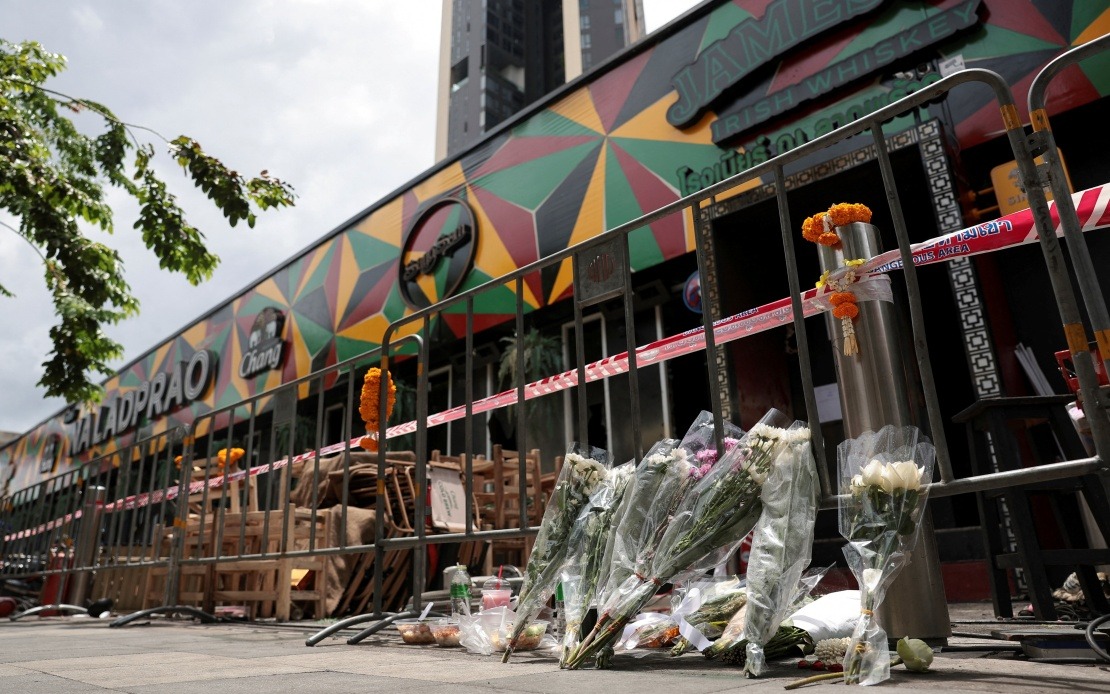
The catastrophic fire that engulfed a Bangkok entertainment establishment on Monday night continues to claim lives, with authorities confirming on Wednesday that the death toll has climbed to 32. Two critically injured victims succumbed to their injuries at separate hospitals, marking another grim chapter in what has become Thailand's deadliest entertainment venue fire in recent memory. The Bangkok Emergency Medical Centre, commonly referred to as the Erawan Centre, disclosed that the latest fatalities occurred at Paolo Kaset Hospital and Nopparat Rajathanee Hospital, bringing the total number of those who died after hospitalization to five.
The blaze, which erupted shortly before midnight at Rong Beer Na Lat Phrao in the Chatuchak district, sent shockwaves through the Thai capital and prompted an immediate government response. The timing of the fire, occurring during late evening hours when the venue would have been densely populated, created a catastrophic scenario where patrons faced severe challenges in evacuating quickly and safely. Current medical assessments indicate that beyond the 32 fatalities, the incident has left a substantial injured population struggling with burn injuries and smoke inhalation trauma. As of Wednesday morning, the Erawan Centre reported 79 people had sustained injuries, with 44 having been released from medical care and 30 remaining hospitalized, including 15 confined to intensive care units.
Thailand's Prime Minister Anutin Charnvirakul responded swiftly to the tragedy by issuing directives that extend far beyond the immediate investigation. On Tuesday, he tasked the Ministry of Interior with executing comprehensive nationwide inspections of buildings and entertainment establishments, recognizing that this disaster may indicate systemic safety vulnerabilities across the country's hospitality and entertainment sectors. This coordinated approach involves multiple government agencies including the Bangkok Metropolitan Administration, local administrative bodies, the Department of Public Works and Town & Country Planning, and the Royal Thai Police, suggesting authorities view this as a widespread problem requiring immediate remedial action.
Investigators have begun examining several critical factors that may have contributed to the fire's rapid spread and the difficulty in evacuating patrons. Among the primary areas of concern are blocked or inadequate emergency exits, which would have severely hampered evacuation efforts during the crucial early minutes of the fire. The presence of flammable interior materials and furnishings throughout the venue is also under scrutiny, as such materials are known to accelerate fire spread and intensify heat and smoke production. Additionally, authorities are investigating possible electrical faults, which represent a common ignition source in commercial establishments that may have inadequate electrical maintenance protocols.
For Malaysian readers and businesses operating across Southeast Asia, this tragedy underscores persistent vulnerabilities in how entertainment and hospitality venues manage fire safety across the region. Many establishments throughout Malaysia, Thailand, and neighboring countries continue to operate with aging infrastructure, poorly maintained emergency systems, and interiors designed primarily for aesthetics rather than occupant safety. The incident serves as a stark reminder that regulatory compliance and safety inspections, while mandatory in principle, often lack sufficient enforcement rigor to prevent disasters of this magnitude.
The scale of Thailand's government response also reflects the political sensitivity surrounding such incidents. Mass casualty events in entertainment venues generate intense public scrutiny and media attention, compelling political leaders to demonstrate decisive action. Thailand's Prime Minister's immediate directive for nationwide inspections sends a clear message to provincial and municipal authorities that entertainment venue safety will receive heightened oversight in the coming weeks and months. This approach parallels similar crackdowns implemented in other jurisdictions following major disasters, though the effectiveness of such exercises often depends on whether they lead to sustained institutional changes or fade once media attention subsides.
The incident raises important questions about liability and accountability within Thailand's entertainment sector. Venue operators, building owners, and regulatory agencies will face considerable pressure to explain how such a deadly fire occurred and what systemic failures allowed it to claim so many lives. Insurance providers and legal authorities will likely become deeply involved in determining responsibility, potentially establishing precedents that reshape how entertainment venues across the region approach safety compliance and risk management.
For Malaysian hospitality and entertainment businesses, the Bangkok fire presents an opportunity to conduct voluntary safety audits before authorities mandate formal inspections. Many establishments could benefit from professional fire safety assessments, ensuring that emergency exits remain unobstructed, fire suppression systems function properly, and staff possess adequate emergency response training. The reputational and legal risks associated with inadequate safety measures far exceed the costs of preventive measures and regular maintenance.
The recovery process for survivors and families will likely extend far beyond the immediate medical treatment phase. Psychological trauma, financial losses, and long-term physical rehabilitation will affect hundreds of individuals and families for years to come. Thai authorities and civil society organizations will need to coordinate support services encompassing mental health counseling, compensation mechanisms, and community support programs. The broader tourism industry in Thailand may also face challenges, as such incidents can deter international visitors and impact business confidence across the sector, with potential ripple effects throughout Southeast Asia's interconnected tourism economy.

