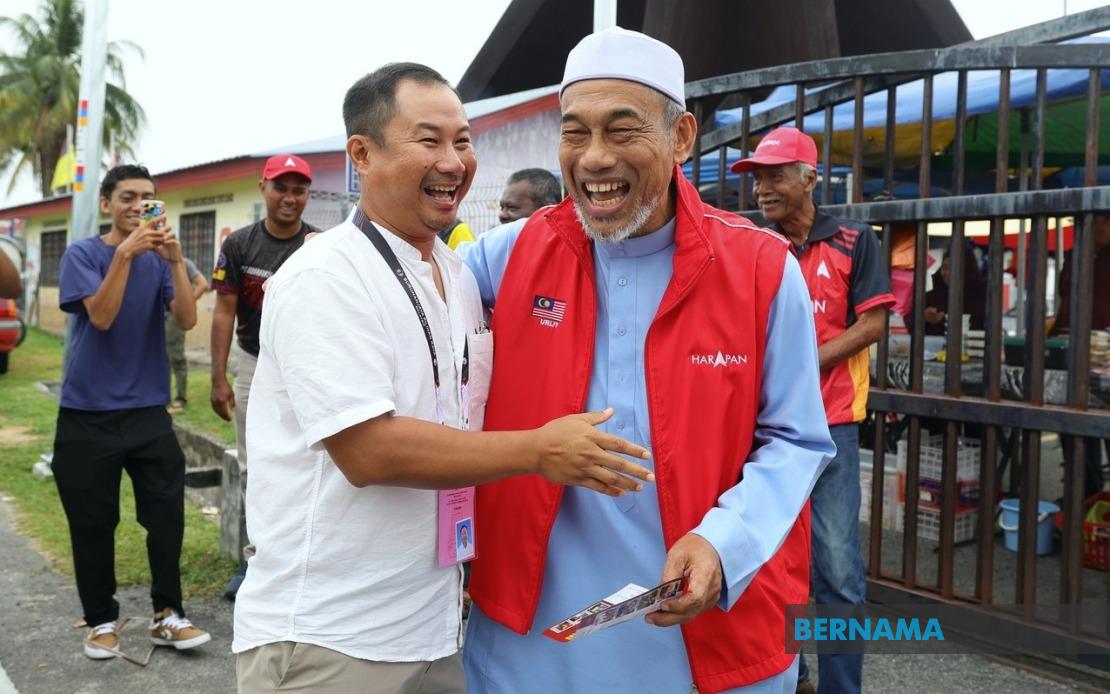
Datuk Bakri Sawir is banking on his established presence and consistent community involvement to retain the Klawang state seat in the 16th Negeri Sembilan State Election scheduled for August 1. The Pakatan Harapan candidate, who has served two consecutive terms since 2018, contends that his demonstrated commitment to grassroots politics distinguishes him from challengers in what has become a three-way contest.
At 67 years old, Bakri has made accessibility a defining feature of his political practice. Rather than expecting constituents to visit his service office, he makes it a point to travel directly to residents' homes to understand their needs and provide assistance. This approach reflects a philosophy he has maintained throughout his tenure, one that he believes has enabled him to build genuine relationships within the relatively compact electoral base of fewer than 14,000 voters in Klawang.
A critical advantage Bakri claims is his decision to reside permanently within the constituency, a choice that allows him to remain available to residents beyond the typical campaign cycle. He frames this as fundamentally different from representatives who emerge into public view primarily during election periods. During his market canvassing in Pekan Kuala Klawang, he articulated this distinction plainly, suggesting that voters should evaluate the depth of engagement shown by incumbents over their full terms rather than during the compressed election season.
Bakri's campaign messaging also incorporates a moral dimension to political service. He has consistently stated that he views politics as a platform for community welfare rather than personal advancement, framing his work through a lens of religious devotion. He expressed willingness to respect voters who choose alternative candidates, treating political disagreement as a legitimate expression of democratic choice rather than personal rejection. This measured tone appears designed to maintain goodwill even among those who do not support him.
Looking beyond his re-election campaign, Bakri has articulated a vision for Klawang's longer-term development that extends across multiple policy areas. His most ambitious proposal involves establishing a higher education institution within Jelebu district, a concept he has pursued for some years. He previously championed the creation of Universiti Malaysia Negeri Sembilan, recognising that access to tertiary education within the district would address human capital constraints. While acknowledging current fiscal limitations that make this objective difficult to achieve, he has indicated his intention to continue advocating for this initiative if re-elected.
In the near term, Bakri is focusing on infrastructure and tourism-related projects with more immediate implementation possibilities. He is advancing plans for a Rest and Recreation Area facility in Tembun, within the Hulu Klawang area, viewing this as an opportunity to enhance the district's appeal to travellers. By developing better stopover infrastructure, he anticipates increased visitor traffic that would generate economic activity for local residents and businesses.
A second tourism initiative targets Bukit Tajali, which Bakri envisions transforming into a comprehensive recreational park offering diverse activities. This development would position the location as both a leisure destination and an adventure tourism venue, broadening its appeal beyond traditional day-trippers. Such projects reflect recognition that rural constituencies like Klawang require deliberate investment in economic diversification beyond traditional agricultural and resource extraction sectors.
Bakri also intends to capitalise on Jelebu's agrotourism potential by leveraging the historical significance of the British Memorial Stone located in the area. This approach represents an effort to blend heritage conservation with income generation, allowing the district to monetise its historical assets while maintaining their cultural value. Tourism-oriented development strategies have gained traction across Malaysian rural constituencies as alternatives to declining primary industries.
The Klawang seat features competitive three-way contest against Danni Rais, 38, representing Perikatan Nasional, and Muhammad Adib Musa, 25, from Parti Pribumi Bersatu Malaysia. The emergence of multiple challengers reflects broader political dynamics in Negeri Sembilan, where support for different coalitions remains contested. The younger age of some challengers suggests attempts to appeal to voters seeking generational change, contrasting with Bakri's emphasis on experience and established relationships.
The state election context involves 889,490 registered voters across Negeri Sembilan, with early voting scheduled for July 28 preceding the August 1 polling day. The electoral roll comprises 867,151 ordinary voters alongside 16,884 military personnel and their spouses, plus 5,455 police personnel eligible for early voting. This composition reflects Negeri Sembilan's demographic structure and the presence of significant security force populations typical of peninsular Malaysian states.
Bakri's campaign strategy reveals broader patterns in Malaysian electoral politics at the state level, where local service delivery and personal accessibility remain powerful differentiators. His emphasis on door-to-door engagement and long-term residence within the constituency suggests that grassroots politics, despite modern communication technologies, continues to influence voter behaviour in constituencies with smaller electorates. For Malaysian voters in comparable rural and semi-rural constituencies, the election offers a choice between continuity represented by an experienced incumbent and change represented by younger challengers aligned with different political coalitions.

