Bahrain's government is signalling financial stability by resisting the need to draw on emergency liquidity facilities, even as the Gulf state grapples with the economic fallout from escalating regional tensions. Development Minister Noor bint Ali Alkhulaif confirmed this week that Bahrain has not activated the $5.3 billion currency swap agreement it secured with the United Arab Emirates in April, despite external headwinds that have compressed the kingdom's foreign exchange reserves to their lowest level since the COVID-19 pandemic.
The decision to preserve the swap line intact carries symbolic weight at a moment when Bahrain faces mounting economic pressures. Credit rating agency S&P Global projects a three percent economic contraction this year alongside a fiscal deficit approaching eight-and-a-half percent of gross domestic product, consequences of renewed hostilities in the region that have disrupted trade flows and investor confidence. These forecasts underscore the genuine challenges confronting policymakers, who had hoped this year would mark the beginning of a stabilisation period following years of managing one of the Gulf's heaviest debt burdens.
The timing of Alkhulaif's remarks proved particularly candid, coming just as fresh tensions flared in the region. The minister acknowledged that the escalating security situation represented a significant departure from original planning, characterising it as unfortunate rather than catastrophic. Yet her underlying message stressed adaptation and recovery momentum already taking hold across key economic sectors, reflecting official confidence that the immediate crisis will not derail longer-term development objectives.
Manufacturing and logistics enterprises have begun routing shipments around the Strait of Hormuz to mitigate exposure to shipping risks, a workaround that demonstrates business resilience despite disruption. Equally important for Bahrain's tourism-dependent economy, regional visitor numbers have recovered to near pre-conflict levels, approaching the ninety percent share of international arrivals that characterised last year's 15 million total visitors. This recovery in leisure travel suggests that, despite headlines and security concerns, confidence among Gulf nationals—the kingdom's primary tourist demographic—remains sufficiently intact to sustain near-normal visitation patterns.
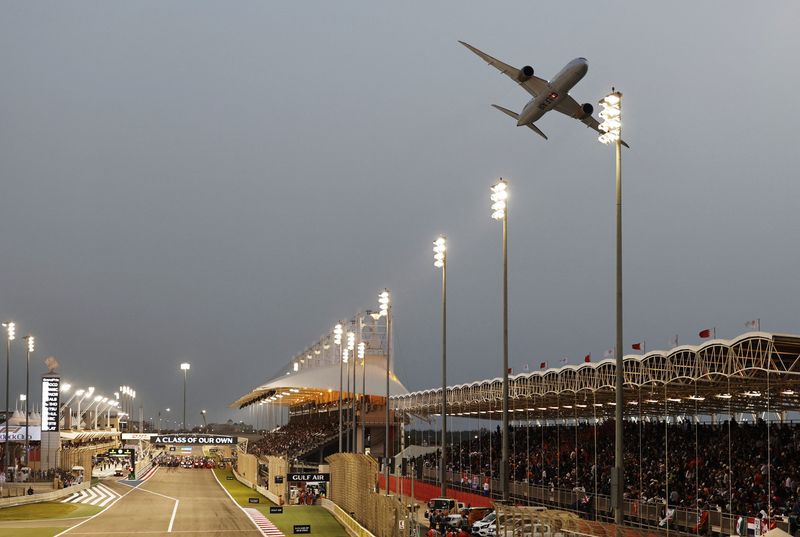
Beyond immediate economic management, Bahrain is pursuing the restoration of its cancelled Formula One Grand Prix to this year's calendar, a development that would inject both revenue and international attention into the flagging economy. The race was suspended in March alongside Saudi Arabia's inaugural event when regional hostilities erupted. Formula One sources indicate that the most feasible weekend for reinstatement is October 3-4, positioned between the Azerbaijan Grand Prix in Baku and Singapore's race on October 11, a narrow window that reflects the tight scheduling constraints facing the championship.
For a country heavily dependent on tourism and international events, the F1 Grand Prix represents far more than a sporting spectacle. The weekend typically draws around 105,000 spectators, with international high-spending visitors comprising ten to fifteen percent of attendance—visitors who distribute substantial discretionary expenditure across hotels, restaurants, and retail sectors. The cancellation therefore dealt a material blow to the 2024 calendar, and restoration would provide a meaningful boost to hospitality revenues and brand positioning.
Alkhulaif confirmed that discussions are actively underway to reschedule cancelled races, though she cautioned that no formal confirmation has been received. The success of these negotiations depends substantially on the evolution of regional tensions. Formula One sources have indicated that teams will require clarity relatively soon to arrange necessary logistical preparations, creating pressure for political decision-making to align with the sporting calendar's constraints.
Looking beyond the immediate crisis, Bahrain has positioned itself to reclaim the opening race of the 2026-27 F1 season, a prestigious designation that would ordinarily secure the kingdom headline attention at the championship's outset. The timing aligns favourably with the Islamic calendar cycle, as Ramadan will occur earlier in 2026, allowing the race to proceed without the scheduling complications that periodically affect events held during the holy month. Pre-season testing rounds would similarly revert to Bahrain, reinforcing the kingdom's status as a fixture in F1's operational calendar.
The broader context reveals Bahrain navigating a delicate balance between fiscal prudence and economic stimulus. By declining to activate the UAE currency swap at a moment when reserves have fallen to crisis-era lows, policymakers are signalling confidence in underlying economic fundamentals and their capacity to manage near-term challenges through operational measures rather than emergency borrowing. This posture may also reflect calculations about the political messaging embedded in accessing bilateral financial support during a period of heightened regional competition.
The Iran-related conflict that triggered the initial cancellations remains the critical variable determining outcomes across multiple fronts. Any escalation would inevitably complicate both the F1 negotiations and the broader recovery narrative. Conversely, any easing of tensions would reinforce Alkhulaif's optimistic assessment regarding tourism recovery and business adaptation. For Malaysian and regional observers, Bahrain's approach offers lessons in crisis communication and maintaining international engagement during periods of genuine economic stress.
Bahrain's experience also illustrates the interconnectedness of Gulf economies and their vulnerability to regional security developments. The kingdom's ability to avoid drawing on emergency liquidity suggests that the economic shock, while material, remains manageable through operational adjustments and the demonstrated resilience of core business sectors. However, continued exposure to regional tensions means that circumstances could shift rapidly, potentially forcing activation of financial backstops if conditions deteriorate further.

