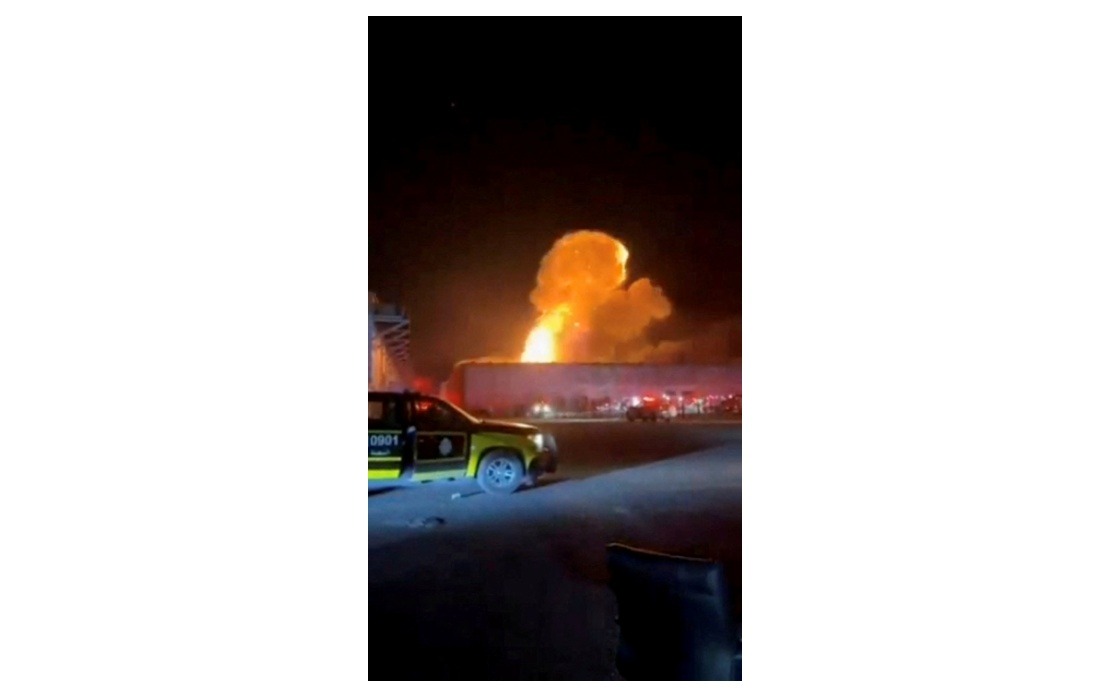
The Gulf region experienced a sharp spike in military tensions on Friday morning as Bahrain, Qatar and Kuwait simultaneously activated emergency warning systems in response to incoming missile and drone attacks, according to reports from Turkish news agency Anadolu. The coordinated alerts underscored the precarious security situation facing multiple nations across the Arabian Peninsula, where the presence of American military assets continues to draw hostile attention from Tehran.
Bahrain's Interior Ministry was among the first to respond, activating air raid sirens across the kingdom and instructing residents to proceed immediately to the nearest available shelter or safe area. The decision to sound public warnings suggested authorities had assessed the threat as sufficiently credible to warrant civilian protective measures, marking an escalation from routine security protocols that typically operate without public-facing emergency signals.
In neighbouring Qatar, officials similarly advised residents to remain indoors and seek protection in designated safe zones, with the Interior Ministry explicitly characterizing the security threat level as elevated. The simultaneous nature of alerts across multiple states suggested a coordinated or widespread attack rather than an isolated incident, prompting authorities to err on the side of caution in protecting civilian populations from potential casualties.
Kuwait faced the most direct military engagement, with the country's air defense systems actively engaging hostile airborne targets throughout the incident. Warning sirens sounded across Kuwaiti territory as the Interior Ministry instructed the public to shelter in place and comply with official instructions. The Kuwaiti army subsequently confirmed that the country's military air defense apparatus had responded to incoming missile and unmanned aerial vehicle strikes, though officials refrained from disclosing specific details regarding the nature, origin or scale of the attack.
According to reporting from regional sources, Iran's military apparatus had launched the drone strikes with American military installations in Bahrain as the stated target. The Iranian action represented the latest manifestation of a broader escalation cycle that has characterized relations between Tehran and Washington throughout the year, with each side retaliating for perceived provocations with military strikes that increasingly threaten civilian populations in the Gulf.
The current flare-up must be understood within the context of a conflict timeline extending back to late February, when American and Israeli forces executed a joint military offensive against Iranian targets. Iran subsequently retaliated with coordinated barrages of missiles and drones aimed at American military installations and Israeli interests, with several weapons transiting through airspace above Gulf nations, thereby placing those countries at direct risk from both the initial attacks and potential collateral damage from air defense operations.
For Malaysian observers and policymakers, these developments carry significant implications. As a maritime trading nation whose economic lifelines depend heavily on unimpeded passage through the Strait of Hormuz, Malaysia faces direct exposure to disruptions caused by regional military escalation. Any serious interruption to shipping lanes through the waterway could disrupt Malaysian trade patterns, raise insurance costs, and affect energy security for regional economies that depend on reliable oil and gas flows.
Despite some progress toward de-escalation, recent diplomatic efforts have proven insufficient to prevent renewed military confrontation. Iran and the United States had reached a preliminary agreement brokered by Pakistan in recent weeks, establishing a framework intended to terminate their acute phase of conflict and establish pathways toward sustainable peace. However, the framework appears to have been tested and ultimately undermined by renewed tactical clashes centred on the Strait of Hormuz, where both Tehran and Washington have engaged in tit-for-tat military operations that keep the region in a state of heightened alert.
The recurrence of large-scale attacks despite diplomatic engagement highlights the fragility of the current security architecture in the Gulf. Neither side has demonstrated sufficient restraint or trust to maintain the ceasefire parameters established through Pakistani mediation. Instead, both Tehran and Washington appear locked in a pattern of action and counteraction that risks inadvertent escalation toward broader conflict.
For the smaller Gulf states caught in the crossfire—Bahrain, Qatar and Kuwait—these incidents impose severe costs in terms of civilian anxiety, economic disruption and military readiness. Each alert forces diversion of resources to emergency response, strains public services, and undermines investor confidence in regional stability. Bahrain, which hosts the United States Fifth Fleet, faces particular vulnerability as a repeat target for Iranian retaliation operations.
The situation also underscores the limitations of relying on air defense systems alone to manage regional security challenges. While Kuwait's air defense apparatus successfully engaged incoming threats, the necessity of sounding public alarms suggests that at least some weapons penetrated outer defensive layers, creating genuine civilian risk. As both sides continue acquiring more sophisticated weapons systems, the adequacy of existing air defense networks will face increasingly severe testing.
Regional analysts note that the current trajectory, if unchecked, could eventually provoke broader involvement from other international actors—whether regional powers like Saudi Arabia and the United Arab Emirates, or external stakeholders concerned with maintaining maritime security. Malaysia, as a Southeast Asian nation with significant maritime interests, remains indirectly affected by every escalation cycle in the Persian Gulf, making resolution of these underlying conflicts a matter of genuine national interest.

