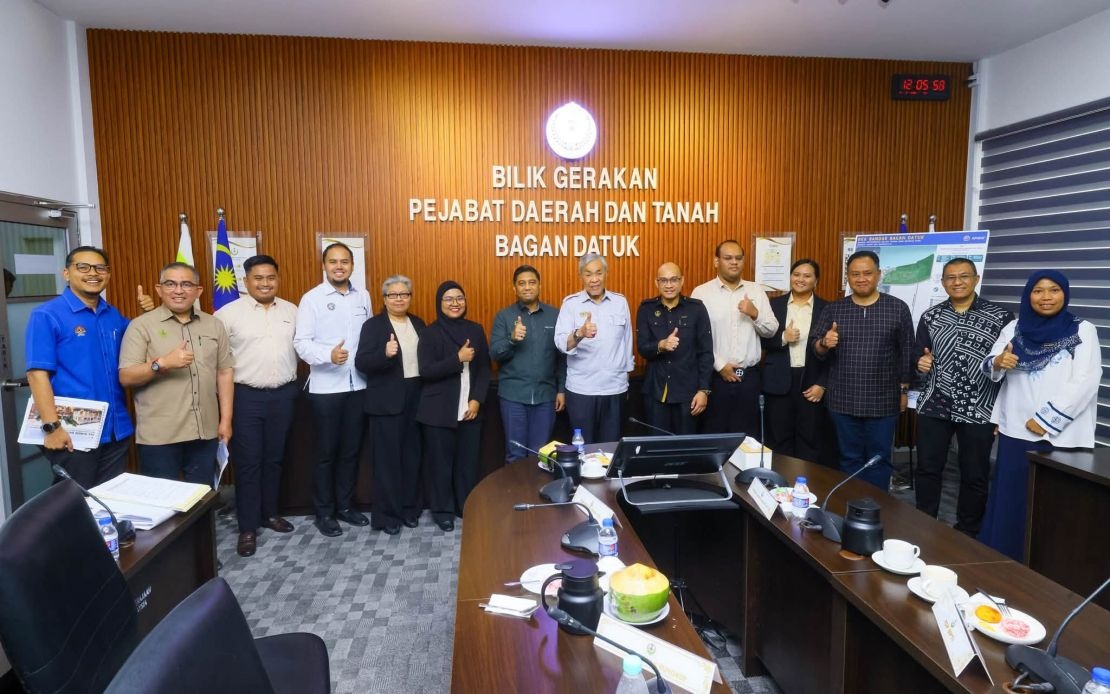
Deputy Prime Minister Datuk Seri Dr Ahmad Zahid Hamidi has unveiled a comprehensive vision for transforming Bagan Datuk into a thriving administrative centre that balances modern development with quality living standards. Speaking in his capacity as both the area's Member of Parliament and a local resident, Zahid emphasised that the Perak constituency possesses untapped potential that, if properly harnessed, could reshape the region's economic and social landscape.
Zahid's remarks follow a substantive engagement with the Teluk Intan Municipal Council, the Bagan Datuk District Office, and land administration authorities, where officials presented findings from a special area plan study. This collaborative approach signals recognition that transforming the district requires coordination across multiple government tiers and specialist consultancy input. The special area plan (RKK) framework represents a formal mechanism for translating aspirational goals into actionable development strategies.
The Deputy Prime Minister's conceptualisation of Bagan Datuk as a "park-integrated administrative town" reflects contemporary urban planning philosophy emphasising green spaces, sustainability, and livability. This terminology indicates movement away from conventional industrial-era town development towards mixed-use environments that prioritise resident wellbeing. The emphasis on distinctive character suggests resistance to generic suburban sprawl, potentially positioning Bagan Datuk as a model for second and third-tier Malaysian towns seeking to compete for talent and investment.
For Malaysian policymakers and regional observers, Zahid's pronouncements carry particular significance given his dual authority as Deputy Prime Minister and constituency representative. His personal identification as a "native of Bagan Datuk" lends authenticity to development rhetoric frequently dismissed as hollow political messaging. This localised stake in outcomes may encourage more substantive follow-through than typical political declarations.
The infrastructure dimension proves crucial for Southeast Asian towns competing in increasingly mobile labour markets. Quality facilities and modern infrastructure function not merely as amenities but as essential competitive factors attracting skilled workers, entrepreneurs, and investment capital away from established metropolitan centres. Bagan Datuk's positioning near Teluk Intan places it within the broader Perak development corridor, potentially enabling synergies with neighbouring municipalities and existing economic zones.
The reference to "broader economic opportunities" suggests strategic thinking beyond conventional administrative functions. Rather than envisioning Bagan Datuk solely as a government service hub, planners appear to contemplate diversified economic bases incorporating commerce, light manufacturing, and perhaps technology-enabled sectors. This diversification imperative reflects lessons learned from Malaysian towns historically dependent on single industries or government employment.
Zahid's emphasis on consulting local communities and incorporating their needs into planning processes addresses a frequent criticism of top-down development initiatives. The specific mention of listening to stakeholders and ensuring development "ultimately benefits the people" acknowledges that administrative and infrastructural improvements require grassroots buy-in to succeed. This consultative framing may indicate genuine commitment to inclusive development or represent standard political communication strategy; the subsequent implementation will determine credibility.
For Perak specifically, which has historically experienced slower economic growth than Selangor and Kuala Lumpur-centric development, initiatives like the Bagan Datuk special area plan represent meaningful attempts to decentralise prosperity. The state has sought to diversify beyond agricultural and mining economies that once dominated, positioning towns like Bagan Datuk as components of broader regional rebalancing.
The timeline for realising this vision remains unspecified, a common feature of Malaysian political development announcements. Special area plans typically require 2-5 years for detailed design and preliminary implementation frameworks, yet physical transformation often spans decades. Monitoring progress through concrete milestones—infrastructure commencement dates, business licensing reforms, housing approvals—will demonstrate whether aspirational rhetoric translates into tangible change.
For businesses and residents considering Bagan Datuk investment, the special area plan process creates both opportunity and uncertainty. Early movers may benefit from improving infrastructure and government priorities, yet premature commitment risks exposure to lengthy planning cycles and potential design revisions. The Deputy Prime Minister's involvement may accelerate bureaucratic processes and secure necessary funding allocations, providing competitive advantages unavailable in towns lacking such high-level political backing.
Zahid's vision aligns broadly with federal initiatives promoting regional development outside the Klang Valley-Selangor corridor. Nevertheless, Bagan Datuk's ultimate success depends less on political enthusiasm than on concrete policy decisions: tax incentives for businesses, housing regulations, transportation connectivity to Kuala Lumpur and other centres, and educational/healthcare facility development. The special area plan study will reveal whether planners have addressed these fundamental requirements.
Southeast Asian regional context matters too. As other nations pursue similar decentralisation strategies—Thailand's Eastern Economic Corridor, Indonesia's new capital Nusantara, Vietnam's satellite cities—Malaysian towns face intensifying competition for investment and talent. Bagan Datuk's positioning as a livable, economically vibrant administrative centre represents a necessary, if incremental, response to these competitive pressures.
The coming months will determine whether the special area plan translates political will into implementable framework. Success would validate Zahid's vision and potentially establish a replicable model for other Malaysian constituencies, while failure would reinforce scepticism surrounding development announcements. For Bagan Datuk residents and stakeholders, the outcomes will significantly influence regional prosperity trajectories.

