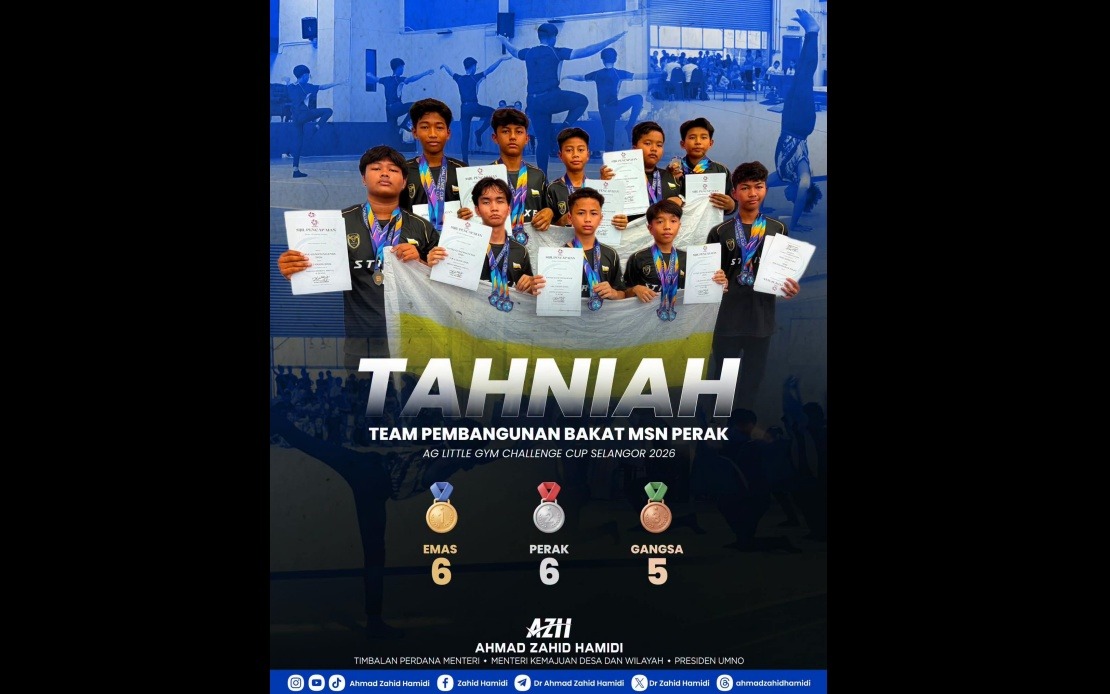
Young gymnasts from Bagan Datuk have etched their names into local sporting history after delivering an exceptional performance at the AG Little Gym Challenge Cup Selangor 2026, held in Kajang on August 1. The team's remarkable haul of six gold medals, alongside six silver and five bronze medals, demonstrates the calibre of athletic talent emerging from the district. The success has sparked celebrations among local leaders and the broader community, with recognition coming from the highest levels of government.
Deputy Prime Minister Datuk Seri Dr Ahmad Zahid Hamidi, who represents Bagan Datuk as Member of Parliament, took to social media to publicly commend the young athletes. In a Facebook post, he described himself as "very proud" to learn of the team's achievements, framing their medals as a source of regional honour. His endorsement underscores how Malaysian political leaders view sporting accomplishments as reflections of constituency pride and national capability.
What sets this achievement apart is its significance within the broader narrative of youth development in Bagan Datuk. Ahmad Zahid emphasised that the young gymnasts have not only demonstrated academic excellence but have proven themselves capable competitors in the sporting arena when afforded adequate resources, expert instruction, and parental encouragement. This observation touches on a persistent challenge in Malaysian sports development: the need for sustained investment in infrastructure, coaching, and talent identification outside major urban centres.
The Bagan Datuk Generasi Muda Gymnastics Club, which oversees the team, released their own statement celebrating the milestone. Their post highlighted the individual qualities that contributed to success—perseverance, self-discipline, and an unwavering commitment to continuous improvement. Notably, the club framed the medal tally not as a final destination but as a stepping stone toward even greater achievements, reflecting a development philosophy focused on long-term progression rather than one-off victories.
Gymnastics in Malaysia has historically been concentrated in well-resourced urban areas, particularly in the Klang Valley and major cities. The emergence of a competitive team from Bagan Datuk, a district in Perak known more prominently for agriculture and palm oil production than sports infrastructure, suggests that grassroots development initiatives may be gaining traction beyond traditional sporting hubs. This geographic diversification of athletic talent is significant for national competitiveness.
The medal breakdown itself tells an interesting story. The six gold medals represent the team's absolute dominance in certain categories or age groups, while the balanced distribution of silver and bronze medals indicates depth across the squad rather than reliance on a handful of exceptional individuals. This pattern suggests a sustainable talent pipeline, which is crucial for medium-term planning in any sport seeking consistent international representation.
Coaching quality and parental involvement emerge as critical factors in the success narrative. The Generasi Muda Club's acknowledgement of coaches and parents reflects the reality that competitive gymnastics success depends on a supportive ecosystem extending far beyond the athlete. Malaysian gymnastics has historically struggled to retain talented young performers past secondary school, often due to competing academic and family pressures. Recognition of parental and coaching contributions helps normalise the commitment gymnastics demands.
For Malaysian gymnastics federations and state sports councils, the Bagan Datuk result offers a template worth studying. Developing talent outside major metropolitan areas requires targeted investment in coaching education, equipment provision, and competition opportunities. The club's success suggests these elements may already be in place, at least partially, in this district.
The timing of this achievement also matters politically and socially. Highlighting sporting excellence from smaller districts helps counter perceptions that only Kuala Lumpur and Selangor's major urban centres possess world-class athletic facilities and programmes. This geographic inclusivity matters for national morale and for encouraging young Malaysians in less urbanised areas to pursue sports seriously.
Looking forward, the challenge for Bagan Datuk's gymnasts involves consolidating these gains. Regional competition success must translate into national-level opportunities and potential international exposure. Many talented young athletes at the state and regional level plateau when progressing to national championships, where competition becomes significantly stiffer and training demands intensify dramatically.
The Generasi Muda Club's statement about returning "stronger" suggests organisational ambition that extends beyond single competitions. Sustained excellence requires continuous evolution—upgrading facilities, recruiting better coaching talent, and maintaining athlete motivation through challenging development phases. Success at one regional event, while noteworthy, represents only the beginning of a potentially longer journey.
For the Malaysian sports ecosystem, the Bagan Datuk story reinforces an important principle: talent exists throughout the country, not merely in established sporting capitals. What varies is access to development pathways. As states like Perak strengthen their grassroots sports programmes, we can expect more unexpected successes emerging from outside traditional strongholds. This diversification ultimately strengthens Malaysian sport nationally.

