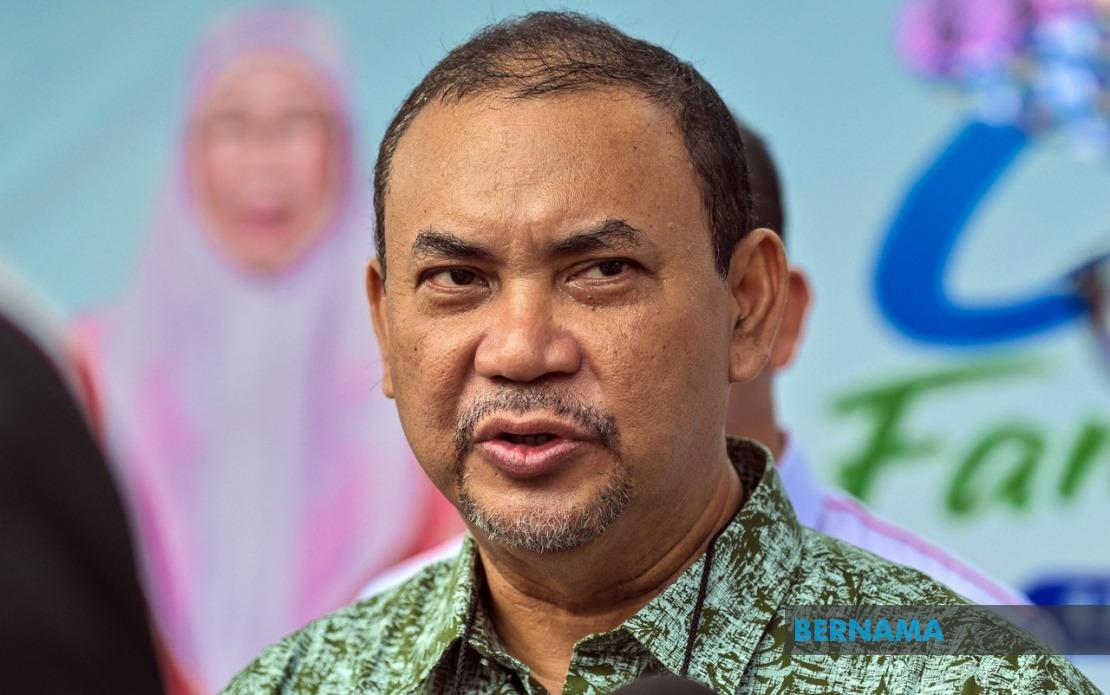
Datuk Azman Abidin, who recently took on the role of Ampang Parliamentary Constituency Coordinator and serves as Prime Minister Datuk Seri Anwar Ibrahim's Political Secretary, has announced a comprehensive framework aimed at improving how government welfare reaches residents in the constituency. The appointment signals a deliberate effort by the Prime Minister's office to strengthen the delivery mechanisms for social assistance programmes across parliamentary constituencies, using the Ampang constituency as a model for more structured and accountable welfare distribution.
Azman's commitment encompasses a multi-agency coordination strategy that leverages the Implementation Coordination Unit (ICU) housed within the Prime Minister's Department. This institutional approach represents a departure from more ad-hoc assistance methods, instead establishing clear pathways and oversight mechanisms to ensure that government initiatives benefit intended recipients in Ampang. The focus on coordination signals recognition that welfare effectiveness often depends less on resource availability than on how efficiently those resources navigate bureaucratic systems and reach beneficiaries.
The formal establishment of an application channel through the Office of the Prime Minister's Political Secretary creates a centralized intake point for constituents seeking welfare-related assistance. This streamlined process potentially reduces the fragmentation that commonly occurs when residents must navigate multiple agencies or local representatives separately. By concentrating applications at the political secretary's office, the administration can maintain a comprehensive record of resident needs within the constituency, enabling data-driven policy adjustments and preventing duplicate applications or assistance gaps.
Integration with local representatives forms a critical component of Azman's strategy. The coordination framework explicitly includes assemblymen representing Ampang parliamentary constituency, community leaders, and other relevant stakeholders. This multi-level engagement acknowledges that effective welfare delivery depends on local knowledge held by elected representatives and community figures who understand specific neighbourhood challenges, vulnerable populations, and cultural contexts that might be invisible to central government mechanisms.
The emphasis on professionalism, integrity, and accountability in Azman's statement reflects broader governance concerns in Malaysia regarding welfare programme implementation. Historical challenges with patronage-based assistance distribution and political favouritism in social support have prompted greater scrutiny of how government resources reach ordinary citizens. Azman's public commitment to these principles appears designed to establish transparent performance benchmarks against which his office's work can be evaluated.
For Ampang residents, the practical implications include potentially faster processing of welfare applications and more coordinated support when cases involve multiple government programmes or agencies. Rather than seeking assistance from various departments independently, constituents can now channel applications through a single office responsible for ensuring comprehensive coordination. This approach particularly benefits individuals requiring integrated support across different government initiatives, such as housing assistance combined with healthcare or educational support.
The timing of this announcement reflects the Prime Minister's broader effort to enhance constituent service delivery across parliamentary constituencies. By establishing Azman as coordinator for Ampang specifically, the administration demonstrates commitment to personalised constituency management beyond the traditional roles of Members of Parliament. This model could potentially be replicated across other constituencies, creating a network of dedicated coordination offices that bridge central government departments and local constituencies.
From a governance perspective, this initiative addresses a fundamental challenge in federalised systems where welfare programmes operate across multiple levels of administration. Ampang constituents may currently access assistance through federal programmes, state schemes, local council initiatives, and parliamentary member discretionary funds. The new coordination framework attempts to create coherence across these fragmented sources, ensuring that beneficiaries receive optimal support without bureaucratic gaps or overlaps.
The reference to structured and efficient delivery mechanisms suggests that quantifiable performance metrics may be introduced to assess the office's effectiveness. This performance orientation contrasts with traditional patronage-based assistance and creates accountability benchmarks. Residents and observers can potentially track whether application processing times decrease, whether assistance reaches intended beneficiaries, and whether coverage of vulnerable populations improves under the new system.
Community leaders' involvement recognises that government offices alone cannot identify all residents needing assistance or understand local contexts that should inform support decisions. Religious leaders, neighbourhood association chairs, and other community figures often hold detailed knowledge about household situations, cultural needs, and informal support networks that complement formal welfare programmes. Their integration into Azman's coordination framework potentially makes assistance more culturally sensitive and contextually appropriate.
The constituency coordinator model also addresses representation challenges facing residents living outside state capitals or major urban centres. While Ampang lies within the greater Kuala Lumpur area, the dedicated coordinator structure ensures that constituents' welfare concerns receive direct political attention from someone specifically tasked with their representation. This dedicated focus potentially counterbalances the tendency of centralized government offices to prioritize administrative efficiency over individual circumstances.
Looking forward, the success of Ampang's welfare coordination framework will partly depend on inter-agency cooperation and the political capital Azman's office can exercise to expedite approvals across multiple departments. Coordination effectiveness ultimately requires willing partners in implementing agencies who treat the coordinator's office as a legitimate priority channel rather than bureaucratic interference.
For Malaysian citizens more broadly, this initiative illustrates how constituency-level administrative structures can improve public service delivery. As the model develops and generates performance data, it may inform broader civil service reforms aimed at making government assistance more accessible, transparent, and responsive to genuine resident needs rather than political considerations.

