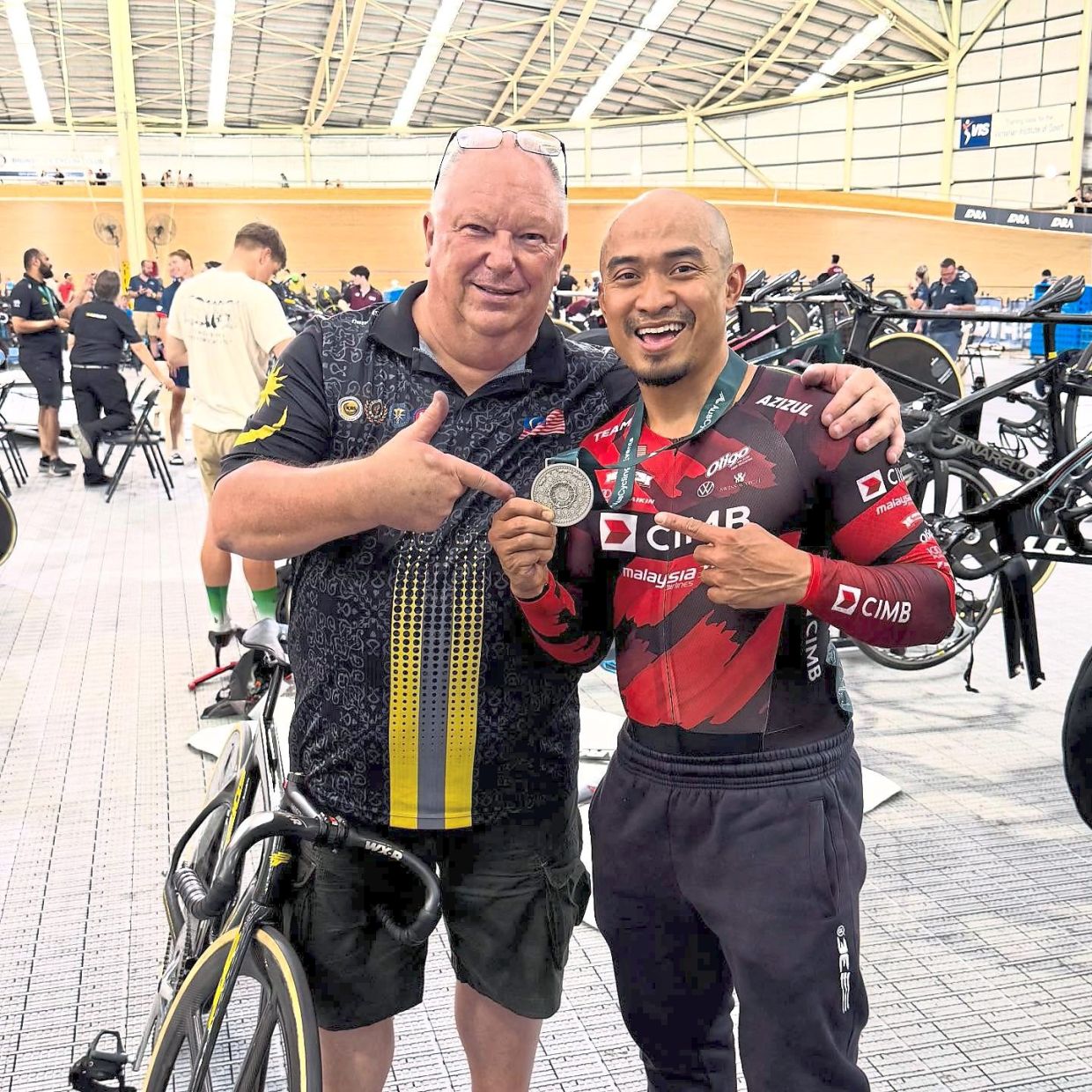
National track cyclist Azizulhasni Awang has waded into the current controversy surrounding technical director John Beasley with eyes wide open to the consequences, acknowledging that his public support for the Australian coach could make him a target for those harbouring grievances against the federation's leadership. The Tokyo 2020 Olympics silver medallist has signalled his willingness to accept whatever personal blowback may follow, provided he remains true to his convictions about Beasley's significant contributions to Malaysian track cycling over two decades.
Azizul's candid admission about the potential fallout reflects the polarised climate within Malaysian cycling, where Beasley's tenure has become a flashpoint for debate. By stepping forward to defend the technical director, the accomplished sprinter has aligned himself with a position that carries real reputational risk. He understands that in the event of disappointing performances at the upcoming Commonwealth Games and Asian Games, he himself may face harsh scrutiny and public criticism alongside Beasley, a scenario he has already mentally prepared himself to endure.
The cyclist's resilience in the face of anticipated attacks appears rooted in his conviction that he is acting from a place of principle rather than self-interest. Azizul has made clear that defending individuals he believes have genuinely advanced Malaysia's cycling programme is a matter of personal integrity, regardless of the professional consequences. His willingness to absorb potential retaliation speaks to his confidence in the righteousness of his position, even if others in the cycling community disagree sharply with his assessment of Beasley's record.
For Malaysian sports observers, Azizul's intervention adds a significant dimension to an already complex internal dispute. The two-time Olympic medallist carries considerable credibility within domestic cycling circles, having been one of the primary beneficiaries of the track cycling system that Beasley helped establish. His voice carries weight precisely because his success is inseparable from the technical director's contributions to the programme. This dynamic makes his public backing of Beasley particularly consequential, though it also exposes him to claims of bias or personal loyalty overriding objective assessment.
Azizul has framed his decision through a spiritual lens, invoking Islamic principles to explain his steadiness in the face of adversity. He has stated that he holds no fear because he places his trust in divine will and believes that any decision made with sincere intention ultimately rests in a higher power's hands. This philosophical stance provides him with psychological armour against the doubt and intimidation that might otherwise shake someone defending a controversial figure in a high-pressure sporting environment.
The controversy that prompted Azizul's defence stems from recent public criticism of Beasley by individuals affiliated with state cycling bodies. The Malaysia National Cycling Federation responded by announcing that two individuals from state affiliates would receive show-cause letters for their public condemnation of the technical director. The federation's position, as articulated by president Datuk Amarjit Singh Gill, emphasised that such criticism breaches proper administrative protocols by circumventing official channels, thereby damaging the national body's standing and credibility.
This disciplinary approach underscores a fundamental tension within Malaysian sports governance—the balance between protecting institutional reputation and permitting internal dissent. Beasley's two decades of service have undeniably shaped Malaysian track cycling into a competitive force capable of producing world-class athletes, yet questions about his methods or decisions clearly exist among some stakeholders. Azizul's emergence as a vocal defender may signal a broader attempt to rally support for the technical director from prominent athletes whose careers have benefited from his programmes.
For Malaysian cycling enthusiasts and regional sports analysts, Azizul's stance carries implications beyond his personal standing. The athlete's resolute commitment to supporting Beasley regardless of competitive outcomes suggests a long-term view of the sport's development that transcends immediate results. This perspective—prioritising systemic stability and the preservation of institutional expertise over reactive demands for change—represents a significant statement about how elite athletes envision their sport's governance during periods of turbulence.
Looking ahead to the Commonwealth Games and Asian Games, the spotlight will fall heavily on outcomes achieved under the current technical direction. Azizul has made explicit his focus on ensuring smooth preparations for these major competitions while appealing for unified support from all stakeholders. His public positioning as both a defender of the system and a committed competitor attempting to deliver success creates interesting narrative dynamics for these tournaments, where his individual performances will inevitably be read as implicit commentary on the Beasley-led programme's effectiveness.
The cyclist's acknowledgement that disappointing results might invite criticism—directed at both Beasley and himself—demonstrates maturity about the stakes involved. Rather than presenting his defence as unconditional or immune to evidence, Azizul has explicitly tied his support to faith and principle while remaining realistic about accountability mechanisms in competitive sport. This nuanced position may resonate with observers who recognise both Beasley's legitimate contributions and the legitimate scrutiny that any long-serving technical official must endure.
Ultimately, Azizul's intervention represents an attempt to reframe discussions about Beasley away from personalised attacks conducted through informal channels and toward substantive assessment of outcomes and institutional processes. Whether his voice proves sufficient to stabilise the environment for the upcoming Games remains uncertain, but his willingness to absorb personal risk in defence of institutional interests marks a notable moment in Malaysian cycling's contemporary history.