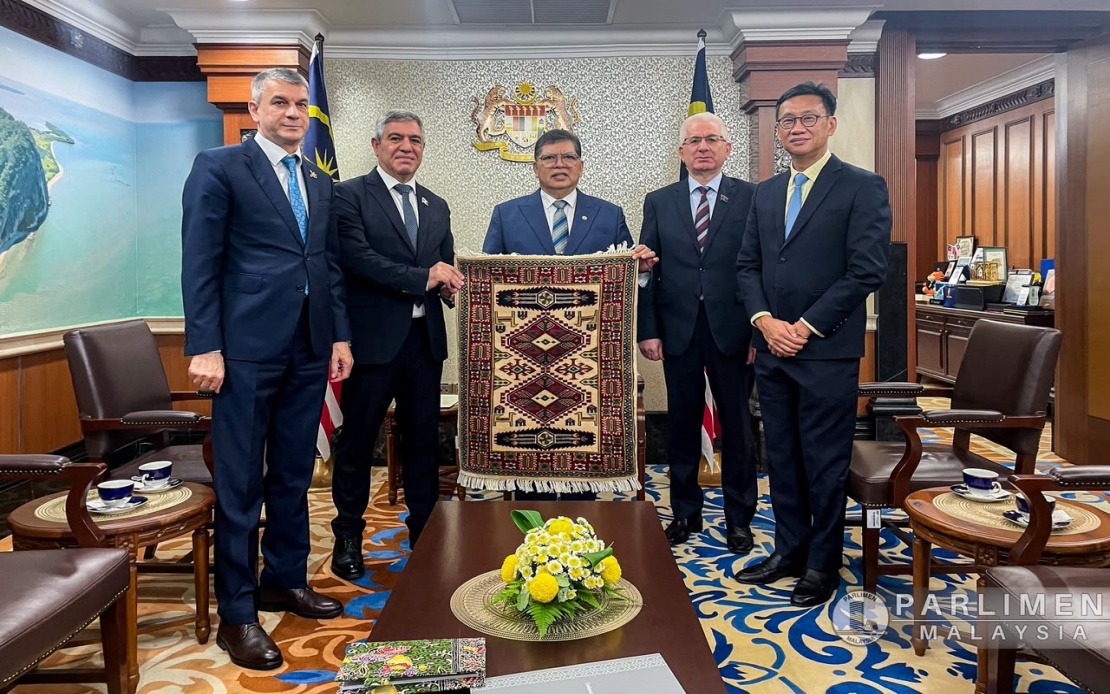
A delegation of Azerbaijani parliamentarians recently travelled to Malaysia on a working visit aimed at consolidating parliamentary cooperation and unlocking fresh avenues for economic collaboration between the two nations. Led by Vugar Bayramov, head of the Working Group for Azerbaijani-Malaysian Interparliamentary Relations in the Azerbaijani Parliament, the mission underscores growing momentum in bridging legislative bodies across Southeast Asia and the South Caucasus region.
Bayramov's visit, which included fellow Member of Parliament Bakhtiyar Aliyev, reflects a deliberate strategy by Baku to deepen institutional relationships beyond traditional diplomatic channels. The timing of such engagement is significant, as Malaysia continues to position itself as a neutral broker in regional affairs while Azerbaijan seeks to expand its international footprint beyond its immediate neighbours and traditional allies. The delegation's focus on parliamentary rather than purely executive relations suggests an intent to build grassroots political understanding that can sustain ties regardless of shifts in government.
During their stay in Kuala Lumpur, the Azerbaijani representatives accorded themselves with Malaysia's highest legislative institutions. A courtesy call on Dewan Rakyat Speaker Tan Sri Johari Abdul set the formal tone for the engagement. Beyond ceremonial protocols, the visitors connected with Wong Chen, chairman of the Malaysian Parliament's Special Select Committee on International Relations and International Trade, indicating that discussions ventured into substantive policy territory covering cross-border commerce, diplomatic coordination, and regional positioning.
The delegation also engaged with Zahir Hassan, chairman of the West Asia Friendship Group, signalling Azerbaijan's interest in being woven into Malaysia's broader Middle Eastern and West Asian diplomatic network. This particular meeting carries implications for how Baku might leverage Malaysian influence in forums where both nations maintain interests, including Islamic organisations and regional development initiatives where Malaysian voices carry considerable weight among Muslim-majority states.
Meetings with Dewan Negara President Datuk Awang Bemee Awang Ali Basah provided opportunity for discussion of legislative collaboration and institutional development. Both sides explored avenues for strengthening parliamentary ties, an area that could encompass legislative exchanges, capacity-building initiatives, and knowledge-sharing on legislative practices. Such engagement at the upper house level suggests attention to longer-term relationship-building beyond immediate political cycles.
Beyond the chamber walls, the Azerbaijani team pursued commercial angles with considerable vigour. Engagement with Malaysian National Chamber of Commerce and Industry secretary-general S.Gnanasambanthan opened pathways to the broader business ecosystem. The delegation subsequently convened with representatives from more than 20 Malaysian business entities, illustrating serious effort to catalyse investor interest and identify complementary sectors for collaboration.
These business-focused discussions addressed multiple dimensions of economic partnership. Both delegations explored mechanisms for strengthening bilateral trade, expanding connections between private sectors, and identifying new domains for joint venture possibilities. For Malaysian companies, Azerbaijan presents potential opportunities in energy, logistics, and connectivity sectors as the nation develops its transportation networks linking Europe and Asia. Conversely, Malaysian expertise in Islamic banking, palm oil processing, and manufacturing could find markets in the Caucasus and beyond.
Speaker Johari's public commentary on the engagement reveals Malaysian thinking about parliamentary diplomacy's contemporary role. His emphasis on people-centred initiatives and human connections transcending borders reflects recognition that formal state-to-state relations increasingly depend on cultivation of understanding at multiple institutional levels. His invocation of geopolitical uncertainty as context for such exchanges acknowledges the fragile international environment in which smaller and medium-sized nations must navigate competing interests and shifting alliances.
For Malaysia, the visit represents an opportunity to expand its footprint in West Asia and the South Caucasus without appearing to take sides in any particular regional dispute. Azerbaijan's position at the crossroads of Europe, Asia, and the Middle East makes it a logical partner for a nation keen to maintain balanced relationships across multiple regions. Strengthening parliamentary ties with Baku could enhance Malaysia's ability to engage constructively in forums addressing regional stability, energy security, and connectivity initiatives.
Azerbaijan, meanwhile, benefits from strengthening connections with an influential Muslim-majority nation that chairs or plays significant roles in numerous international organisations. Malaysia's experience in balancing multiple partnerships and mediating between divergent interests offers valuable lessons for Baku as it develops its own diplomatic architecture. The visit signals Azerbaijan's commitment to building relationships beyond traditional spheres of influence, particularly in Southeast Asia where Malaysia serves as a gateway to broader regional networks.
The emphasis on business community involvement rather than relying solely on government-to-government channels indicates both sides recognise that sustainable partnerships require private sector engagement and commercial viability. Malaysian businesses seeking new markets or sourcing opportunities in the South Caucasus region have received direct introduction to potential partners, while Azerbaijani enterprises gain insight into Malaysian standards, preferences, and partnership models that could facilitate future collaboration.
Looking forward, the parliamentary working group structure established between the two nations provides institutional framework for continuity. Regular exchanges, legislative delegations, and committee-level engagement can maintain momentum beyond individual visits. Whether this engagement translates into tangible economic results will depend on subsequent follow-up, removal of trade barriers, and identification of genuinely complementary business interests that reward both parties with concrete benefits rather than merely symbolic cooperation.
The visit exemplifies how parliamentary diplomacy functions as soft power instrument for smaller nations seeking to expand influence and build networks. By engaging at legislative level, Azerbaijan demonstrates seriousness about bilateral relationship while avoiding the hierarchy and formality that sometimes characterise executive-branch interactions. For Malaysia, welcoming such missions reinforces its self-positioning as a bridge nation and responsible international actor committed to widening circles of cooperation across geographic, cultural, and religious divides.

