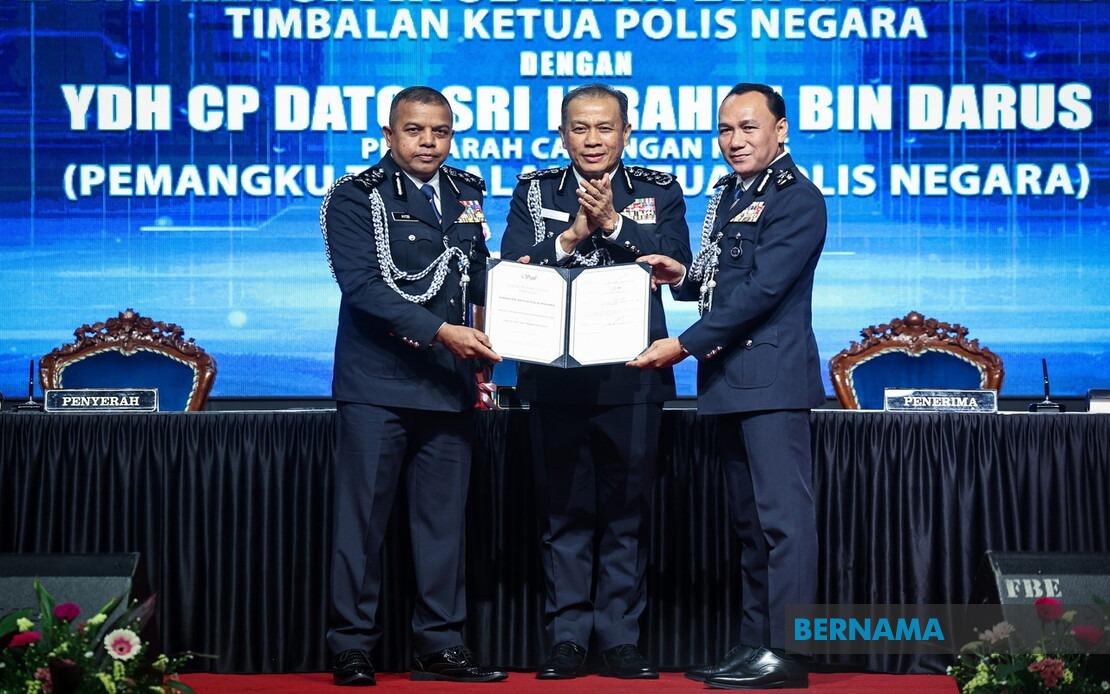
The head of Malaysia's police force has offered a glowing assessment of Tan Sri Ayob Khan Mydin Pitchay as he concluded his tenure, highlighting the retiring official's long track record of maintaining high ethical standards and unwavering commitment to the institution. Inspector-General Tan Sri Mohd Khalid Ismail made the remarks during a formal handover ceremony, characterising Ayob Khan's approach to leadership as rooted in integrity and principled decision-making throughout his professional journey.
Ayob Khan's career in the Royal Malaysian Police spanned nearly 35 years, during which he navigated the force through various challenges while consistently demonstrating allegiance to institutional values. The Universiti Kebangsaan Malaysia graduate ascended through a succession of demanding roles that placed him at the centre of some of the force's most sensitive operations. His progression through the ranks reflected both technical competence and an ability to manage complex responsibilities with consistent ethical clarity, according to Mohd Khalid's assessment.
Throughout his service, Ayob Khan held command over critical divisions including the Special Branch, which handles national security matters, and the Narcotics Criminal Investigation Department, responsible for countering drug trafficking. He also served as Johor police chief and directed the Bukit Aman Criminal Investigation Department before his appointment as Deputy Inspector-General in June 2023. Each posting required navigation of politically sensitive terrain and decision-making under pressure, areas where Mohd Khalid suggested Ayob Khan demonstrated particular acuity.
The IGP's commendation emphasised Ayob Khan's resistance to external pressure in upholding the rule of law, a quality that has become increasingly prominent in Malaysian policing discourse. In an era when law enforcement agencies face scrutiny over their independence and adherence to constitutional principles, Mohd Khalid's specific mention of Ayob Khan's firmness suggests an implicit acknowledgment of the importance of officers who prioritise legal propriety over other considerations. This framing carries significance for Malaysian institutional health and public confidence in the constabulary.
In his role as Deputy Inspector-General, Ayob Khan worked closely with Mohd Khalid to manage the force's strategic direction and operational oversight. The IGP characterised this partnership as mutually supportive, describing Ayob Khan as both a capable administrator and a loyal colleague who remained steadfast during institutional challenges. This language of shared burden and collective commitment reflects the hierarchical nature of police operations while also suggesting meaningful collaboration at the highest levels.
Ayob Khan's tenure encompassed significant national security concerns, including counter-terrorism operations and organised crime investigations. His experience in the Counter-Terrorism Division and combat against militant elements provided direct exposure to evolving security threats facing Malaysia. The IGP indicated that Ayob Khan's approach to these challenges, grounded in methodical law enforcement rather than expediency, should serve as exemplary for future police leadership.
The formal handover passed responsibility for the Deputy Inspector-General position to Datuk Seri Ibrahim Darus, director of the Bukit Aman Special Branch, who assumed the role in an acting capacity. Mohd Khalid extended congratulations to Ibrahim while expressing confidence in his ability to maintain the institutional standards Ayob Khan had helped establish. This transition represents a moment of continuity and renewal within Malaysia's top police echelon, with the incoming deputy inheriting both operational portfolios and institutional expectations.
For Malaysian observers of institutional affairs, Ayob Khan's retirement marks the departure of an officer whose career reflected the complex demands placed on high-ranking police officials. The emphasis placed by the IGP on integrity and principled adherence to law suggests these qualities remain valued at the institution's apex, even as Malaysia's police force continues navigating contemporary pressures including public accountability demands and evolving internal governance frameworks.
The broader significance of this transition extends to questions about institutional succession and the preservation of ethical standards across leadership changes. In an organisation as hierarchically structured and operationally demanding as the Royal Malaysian Police, the departure of senior figures creates both practical management challenges and opportunities to reinforce institutional culture. Mohd Khalid's public acknowledgment of Ayob Khan's contributions appears designed to underscore the importance he places on continued adherence to the principles his predecessor exemplified throughout his career.

