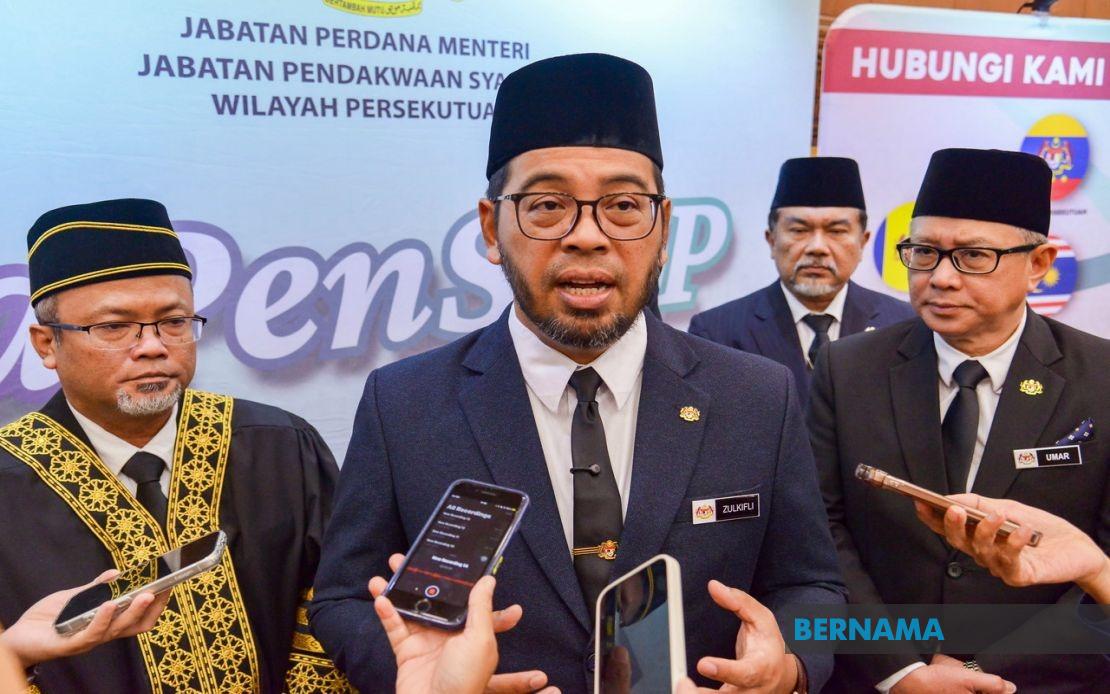
The Prime Minister's Department (Religious Affairs) has opened an investigation into allegations that a Department of Islamic Development Malaysia (JAKIM) reference number was fraudulently used to authenticate a marriage declaration letter purportedly issued by the Malaysia Rohingya Ulama Council, a development that highlights growing concerns over document verification and religious authority in Malaysia. Minister Dr Zulkifli Hasan acknowledged the matter at a press conference in Putrajaya on July 15, indicating that preliminary details remain incomplete but that a comprehensive review is underway.
The controversy emerged when a marriage declaration document began circulating across social media platforms bearing the reference number "JAKIM.PERH/LN.800-7(5)", prompting widespread speculation about its authenticity and legitimate connection to JAKIM's official documentation systems. The appearance of what appeared to be an official JAKIM identifier raised immediate red flags among religious authorities, particularly given the sensitive nature of marriage registration and the specific legal framework governing such documents in Malaysia.
State-level religious authorities have cast doubt on the legitimacy of these documents. The Perak Islamic Religious Department (JAIPk) explicitly stated that it does not recognise the marriage declaration letter as a valid official document suitable for legal registration. Furthermore, JAIPk clarified that marriages involving members of the Rohingya community cannot be processed or registered through standard channels, as the matter touches upon broader policy considerations currently under review by various state religious authorities across Malaysia.
This development underscores the fragmented nature of Islamic administrative authority in Malaysia, where responsibility for religious affairs is distributed between federal and state governments. The Rohingya marriage issue thus becomes entangled in pre-existing jurisdictional questions and policy frameworks that have not yet been fully harmonised across different state religious departments. For members of the Rohingya community seeking to formalise marriages in Malaysia, the lack of clarity represents a significant legal and administrative impediment.
Dr Zulkifli also brought attention to a related concern affecting the broader Islamic teaching landscape in Malaysia: the proliferation of religious lectures and educational content delivered through social media platforms by individuals lacking proper accreditation. Though this issue received less media attention than the marriage document controversy, it reflects systemic challenges in monitoring and regulating religious discourse in the digital age. The minister acknowledged that his department is actively examining how to address unaccredited religious teaching online while respecting constitutional boundaries between federal and state jurisdictions.
The regulatory responsibility for religious teaching accreditation formally rests with state governments rather than the federal authority, creating coordination challenges across Malaysia's thirteen states and three federal territories. Each jurisdiction maintains its own systems for vetting and approving individuals qualified to deliver Islamic instruction, meaning there is no unified national mechanism to prevent unsuitable content from being broadcast through digital channels. Dr Zulkifli emphasised that the Prime Minister's Department continues studying potential approaches, though legal complexities mean any solution must carefully navigate constitutional constraints.
Within the Prime Minister's Department itself, officials maintain internal protocols ensuring that individuals appearing on government-associated platforms possess appropriate accreditation. However, this institutional safeguard does not extend to the wider social media ecosystem where religious enforcement officers (PPA) face significant practical difficulties in monitoring and curtailing unaccredited teaching. The minister acknowledged these enforcement challenges, indicating that developing effective strategies requires careful consideration of applicable laws and constitutional limitations.
Beyond these immediate concerns, Dr Zulkifli outlined the government's broader agenda to modernise Malaysia's Syariah legal framework in response to emerging technological threats. Cyber-related crimes and digital offences increasingly fall within the purview of Islamic law enforcement, requiring prosecutors and investigators to develop sophisticated capabilities in areas including digital forensics and data analysis. The government has committed to strengthening collaborative arrangements with the Malaysian Communications and Multimedia Commission (MCMC), police (PDRM) and the Attorney General's Chambers to enhance the effectiveness of Syariah enforcement and prosecution.
This modernisation agenda became apparent during the second Malaysian Syariah Prosecutors Conference (PePSSM) 2026 held in Putrajaya, where Dr Zulkifli addressed the assembled prosecutors and officials. He stressed that the growing complexity of contemporary crimes necessitates continuous professional development and technological literacy among Islamic legal practitioners. Syariah prosecutors must transition beyond traditional investigative approaches to master data analytics and technology-enabled evidence gathering, ensuring that the Islamic legal system remains effective in prosecuting twenty-first century offences.
The convergence of these issues—fraudulent use of JAKIM references, unaccredited religious teaching proliferating online, and cyber crime targeting Islamic institutions—suggests that Malaysia's religious authorities face mounting pressure to strengthen governance frameworks without overstepping constitutional boundaries. The investigation into the Rohingya marriage document claims represents only one facet of a broader reckoning with how Islamic administrative institutions function in an increasingly digitised environment where verification, authentication and authoritative oversight have become simultaneously more critical and more difficult to enforce. Policymakers must balance transparency, security and respect for jurisdictional divisions as they develop more robust mechanisms for protecting the integrity of Islamic legal and administrative processes.

