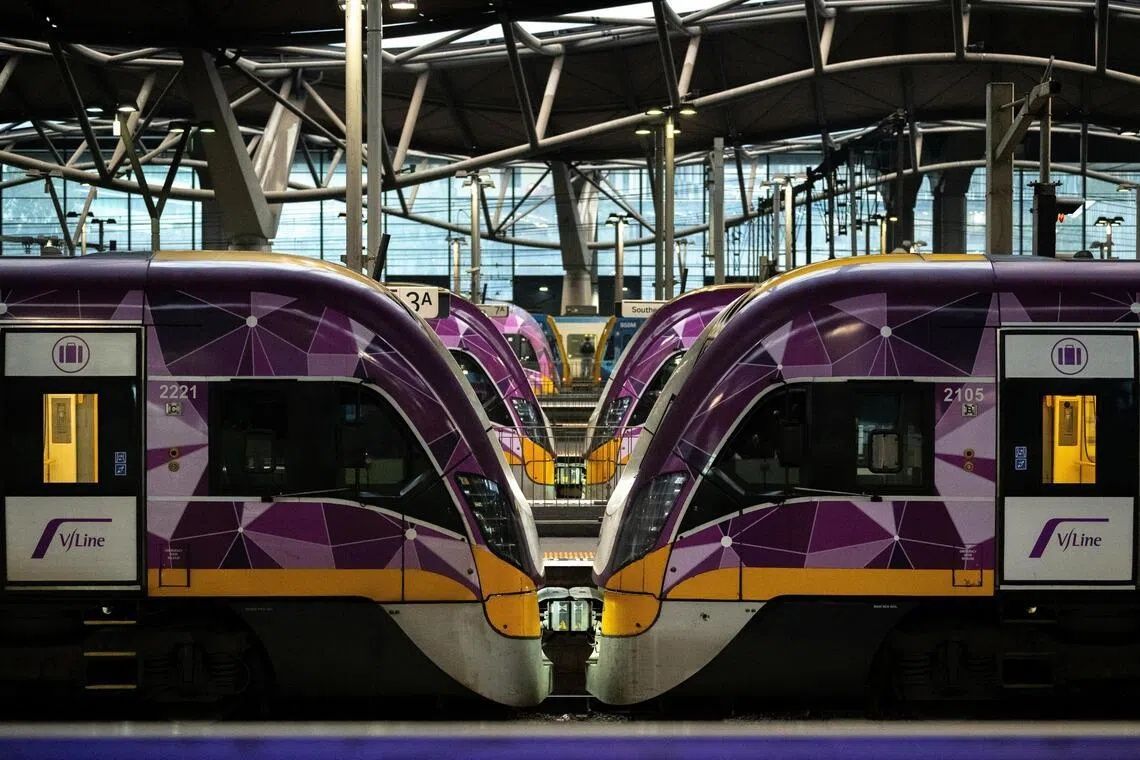
Australian rail operations commenced their staged return to normal service on Thursday following a significant network failure at Telstra Group Ltd. that had crippled mobile and data services across the nation, forcing trains to halt in multiple regions. The outage underscored the deep reliance placed on a single telecommunications provider by Australia's essential services and raised urgent questions about redundancy and backup systems in critical infrastructure.
Telstra's 4G network serves as the backbone for Australian Rail Track Corporation's communications with train drivers, making the carrier's infrastructure outage devastating for rail operations. ARTC, which manages both freight and passenger rail networks spanning five states, suspended services after discovering it could no longer safely coordinate with its drivers. As services began to recover later Thursday, ARTC prioritised the restoration of metropolitan networks in New South Wales, regional V/Line services in Victoria, and interstate passenger routes, reflecting the hierarchical approach authorities adopted to restore normalcy across the sprawling network.
The telecommunications failure was multifaceted and compounded the initial crisis. An underlying software issue affecting the nodes that maintain time synchronisation across Telstra's system triggered the primary disruption, but the troubles deepened overnight when a secondary problem emerged. Some telephone calls began routing directly to voicemail, and critically, some emergency Triple Zero calls failed to connect. This created a particularly alarming scenario where members of the public facing genuine emergencies could not reach help, a situation that telecommunications regulators and consumer advocates found deeply troubling.
Telstra Chief Financial Officer Michael Ackland confirmed during a Thursday briefing that engineers had identified and remedied both the primary time synchronisation fault and the secondary routing issue. However, the revelation that the company needed to implement further measures to prevent future occurrences suggested the initial fixes might not represent a comprehensive solution. The provider, which serves approximately 25 million retail mobile customers, disclosed it had conducted 639 welfare checks following instances where emergency calls did not connect, a number that haunted discussions about how many people might have faced genuine crises without reaching help.
Mobile networks operate as extraordinarily complex systems, integrating thousands of interconnected components, and Ackland acknowledged this complexity while attempting to reassure customers. He stressed that Telstra would continue implementing additional safeguards to ensure the robustness of its emergency calling systems, framing the incident as a learning moment rather than a systemic failure. Chief Executive Vicki Brady, who had been on a family vacation abroad when the crisis unfolded, cut her leave short and returned to Australia on Friday, symbolising the seriousness with which the company's leadership treated the incident. Stock market confidence appeared only mildly shaken, with Telstra shares rising one per cent Thursday afternoon, having fallen three per cent the previous day.
Cynthia Gebert, head of the Telecommunications Industry Ombudsman, articulated the broader anxiety that had gripped Australians during and immediately after the outage. Beyond the inconvenience of lost mobile connectivity, the outage had disrupted travel plans, interrupted business operations resulting in lost income, and created anxiety about whether essential services could be relied upon in moments of genuine need. Her comments reflected a growing sentiment that Australians should not live with the constant fear that critical telecommunications infrastructure might fail without warning, particularly when emergency services form part of that infrastructure. The ombudsman emphasised the need for thorough investigation to determine root causes and prevent recurrence, suggesting that surface-level fixes would prove insufficient for public confidence.
This latest incident sits within a troubling pattern of telecommunications failures that have affected Australia's essential services and raised systemic concerns about infrastructure reliability. Optus, owned by Singapore Telecommunications Ltd., experienced a severe outage in September 2025 affecting emergency service access that resulted in fatalities, a catastrophic outcome that shocked the nation. That disaster followed an earlier Optus outage less than two years prior that had similarly impacted millions of customers and disabled emergency calling for some users. The frequency and severity of these incidents suggested that Australia's telecommunications infrastructure, despite its sophistication, harboured critical vulnerabilities.
The repeated nature of these failures has prompted experts and policymakers to examine whether Australia's regulatory framework adequately addresses redundancy requirements and backup systems for critical infrastructure providers. The telecommunications sector in Australia remains highly concentrated, with a handful of major carriers dominating the market, and the Telstra outage demonstrated the risks of such concentration when a single provider controls essential infrastructure used by rail operators, hospitals, emergency services, and millions of ordinary Australians. For regional countries like Malaysia and other Southeast Asian nations that often look to Australia as a developed-market benchmark, these incidents offer cautionary lessons about ensuring competitive market structures and regulatory safeguards that mandate redundancy in critical telecommunications networks.
The path forward for Australian telecommunications appears to demand substantial investment in infrastructure resilience, with regulators likely to impose stricter requirements on carriers regarding backup systems, network redundancy, and emergency service reliability. Telstra's undertaking to continue implementing additional protective measures suggests that industry and regulators may finally be moving beyond reactive responses to preventive strategies. However, the confidence gap created by multiple serious outages will take considerable time to restore, and Australian consumers may increasingly question whether their telecommunications infrastructure truly merits the description of world-class or whether complacency has created dangerous vulnerabilities at the core of modern society.

