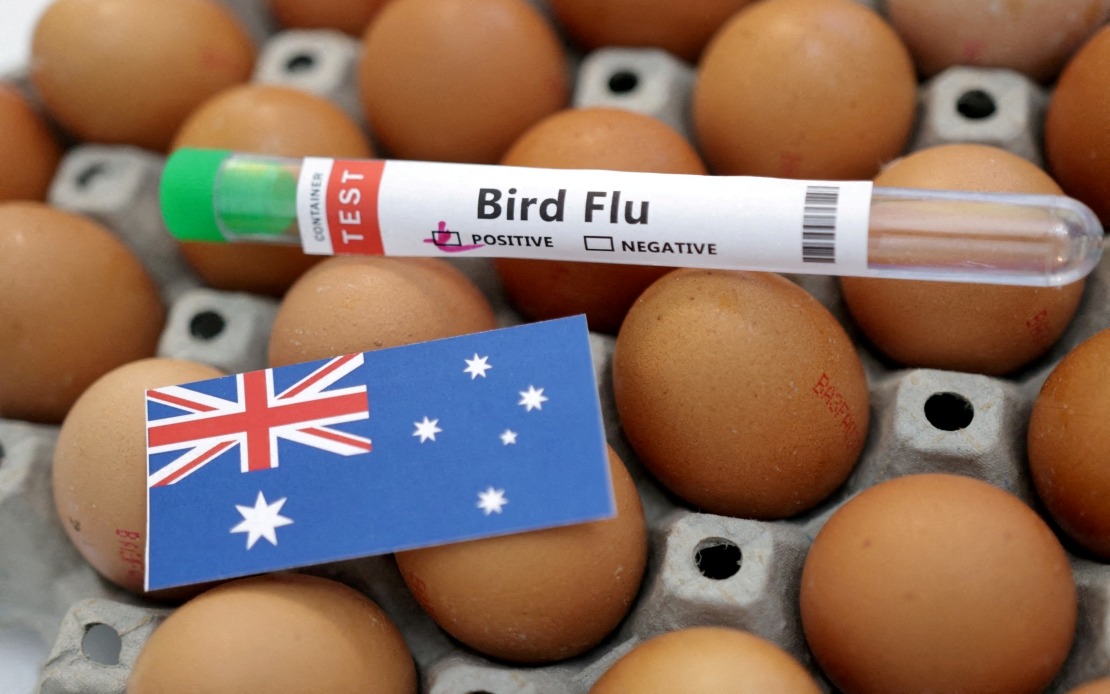
Australia's H5N1 bird flu outbreak has intensified dramatically over August, with confirmed and presumed positive cases climbing past 200, prompting the southeastern state of Victoria to implement strict new biosecurity protocols aimed at protecting commercial poultry operations from the highly pathogenic strain. The federal Department of Agriculture, Fisheries and Forestry confirmed 203 cases as of Saturday, marking a concerning acceleration of the disease's spread across the continent.
The escalation has been remarkable in its speed. The nation recorded only 52 cases by the end of July, meaning the August caseload represents a 290 per cent surge in just over a week. This trajectory underscores how rapidly avian influenza can establish itself once introduced into susceptible wildlife populations, a lesson with obvious implications for the Southeast Asian region, where migratory bird populations and live animal markets create conditions favourable for viral transmission and emergence of new variants.
South Australia remains the epicentre, accounting for nearly three-quarters of the national total with 147 confirmed cases, including 28 new infections documented on Saturday alone. Notably, all 28 of these fresh cases involved wild seabirds, suggesting that the virus continues to spread through natural fauna rather than spilling over into domestic fowl on any significant scale. This distinction is crucial because wild-bird transmission, while concerning from an ecological and epidemiological perspective, differs fundamentally from poultry farm outbreaks in terms of scale and economic consequence.
Victoria has emerged as the second-most affected state, with 43 cases to date. A cluster of 36 bird deaths was confirmed over Thursday and Friday after specimens were recovered from the state's western regions near the South Australian border. The geographic pattern suggests a natural dispersal corridor along the coastline, where migratory seabirds concentrate seasonally. Understanding these migration routes and seasonal patterns is vital for policymakers across the Indo-Pacific region anticipating similar incursions into their own territories.
Recognising the potential for spread to commercial operations, the Victorian government has moved decisively to implement preventative measures. On Friday, state authorities mandated that poultry producers operating farms with flocks of at least 50 birds must house their animals indoors for a minimum of 14 days, with the requirement applying to producers along the state's south coast, encompassing the Melbourne metropolitan area. This threshold ensures that the regulation covers substantial agricultural operations where disease amplification poses the greatest public health and economic risk.
Victorian Agriculture Minister Michaela Settle framed the measure as a precautionary intervention intended to arrest transmission pathways between wild and domestic bird populations. The logic is straightforward: indoor confinement eliminates contact with infected wild birds and their contaminated faeces and respiratory secretions. However, such measures also carry operational burdens for producers, particularly those accustomed to free-range or semi-intensive systems, and raise questions about the duration of restrictions and conditions for their eventual lifting.
The H5N1 situation in Australia carries broader implications for the Southeast Asian region and beyond. Avian influenza surveillance in Malaysia and neighbouring countries should intensify given that migratory birds from Australian regions could theoretically transport the virus during seasonal movements northward. Past experience demonstrates that H5N1 lineages can persist in wild bird reservoirs across vast geographic areas, periodically spilling into poultry and occasionally into human populations, though human transmission remains rare.
For Malaysia specifically, where poultry production ranks among the critical livestock sectors and live bird markets remain common, the Australian experience provides a cautionary blueprint. The speed with which H5N1 cases multiplied in August suggests that early detection and rapid response are essential defensive strategies. Government agencies should examine whether current surveillance protocols at ports of entry, in live bird markets, and on poultry farms are sufficiently robust to identify incursions before widespread amplification occurs.
The economic dimensions merit attention as well. While the Australian outbreak has so far involved predominantly wild seabirds, any substantial shift toward poultry farm infections could trigger export restrictions, market disruptions, and costly culling operations. Malaysia's poultry industry, which supplies both domestic consumption and export markets, faces similar vulnerabilities. Preventive biosecurity investments now, such as infrastructure upgrades at farms and enhanced training for producers, represent far cheaper mitigation than emergency responses to an established outbreak.
Victoria's mandatory indoor housing requirement represents a measured middle path between unrestricted farming and sweeping industry shutdowns, though its effectiveness depends on compliance rates and the actual duration of enforcement. As the August outbreak continues, Australian authorities will face ongoing decisions about whether to expand or relax these measures based on case trajectories and epidemiological evidence. Those decisions and their rationale warrant close monitoring by regional counterparts.
The 14-day indoor housing window is noteworthy for its specificity. This timeline approximates the incubation period for H5N1 in poultry and reflects epidemiological understanding, but its adequacy depends on local outbreak dynamics. If transmission between wild birds and poultry farms proves more frequent than anticipated, authorities may need to extend restrictions or introduce additional safeguards such as vaccination programs or enhanced biosecurity protocols at feed and water facilities.
As Australia navigates this outbreak, the global avian influenza community is watching closely. The response demonstrates the importance of maintaining robust surveillance systems, clear communication channels between state and federal authorities, and mechanisms for rapid implementation of targeted interventions. For Malaysia and the region, Australia's experience serves as a timely reminder that H5N1 remains an ongoing threat requiring sustained vigilance, continued investment in detection capability, and coordinated regional approaches to preventing its establishment in commercial poultry systems.

