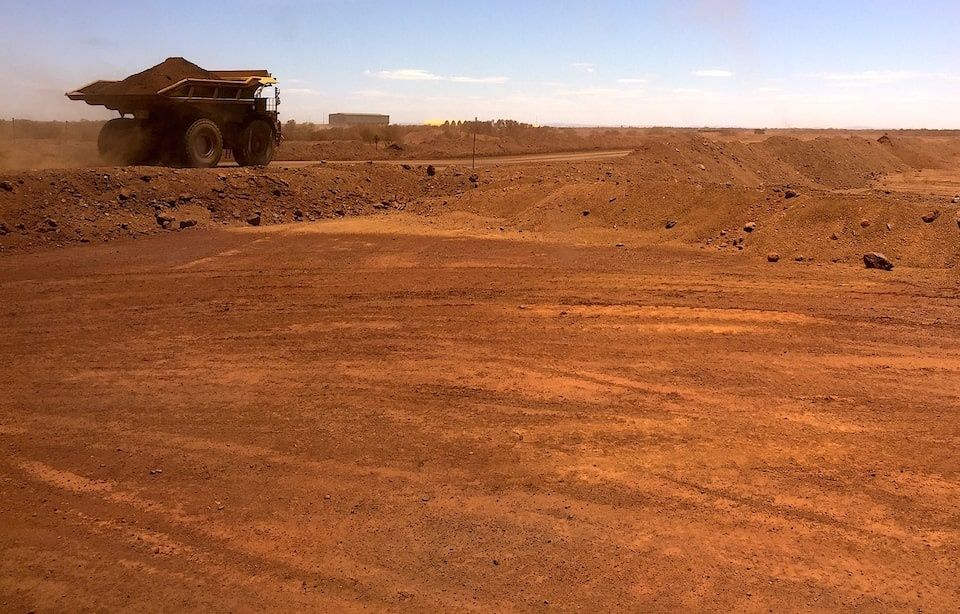
Scientists working in Western Australia have identified what could become a significant natural energy resource. Researchers at Edith Cowan University (ECU) have demonstrated that magnetite, an iron oxide mineral found beneath the state's distinctive red earth, generates hydrogen gas when exposed to hot water deep underground. This finding, detailed in the International Journal of Hydrogen Energy, opens possibilities for tapping into a previously overlooked source of clean fuel that exists naturally within geological formations across one of the world's most mineral-rich regions.
The discovery carries particular significance for Western Australia, which already leads global iron ore production. The state's vast banded iron formations—layered deposits of iron-rich minerals created billions of years ago—occupy an area larger than some countries. The ECU team's findings suggest these same geological structures that have made WA an economic powerhouse could simultaneously serve as natural hydrogen factories operating beneath the surface. This dual potential makes the research especially relevant to regional energy strategy and industrial decarbonisation efforts.
To validate their hypothesis, researchers from ECU's School of Engineering conducted controlled experiments with magnetite samples, subjecting them to temperatures of 200 degrees Celsius under high pressure for 60 days. This laboratory environment replicated conditions found thousands of metres beneath the Earth's surface, where such chemical reactions occur naturally. The results confirmed that hydrogen production was indeed occurring through the interaction between magnetite and water—a straightforward but previously underexploited chemical process.
The research reveals that hydrogen generation depends on two critical factors working in tandem. The quantity of magnetite present forms the foundation, but equally important is the mineral's accessibility to water molecules. Fractures, pores, and naturally permeable pathways within the rock formations allow water to reach fresh mineral surfaces where the chemical reaction can occur. This insight suggests that the efficiency of natural hydrogen production varies significantly depending on the geological structure and permeability of different deposits.
The team's additional finding—that injecting a solution into banded iron formations substantially increases hydrogen output—hints at potential future production methods. Rather than simply extracting naturally occurring hydrogen, this technique suggests that human intervention could accelerate and amplify the process. Given WA's extensive experience with deep mining operations and subsurface engineering, the state possesses considerable technical expertise that could be adapted for hydrogen extraction at scale.
Natural hydrogen has long intrigued energy researchers as a potential game-changer in the global transition away from fossil fuels. Unlike hydrogen produced through conventional methods such as steam methane reforming—which currently dominates the market but generates significant carbon emissions—naturally occurring hydrogen requires no human energy input to form. The challenge has always been locating and accessing deposits economically. WA's abundant iron ore deposits could overcome this fundamental hurdle.
For Southeast Asia, including Malaysia, the implications extend beyond Western Australia's borders. The region's own mineral deposits and geological characteristics may harbour similar hydrogen-generating formations. If the ECU methodology proves commercially viable, neighbouring nations could apply similar exploration and extraction techniques to their own resources. This could fundamentally reshape energy security discussions across the Indo-Pacific, offering alternatives to traditional energy imports and reducing regional dependence on fossil fuel infrastructure.
The research also highlights how existing mining expertise and infrastructure could be repurposed. Companies already operating in WA's mining sector possess the deep drilling capabilities, geological knowledge, and subsurface engineering experience necessary for hydrogen extraction. Rather than viewing renewable energy transition as requiring entirely new industrial capabilities, these findings suggest that established mining regions could leverage their existing technical foundations to develop hydrogen production sectors.
The commercial viability question remains unresolved. While the ECU research demonstrates the physical and chemical feasibility of natural hydrogen production, converting this knowledge into economically competitive energy production requires further development. Cost analysis, production rate calculations, and infrastructure requirements will determine whether natural hydrogen becomes a practical energy source or remains a scientific curiosity. The team's work provides the essential foundation upon which such commercial investigations can proceed.
International energy markets are increasingly receptive to hydrogen technologies. Major economies including Japan, South Korea, and the European Union have launched hydrogen economy initiatives, creating growing demand for low-carbon hydrogen supplies. Australia's position as a trusted energy exporter could be reinforced if WA's natural hydrogen deposits prove exploitable. This would position the state and nation as suppliers not just of raw minerals but of processed clean energy products.
The discovery also underscores the value of fundamental scientific research into natural processes. By studying how hydrogen forms naturally underground, researchers gain insights that could lead to improved industrial hydrogen production methods or entirely new approaches to energy generation. The magnetite-water reaction mechanism identified by ECU may have applications beyond Western Australia, with potential relevance to hydrogen exploration worldwide.
As the global community grapples with climate change and energy transition challenges, natural hydrogen represents an unconventional yet potentially valuable pathway. The ECU research team's work in Western Australia demonstrates that sometimes the solutions to modern energy challenges lie beneath our feet, awaiting the right combination of scientific insight and technical innovation to unlock their potential. For a region already synonymous with mineral wealth, natural hydrogen could represent the next chapter in Australia's energy story.

