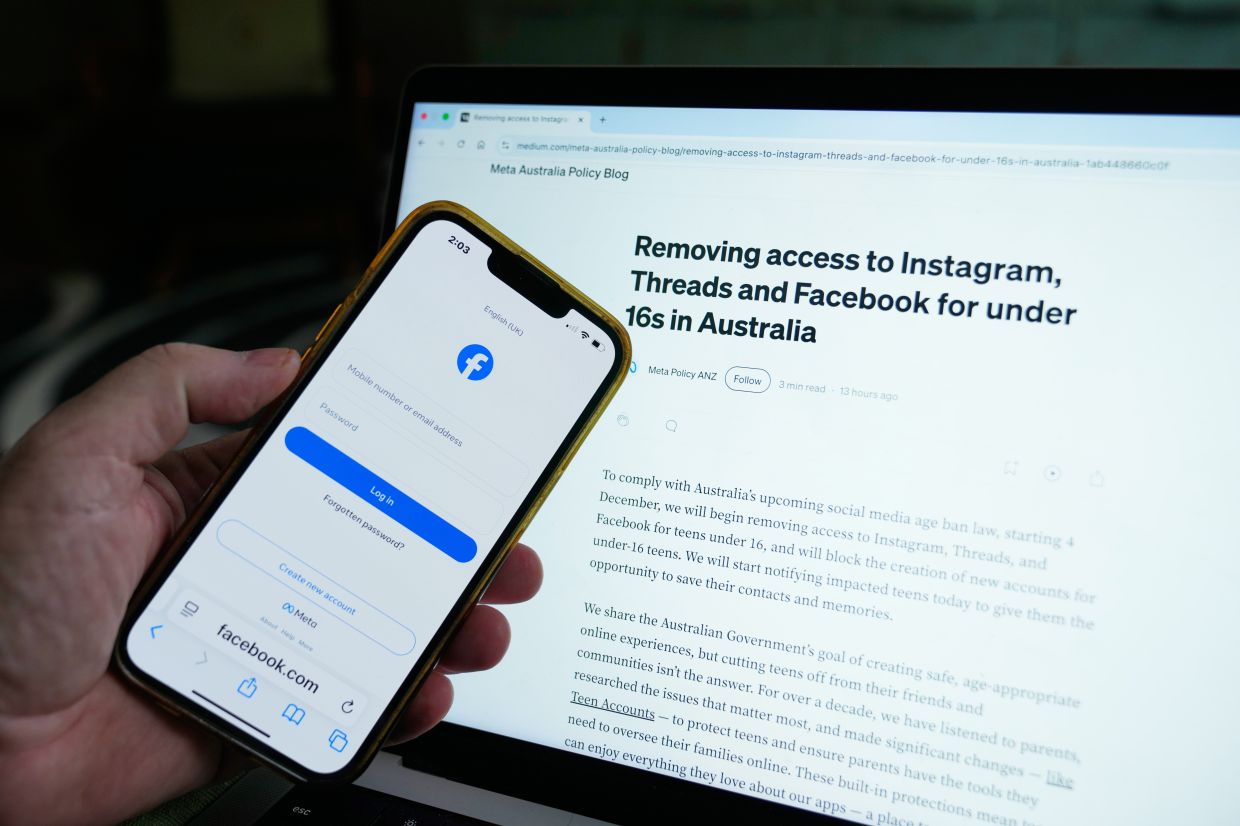
Prime Minister Anthony Albanese has condemned parliamentary delays to critical amendments designed to bolster enforcement of Australia's landmark ban preventing children under 16 from accessing major social media platforms including Facebook, Instagram, and YouTube. The government submitted legislative proposals to strengthen the hand of eSafety Commissioner Julie Inman Grant, Australia's online safety regulator, but the conservative Liberal Party and the Australian Greens referred the amendments to an eight-week Senate inquiry on July 2. Since the centre-left Labour government lacks a Senate majority, the delays threaten the effectiveness of measures already proving difficult to implement across the digital landscape.
Albanese expressed frustration that postponement of the amendments would allow technology companies additional time to obscure their compliance failures. Speaking to the Australian Broadcasting Corporation, he pointed out that the commissioner currently possesses only information-gathering authority. The expanded powers would enable her to issue formal demands for compliance data and subsequently impose financial penalties. According to Albanese, approving the amendments immediately would have established the enforcement date from which platforms must comply, creating an enforceable timeline for regulatory action.
The proposed amendments represent a substantial escalation in regulatory muscle. Beyond demanding documents and compliance information from platforms, the expanded authority would allow Inman Grant to compel third parties, including age assurance technology providers, to furnish information testing platform claims about child circumvention methods. This broadened investigative capacity reflects growing concerns that major social media companies are insufficiently rigorous in verifying user age and enforcing the restrictions. The changes also propose doubling the maximum financial penalties to A$99 million (US$68 million or RM276.56 million) for platforms failing to implement reasonable protective measures.
However, opposition voices question the necessity and adequacy of these enforcement tools. Greens Senator David Shoebridge, a longstanding critic of the entire prohibition framework, challenged the logic of increasing fines that have never been deployed. Speaking on Sky News Australia, he characterised the penalty doubling as performative rather than substantive, questioning whether raising financial consequences represents genuine progress toward child protection online. This perspective reflects broader scepticism within some political quarters regarding whether prohibition represents the most effective policy response compared to alternative protective frameworks.
Liberal Party communications spokesperson Senator Sarah Henderson offered a different critique, arguing the amendments remain insufficiently stringent. Henderson characterised the original legislation as poorly designed and hastily implemented, describing it as fundamentally flawed. She committed the opposition to subjecting the bill to rigorous parliamentary scrutiny, insisting that the proposed amendments require further strengthening before parliamentary approval. This positioning suggests potential coalition willingness to support enforcement measures while challenging the underlying legislative architecture.
Parliament had overwhelmingly endorsed the initial legislation in 2024, demonstrating broad cross-party consensus regarding child protection objectives. Ten major platforms received over one year to implement compliance mechanisms, providing substantial preparation time. Initial implementation appeared promising when the government reported that over five million child accounts were removed, deactivated, or restricted following the December enforcement date. This figure suggested platforms were responding substantively to regulatory requirements, providing early encouragement that the prohibition could achieve meaningful outcomes.
Subsequent evidence, however, has proven deeply disappointing. In March, the eSafety Commissioner disclosed findings that seven in ten children maintaining accounts on restricted platforms on December 10—the ban's commencement date—continued accessing Facebook, Instagram, Snapchat, and TikTok. This data revealed that the initial account suspensions represented incomplete enforcement rather than comprehensive prohibition. The persistence of child users on major platforms despite theoretical enforcement mechanisms highlighted the limitations of self-regulatory approaches reliant on platform cooperation and technological controls.
Inman Grant responded to persistent non-compliance by signalling potential legal action against Facebook, Instagram, YouTube, and associated services. In April, she formally alleged these companies were neglecting reasonable protective measures required under existing legislation. The eSafety Commissioner distinguished this enforcement approach from progress observed on five smaller platforms—X, Kick, Reddit, Threads, and Twitch—with which she reported satisfaction regarding compliance efforts. This tiered assessment suggested that platform size and business model substantially influence compliance capacity and willingness.
Communications Minister Anika Wells indicated that regular monthly updates from the eSafety Commissioner since March had revealed stagnant performance indicators. According to Wells, compliance trajectories showed no improvement, suggesting that voluntary platform engagement with regulatory frameworks had plateaued. This assessment underscores the primary justification for the contested amendments: existing authority proves insufficient to compel compliance from major technology companies with substantial financial incentives to permit child user engagement, regardless of legislative restrictions.
The Australian situation carries significant implications for regional policy development. Multiple countries throughout Southeast Asia and the Asia-Pacific region have monitored Australia's implementation experience as they contemplate equivalent restrictions. The evident difficulties in enforcing age-based prohibitions despite legislative clarity and substantial penalties demonstrate that technological and enforcement challenges transcend individual national contexts. Malaysia and neighbouring jurisdictions considering comparable frameworks must grapple with whether enhanced regulatory authority and punitive mechanisms can overcome platforms' ingrained economic incentives and sophisticated circumvention technologies.
The Senate inquiry process introduces uncertainty regarding enforcement timeline and ultimate amendment scope. While parliamentary scrutiny can strengthen legislative design, extended deliberation extends the enforcement gap that platforms can exploit. Technology companies have demonstrated capacity to absorb financial penalties as operational costs when user engagement generates sufficient commercial value. Unless amendments provide genuinely enforceable compliance mechanisms—potentially including service restrictions or market access limitations—incremental penalty increases may prove insufficient to fundamentally alter platform compliance calculus.
The Australian case illustrates the structural challenge confronting digital regulation globally. Prohibition-based frameworks attempt to restrict access to profitable user populations, creating powerful economic incentives for non-compliance. Regulatory authorities, despite expanded authority, remain dependent on platforms for voluntary disclosure and transparency regarding their technical implementations. Without direct technological access or capacity to independently verify age assurance mechanisms, commissioners remain constrained by information asymmetries favoring the regulated companies. The proposed amendments address this imbalance partially through third-party inquiry powers, but fundamental structural tensions between regulatory objectives and platform business models persist.

