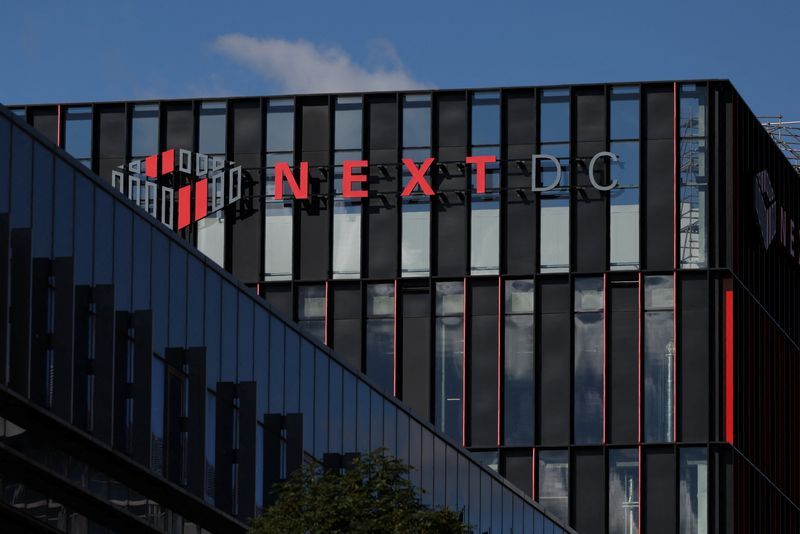
NextDC, Australia's largest data centre operator, has delivered financial results that mask a growing environmental challenge: the company's resource consumption is climbing faster than its efficiency improvements can offset. The Sydney-listed firm swung to a profit of A$82.1 million for the year to June, reversing a A$60.5 million loss in the previous period, while underlying EBITDA climbed 15 per cent to A$248.8 million, surpassing analyst expectations. Yet beneath these celebrated numbers lies a worrying trend that extends far beyond NextDC's balance sheet and carries significant implications for how Australia and Southeast Asia manage the infrastructure demands of the artificial intelligence revolution.
The company's operational metrics reveal the tension between explosive growth and environmental sustainability. Water usage effectiveness, measured as litres consumed per kilowatt-hour of computing power, deteriorated to 2.40 from 2.25 in the prior year. Similarly, power usage effectiveness, which quantifies how much electricity is needed for cooling systems and ancillary infrastructure, worsened to 1.49 from 1.44. Critically, both measures have trended downward—meaning worsening efficiency—for three consecutive years, suggesting the problem is structural rather than anomalous. This consistent deterioration is precisely the sort of trajectory that alarms governments and communities already nervous about data centre proliferation.
NextDC has offered explanations for the rising ratios that warrant closer examination. The company attributes the increases partly to newly commissioned capacity operating cooling systems at full capacity before information technology infrastructure reaches completion and full utilization. In other words, NextDC is building excess infrastructure ahead of demand—a common industry practice but one that temporarily inflates consumption metrics. Additionally, the firm acknowledged that significant data reconciliation and validation work during the year uncovered previously unaccounted-for water losses, including isolated leaks, utility meter discrepancies, and variations between site-level measurements and supplier records. These revelations suggest that water management across the data centre industry may be less precise than previously understood.
The financial performance that impressed markets must be contextualized within Australia's tightening regulatory environment around data centre development. The Australian government, recognizing that data centres represent both economic opportunity and resource vulnerability, is actively considering mandatory national standards to govern energy consumption, water usage, and facility location. More ambitiously, Canberra has proposed requirements that data centre operators construct new renewable energy capacity rather than drawing electricity from existing grids increasingly strained by peak demand. These policy directions reflect deepening frustration with an industry that has grown rapidly without corresponding investment in dedicated, clean energy infrastructure or water management systems.
Globally, the regulatory pushback against data centre expansion is intensifying. Governments, municipal authorities, and regional regulators across multiple continents are implementing freezes on new construction, imposing strict restrictions on facility approvals, or outright banning development in resource-constrained areas. The drivers are consistent: concerns about electricity affordability and grid stability, water scarcity in drought-prone regions, competition for limited land resources, and the socioeconomic burden placed on neighbouring communities. Ireland, which hosts massive data centre capacity serving European cloud providers, has experienced particularly fierce backlash. The Philippines, Indonesia, and other Southeast Asian nations are now confronting similar debates as hyperscale cloud providers and artificial intelligence companies seek to establish regional hubs closer to growing Asian markets.
For Malaysia and other Southeast Asian economies eyeing data centre investment as a pathway to digital leadership, NextDC's experience offers a cautionary lesson. The Australian company's deteriorating efficiency metrics despite substantial capital investment suggest that rapid scaling and environmental sustainability do not automatically align. Malaysia's Penang, Johor, and Klang Valley regions have attracted data centre interest, yet the nation's tropical climate, seasonal water stress, and energy infrastructure limitations mean that efficiency challenges could emerge more acutely than in temperate developed economies. The regulatory trajectory in Australia—moving toward mandatory renewable energy construction requirements—may foreshadow the standards that Malaysian and ASEAN policymakers will eventually impose.
The market's response to NextDC's results—a 3.3 per cent share price gain—demonstrates investor confidence in data centre operator profitability, despite acknowledged environmental challenges. This disconnect between share market enthusiasm and sustainability concerns reveals a persistent gap in how capital markets price environmental risk. Investors are rewarding revenue and EBITDA growth while remaining relatively indifferent to deteriorating resource efficiency metrics. This creates perverse incentives for operators to prioritize expansion and profitability over genuine operational improvements in water and energy management.
The financial accounting changes that bolstered NextDC's reported profit warrant scrutiny as well. The company recognized a significant gain on the revaluation of its property holdings, which contributed materially to the swing from loss to profit. This suggests that underlying operational performance—the actual cash generation from data centre operations—may be less robust than headline profit figures suggest. When stripped to underlying EBITDA, growth of 15 per cent is solid but not extraordinary given the booming demand environment for data centre capacity globally. Revenue growth of 16 per cent, meanwhile, indicates that rising consumption is partly a function of expanding capacity rather than improved efficiency from existing facilities.
The sustainability report accompanying NextDC's financial disclosure represents the company's attempt to address growing stakeholder concern about resource consumption. Yet the candid acknowledgment that water usage ratios have deteriorated for three consecutive years, combined with admissions of previously undetected leaks and measurement anomalies, raises questions about data centre industry transparency and governance more broadly. If a large, professionally managed, publicly listed operator like NextDC only recently discovered significant water losses and meter discrepancies, the accountability mechanisms in place across the broader sector appear inadequate.
For Southeast Asian policymakers and investors, the NextDC case study underscores the necessity of establishing environmental standards and monitoring frameworks before data centre industries become entrenched. Requiring operators to construct dedicated renewable energy capacity, imposing water efficiency performance benchmarks tied to licensing renewal, and mandating independent verification of consumption data should be prerequisites rather than afterthoughts. Australia's emerging regulatory approach, while potentially restrictive, reflects hard-won experience with the environmental consequences of unmanaged data centre growth. Regional governments can benefit from that experience without repeating it.
The broader challenge for artificial intelligence-dependent digital economies is reconciling insatiable computational demand with planetary resource constraints. NextDC's improved profitability amid deteriorating efficiency metrics exemplifies this contradiction. Technology companies and their investors continue to operate under the assumption that efficiency gains will eventually match capacity growth, yet the evidence from mature markets suggests otherwise. Southeast Asia has an opportunity to establish a different model—one that ties data centre investment to genuine environmental stewardship rather than retrofitting constraints after explosive growth has occurred. NextDC's financial success, ironically, may be most valuable not as a model to emulate but as a warning about the path not to follow.

