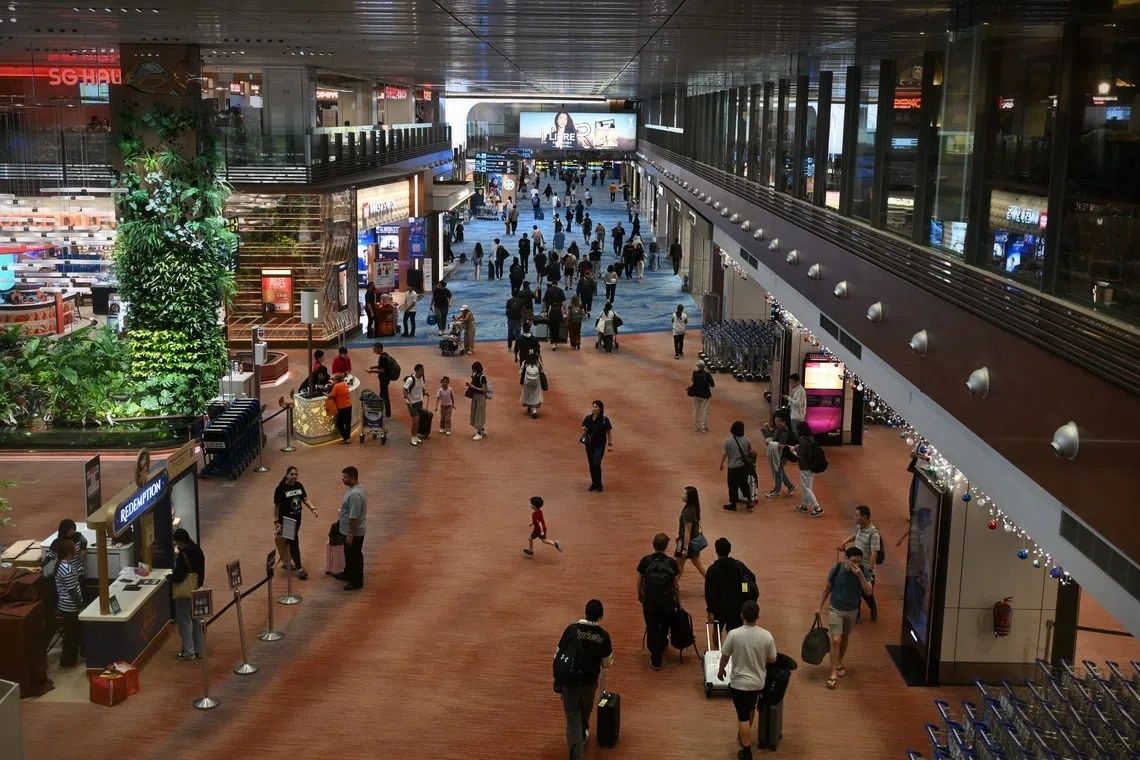
Singapore's Changi Airport has become the focus of a retail security case involving two international travellers accused of perfume theft, with law enforcement highlighting how persistent investigation and advanced surveillance technology have proven effective in tracking down offenders even after considerable delays. The arrests of a 37-year-old Australian man and a 50-year-old American man underscore the airport's commitment to preventing commercial crime in one of the world's busiest transit hubs, where millions of passengers pass through annually.
The first incident came to light in mid-November when a sales attendant at a perfume retailer in the transit area of Changi Airport Terminal 2 discovered merchandise missing from display shelves. Upon review of security camera footage, authorities identified a customer who had removed two perfume boxes valued at approximately $430 without completing any transaction. The theft occurred in the early evening, but the individual had already departed Singapore before police could intervene, leaving investigators with only video evidence and a description to work from.
For more than eight months, the case remained open as the suspect moved beyond Singapore's jurisdiction. The breakthrough came in early August when the man transited through Changi Airport once again, likely unaware that his earlier actions had been documented and tracked. Airport security personnel recognised him, leading to his arrest on August 4—a significant span of time that demonstrates how determination and systematic tracking can bridge geographical and temporal gaps in retail crime investigations.
The second case unfolded with more immediacy, though over a broader scale. On August 5, another security incident was reported at a duty-free outlet in the Terminal 1 transit zone, where a perfume display was found to be missing a box. CCTV review showed an American passenger had taken the item, valued at more than $310, during the early morning hours without payment. Crucially, airport police managed to locate and detain him before he could board his departure flight, preventing his immediate escape from the jurisdiction.
Subsequent investigation into the American suspect's activities revealed a pattern of theft extending across multiple locations within the airport's transit area. Security footage analysis showed he had also removed a second perfume box worth approximately $170 and a perfume tester bottle valued at over $230 from different retailers. The cumulative value of all three stolen items exceeded $717, painting a picture of systematic rather than impulsive theft. All merchandise was recovered, minimising financial loss to the retailers.
Both men face serious legal consequences under Singapore's theft statutes. The relevant law pertaining to theft in dwelling—which encompasses retail spaces and commercial buildings—carries potential imprisonment of up to seven years, financial penalties, or both. This sentencing framework reflects the jurisdiction's zero-tolerance approach to commercial crime, particularly in high-traffic areas like major transportation hubs. Court appearances were scheduled for August 17, with both cases moving swiftly through the legal system.
The arrests carry particular significance for Southeast Asian travel and commerce communities. Changi Airport serves as a critical logistics and passenger nexus for the region, with retailers operating under the expectation that sophisticated security measures protect their interests. These cases validate that expectation while also serving as a cautionary narrative for international travellers who may underestimate the capabilities of modern airport surveillance systems.
Australian and American nationals represent significant passenger demographics at Changi Airport, and these incidents highlight that law enforcement applies consistent standards regardless of a traveller's nationality or origin. The message from authorities is clear: commercial crime will be pursued methodically, and distance or time delay will not provide immunity from prosecution.
Police leadership emphasised that the resolution of these cases reflects broader investment in security infrastructure and inter-agency cooperation. ACP M. Malathi noted that contemporary CCTV technology and its deployment across retail environments have substantially elevated detection rates for theft offences. The systematic review of footage, cross-referencing between outlets, and coordination with airport operations created the conditions necessary for apprehension and recovery of merchandise.
The cases also underscore an evolving reality in retail security: even when initial detection fails and offenders leave the country, investigative follow-up combined with technological documentation creates a permanent record. Offenders who believe they have escaped consequences through geographical distance may find themselves apprehended on subsequent transits through the same airport, as the Australian suspect discovered. This deterrent value extends beyond individual cases to shape broader behavioural expectations among international travellers.
Looking forward, authorities have reaffirmed their commitment to sustained cooperation between Changi Airport operators, retail stakeholders, and police units specialising in airport security. The airport's role as a gateway for Singapore and the broader region necessitates that commercial crime be treated with the same seriousness as security threats, given its impact on retailer confidence and passenger experience. Regular review of security protocols, staff training, and cross-border information-sharing mechanisms remain priorities in preventing similar incidents.
For Malaysian and regional business communities operating retail operations at major airport hubs, these cases reinforce the importance of robust internal security procedures, staff vigilance, and active engagement with airport authorities on loss prevention. The sophistication of modern surveillance creates accountability mechanisms that can operate across months and international boundaries, ultimately protecting legitimate commerce and deterring casual or opportunistic theft.

