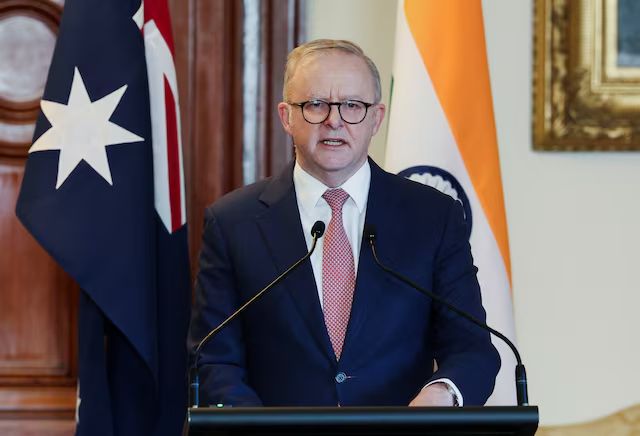
Prime Minister Anthony Albanese has committed to making tariffs a central point of discussion with US President Donald Trump, signalling that Canberra will pursue the issue across multiple channels within the bilateral relationship. The Australian government's determination to engage directly on the matter reflects growing tension over Washington's recent trade actions, which have caught the nation's export-dependent economy in their crosshairs. Speaking on Sunday, Albanese confirmed that Australia will leverage its diplomatic channels at all levels to press the administration for relief.
The United States implemented sweeping tariff measures on Friday, targeting goods from 60 trading partners under the pretext that these nations have failed to adequately combat trade in forced labour products. The timing is significant, arriving just as a temporary 10% global tariff that Trump had threatened earlier expired, giving way to a more differentiated tariff structure. Australia, alongside 37 other countries, now faces a 12.5% tariff on its exports, while a separate cohort of 17 nations faces a 10% levy. Five additional countries are subject to mixed rates, creating a complex web of protectionist measures that will reverberating through global supply chains.
The Albanese government has swiftly rejected the justification for these tariffs, characterising them as unfounded and calling for their complete removal. This represents a notable departure from Australia's traditionally cautious approach to US trade relations, indicating genuine frustration with Washington's unilateral action. The Labor administration's strong pushback suggests that Canberra sees the tariffs as politically motivated rather than grounded in legitimate labour standards concerns, particularly given Australia's sophisticated regulatory framework in this area.
Australian officials point to their nation's robust provisions on modern slavery as evidence that the tariff rationale is misplaced. Australia has implemented some of the world's most stringent regulations addressing forced labour and human trafficking in supply chains, backed by comprehensive legislation and enforcement mechanisms. Albanese emphasised that the government is actively strengthening these protections further, signalling that Australia is not standing still on the issue. The push to enhance supply chain scrutiny and impose substantial financial penalties on violators demonstrates Canberra's genuine commitment to eradicating forced labour from international commerce, potentially undermining Trump's assertion that Australia has been negligent on the matter.
For Malaysian and regional readers, Australia's predicament carries important implications. The tariff action signals that Trump's America First agenda will not exempt close US allies from trade restrictions, even those with whom Washington maintains strong strategic partnerships. Australia's experience suggests that ASEAN nations and other regional trading partners should prepare for potential similar measures. The US administration appears willing to weaponise labour standards complaints as a mechanism to restrict imports broadly, raising questions about the genuine motivations behind the tariff regime.
The bilateral relationship between Canberra and Washington has traditionally been among America's most stable in the Indo-Pacific region, grounded in shared strategic interests and the AUKUS security arrangement. However, the tariff dispute highlights friction points even within this alignment. Albanese, who prioritises what he describes as "free and fair trade" with the United States, has already made tariffs a focal point in discussions with Trump following Labor's landslide election victory last year. The willingness to raise the issue at every diplomatic level indicates that Canberra sees this as a matter affecting core national interests rather than a marginal trade irritant.
The economic consequences for Australia could be substantial. As a major exporter of goods ranging from minerals to agricultural products, the imposition of a 12.5% tariff represents a meaningful cost to Australian businesses. Many exporters will face reduced price competitiveness or margin compression, potentially affecting employment and investment decisions across affected sectors. Agricultural exporters, in particular, who have already endured Chinese trade restrictions in recent years, now face additional headwinds in their largest alternative market.
The tariff structure itself reveals something about Trump's negotiating approach. By creating differentiated rates across 60 countries, the administration has signalled that it views some nations as more culpable than others on forced labour issues, though the criteria for these distinctions remain opaque. Australia's placement in the higher tariff category, alongside countries with which it shares few characteristics, suggests the classification owes more to Trump's broader trade confrontation strategy than to any objective assessment of modern slavery compliance.
Canberra's diplomatic response will likely test Australia's ability to influence US policy through backchannels and alliance relationships. The rhetoric around raising concerns "at every level" suggests a comprehensive approach involving ministerial engagement, parliamentary exchanges, and coordination through multilateral forums. However, the effectiveness of these efforts remains uncertain given the Trump administration's demonstrated resistance to allied pressure on trade matters. Australia may find that resolving the dispute requires either concessions on other fronts or joining collective pushback from other affected nations, potentially through the World Trade Organization.

