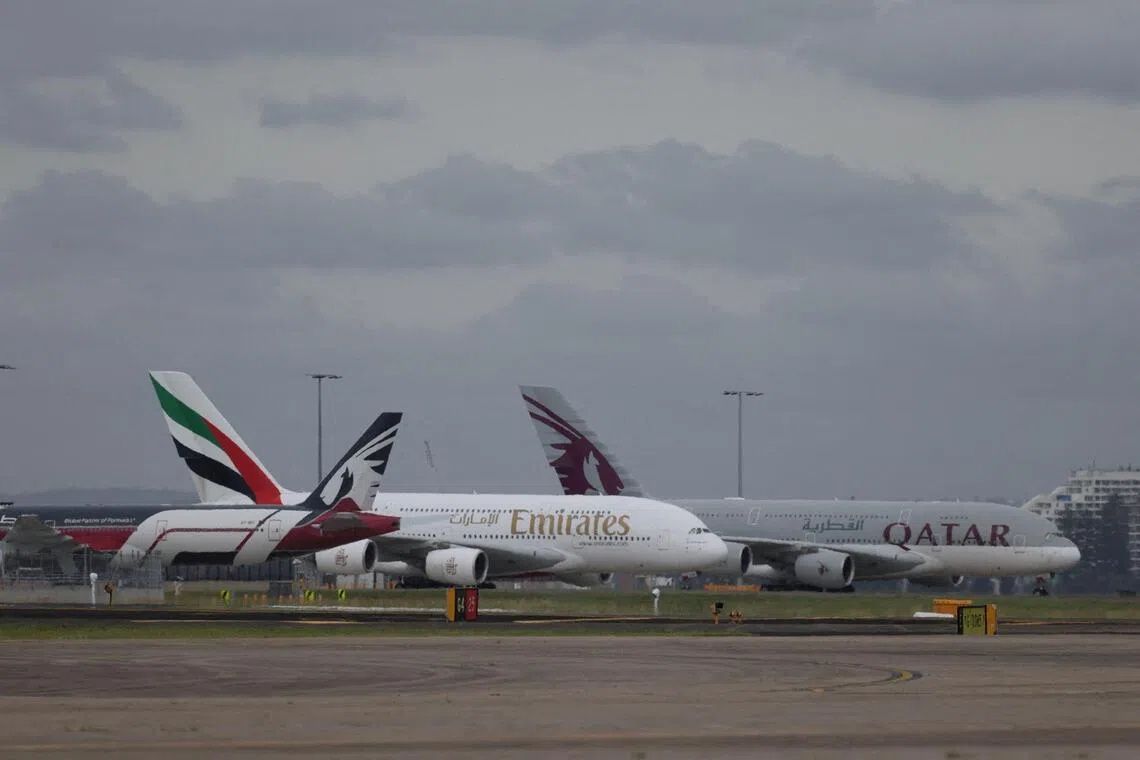
Australia's transport safety regulator has launched a comprehensive investigation into three dangerous near-miss incidents that occurred at Sydney Airport in rapid succession, raising fresh concerns about runway safety protocols at one of the Asia-Pacific region's busiest aviation hubs. The incidents, spanning just 14 days in late July and early August, have triggered scrutiny of air traffic control procedures and staffing capacity during what authorities acknowledge is a period of significant expansion in Australia's aviation workforce.
The most recent near-miss unfolded on the morning of August 9 when a Virgin Australia 737 received clearance from air traffic control to begin its takeoff roll. As the aircraft accelerated along the runway, the flight crew spotted a Qantas plane actively crossing their flight path ahead of them. The Virgin Australia pilots made the immediate decision to apply maximum braking, bringing their aircraft to a complete stop approximately one kilometre away from the Qantas aircraft, which had itself been separately cleared to taxi across the runway. The incident underscores the critical margins of safety that exist in modern aviation operations and the potential for catastrophic consequences when communication protocols break down.
On the same day as the Virgin Australia incident, tensions had run high earlier when a Jetstar pilot was compelled to apply emergency braking procedures to avert a collision with a Qatar Airways aircraft. This back-to-back sequence of events within a single operational day raised immediate alarm bells among regulators and industry observers. Just two weeks earlier, on July 27, two Qantas aircraft had similarly narrowly avoided a collision after both received takeoff clearances simultaneously, pointing to a pattern rather than isolated lapses.
Angus Mitchell, Chief Commissioner of Australia's Transport Safety Bureau, acknowledged the severity of the situation while emphasizing the regulator's commitment to comprehensive analysis. He stated that investigators would examine organisational and systemic factors that may have contributed to the three occurrences, alongside consideration of broader operational contexts including airport traffic volume and staffing levels within the control tower at the time of each incident. Mitchell's comments suggest the investigation will extend beyond individual controller error to scrutinize whether structural deficiencies in the system created conditions conducive to mistakes.
A particularly troubling aspect of the incidents has been the apparent delay in formal reporting procedures, with questions emerging about why alerts were not immediately escalated through official channels. Mitchell disclosed that a supervisory or training situation was taking place on August 9, potentially explaining some procedural variations, though this revelation has only deepened concerns about consistency in how incidents are managed during operational transitions. The timing of these near-misses during a period when Sydney Airport is experiencing elevated traffic volumes adds another layer of complexity to the investigation.
The Australian transport regulator has acknowledged that the aviation sector is currently undergoing a significant staffing expansion phase, with substantial recruitment, training, and qualification programmes being conducted to increase air traffic controller capacity. While this expansion is necessary to accommodate growing passenger demand across Australia's major airports, Mitchell's comments suggest it may also be creating operational pressures and training challenges that could have intersected with the recent incidents. This observation has relevance across Southeast Asia, where airports from Kuala Lumpur to Bangkok are similarly grappling with capacity constraints amid post-pandemic recovery in aviation activity.
Mitchell's statement that "three incidents occurred that shouldn't have occurred" represented an unusually direct acknowledgment of systematic failure, suggesting investigators have already formed preliminary views about the preventability of these events. His emphasis on understanding the underlying "why" indicates that the investigation will go beyond blame assignment to identify actionable changes in procedures, technology, or resource allocation that could prevent recurrence. Prime Minister Anthony Albanese's call for an investigation underlines the political dimension of aviation safety, with aviation incidents capable of shaking public confidence in national infrastructure regardless of actual statistical safety records.
For Malaysian and broader Southeast Asian aviation stakeholders, the Sydney Airport incidents carry important lessons about the intersection of rapid growth, workforce development, and safety management. The region's major airports, including Kuala Lumpur International Airport, handle comparable traffic volumes and have similarly experienced rapid expansion in recent years. The Australian case study demonstrates how periods of transition in staffing and operational scaling can create unexpected vulnerabilities unless accompanied by correspondingly robust safety oversight and quality assurance mechanisms.
The investigation will likely produce recommendations affecting not just Sydney Airport but potentially influencing best practices across Australian aviation and beyond. The specific focus on tower staffing levels, training protocols during peak recruitment periods, and communication procedures between different aircraft during taxi and takeoff phases represents standard investigative priorities that resonate across the industry. Australian aviation authorities' approach to this incident sequence will be closely watched by regional counterparts managing similar operational challenges in one of the world's most dynamic aviation markets.

