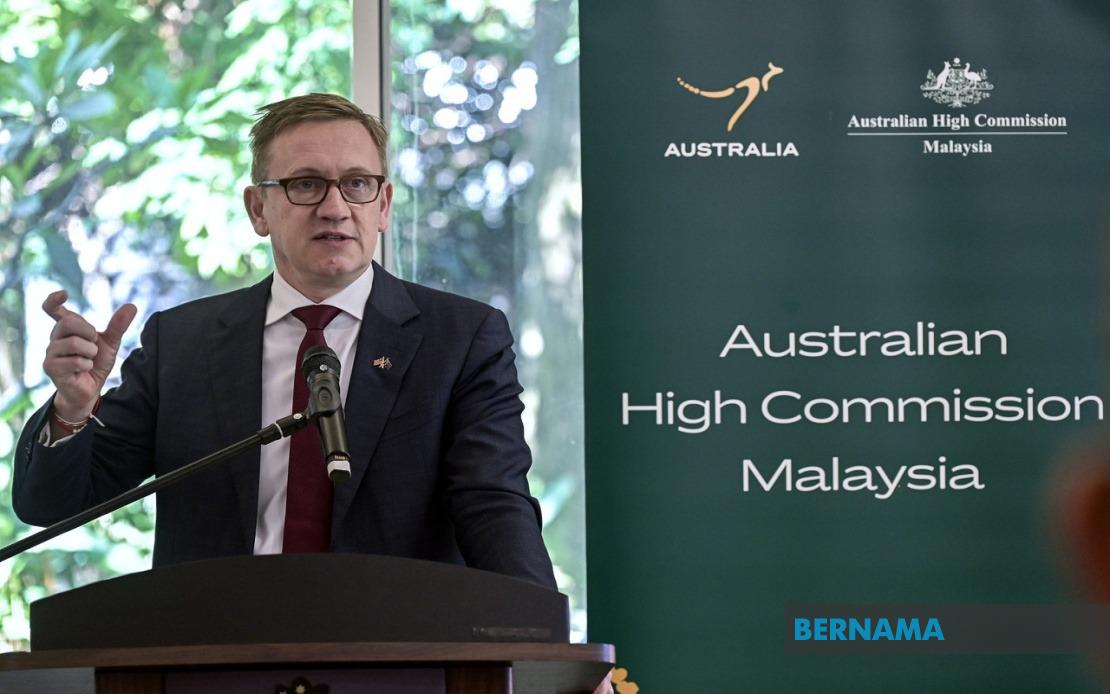
The Australian High Commission in Malaysia has unveiled the Australia Awards-Malaysia Semester Programme, marking a significant expansion of educational opportunities between the two nations. The initiative, officially launched by Australia's Assistant Minister for International Education Julian Hill, seeks to broaden access to Australian tertiary education for Malaysian students by providing comprehensive financial support for semester-long exchanges at participating institutions. This move represents a strategic effort by Canberra to cement educational partnerships with Southeast Asia's third-largest economy at a time when regional competition for student talent intensifies among developed nations.
Hill characterised the programme as emblematic of Australia's sustained commitment to fostering deeper connections between Australians and Malaysians beyond governmental channels. He emphasised that over half a million Malaysians have studied in Australia across decades, many of whom have returned home as informal ambassadors carrying Australian perspectives and values. By expanding opportunities for such exchanges, the initiative aims to create what Hill termed "human bridges" between the countries—individuals equipped with firsthand experience of Australian society who can facilitate understanding and cooperation in their professional and personal circles back home. This people-to-people dimension reflects a recognition that durable bilateral relationships rest not merely on diplomatic protocol but on the lived experiences and networks established through educational institutions.
The programme's financial architecture represents a significant commitment from the Australian government. Participating students receive comprehensive support encompassing international airfares, accommodation costs, living allowances, visa fees, travel insurance and sundry expenses associated with studying abroad. This holistic approach removes substantial financial barriers that might otherwise exclude talented but economically disadvantaged Malaysian students from accessing international education. By absorbing these costs, Australia positions itself competitively against other nations pursuing Malaysian talent, while simultaneously advancing a policy objective of ensuring educational access based on merit rather than family wealth.
Currently, three Australian university branch campuses in Malaysia actively participate in the pilot phase: Curtin University Malaysia, Monash University Malaysia and the University of Wollongong Malaysia. A fourth institution, Swinburne University of Technology Sarawak Campus, has received an invitation to join the scheme. The decision to channel students through existing Australian branch campuses in Malaysia creates an interesting institutional dynamic—Malaysian students complete foundational work at local campuses before transferring to parent institutions in Australia for specialised study. This sequential approach allows universities to manage student progression while maintaining quality assurance across geographically dispersed academic operations.
The inaugural cohort comprised 16 Malaysian students who commenced studies in Australia during the July intake cycle of 2024, serving as proof-of-concept for the broader programme architecture. This modest starting number reflects the pilot's deliberately cautious scaling approach, permitting administrators to refine processes, gather feedback and evaluate outcomes before potential expansion. The success or challenges encountered by this first group will substantially shape how the programme evolves and whether participating universities subsequently admit larger student numbers in subsequent years.
Hill articulated a reciprocal vision for the bilateral educational relationship, noting that Australia seeks not unilateral benefit but mutual learning flows. He expressed hope that Australian students would increasingly choose to pursue studies at Australian university campuses operating in Malaysia, leveraging initiatives like the New Colombo Plan and semester exchange arrangements. This mutuality reflects a sophisticated understanding that durable partnerships require balanced benefit flows—neither partner should perceive itself as merely supplying labour or talent while the other harvests advantage.
Beyond student mobility, Hill positioned Australian universities operating in Malaysia as research institutions capable of generating original knowledge and collaborative problem-solving on issues confronting both nations. Rather than treating branch campuses as purely teaching operations delivering standardised curricula, Australian policymakers increasingly view them as nodes within research networks addressing shared challenges spanning medical science, renewable energy transitions, mining sustainability and agricultural innovation. This conception elevates educational exchange from cultural enrichment toward practical collaboration on technical problems requiring cross-border expertise and methodological approaches.
The Australian government has committed funding for an initial four-year period aligned with its budget cycle, effectively extending through 2028. This timeframe provides a clear evaluation window within which programme administrators can assess whether the initiative meets stated objectives regarding student access, outcomes and bilateral relationship strengthening. Hill's statement that the government "hopes" the programme eventually becomes permanent suggests an implicit acknowledgment that initial funding, while substantial, remains contingent on demonstrated success and broader political support within Australia.
For Malaysian policymakers and education observers, the programme presents both opportunity and strategic considerations. The scheme expands options for Malaysian students pursuing internationally recognised qualifications, potentially strengthening Malaysia's human capital through enhanced exposure to advanced research methodologies and professional networks. However, the programme also reflects Australian interest in cultivating long-term influence within Malaysia through educational channels—a soft power mechanism that other developed nations employ similarly. The presence of Australian High Commissioner to Malaysia Danielle Heinecke and MARA Chairman Dr Asyraf Wajdi Dusuki at the launch underscores the initiative's significance within Malaysia's own educational strategy and government-to-government relations.
The timing of this initiative coincides with intensifying regional competition for educational partnerships and student flows. Nations including the United Kingdom, Canada and increasingly Asian economies like South Korea and Japan maintain aggressive scholarship and exchange programmes targeting Malaysian students. Australia's expansion of funded opportunities through the Awards scheme represents a calculated response to this competitive landscape, positioning Australian universities as accessible and financially attractive options for Malaysians seeking overseas education. This competitive dynamic ultimately benefits Malaysian students through expanded choices and improved terms of access to international education, even as it reflects deeper geopolitical and economic positioning among developed nations seeking influence within Southeast Asian societies.

