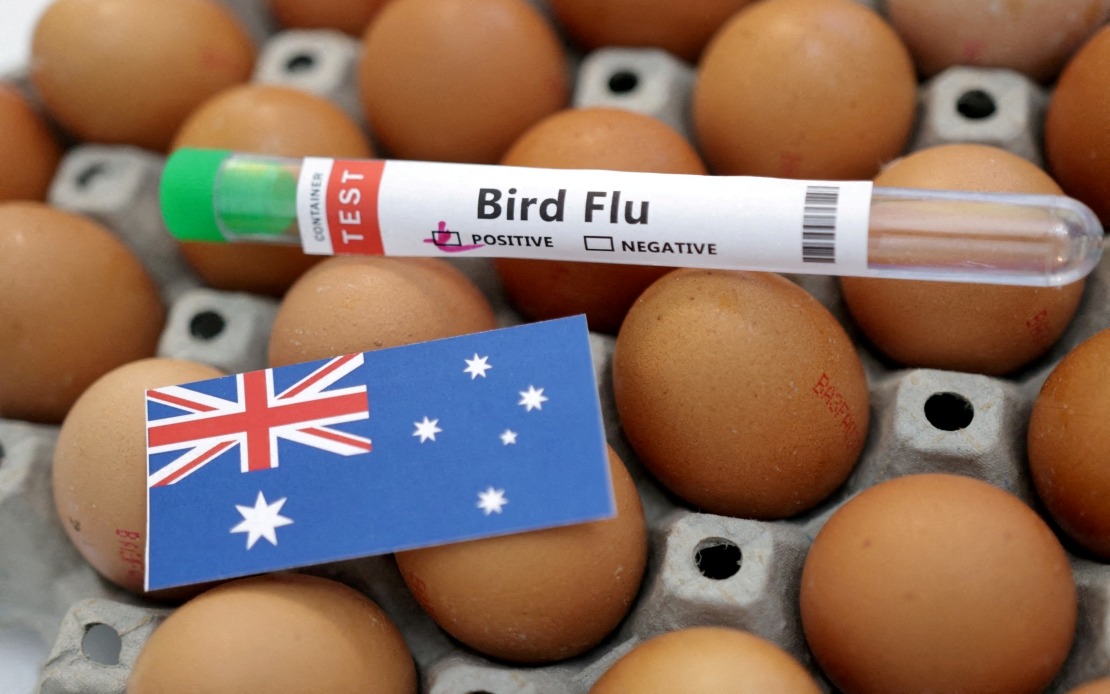
Australia's discovery of H5N1 avian influenza in a locally-resident seabird represents a watershed moment in the nation's pandemic preparedness landscape. Agriculture Minister Julie Collins announced on Friday that a greater crested tern discovered near Robe in South Australia had tested positive for the highly pathogenic H5N1 strain, marking the first confirmed detection of the virus in non-migratory Australian wildlife. This development signals that the disease has transcended its previous geographical boundaries, establishing itself beyond migratory bird pathways that have historically served as the primary transmission mechanism into the continent.
The identification of this case carries particular significance because the bird species involved differs fundamentally from earlier detections. Prior to this finding, all confirmed H5N1 cases on the Australian mainland had been traced to migratory birds originating from sub-Antarctic regions, a pattern that offered some epidemiological predictability. The greater crested tern's sedentary nature suggests the virus may now be circulating through local bird populations, a scenario that authorities had anticipated but hoped to avoid. Collins acknowledged this concern while emphasizing that the detection itself demonstrates the effectiveness of Australia's surveillance infrastructure in identifying emerging threats rapidly.
The ramifications extend throughout the Indo-Pacific region, where Southeast Asian nations including Malaysia, Indonesia, and Thailand maintain substantial poultry industries and wild bird populations. Australia's experience provides a cautionary case study demonstrating how rapidly H5N1 can adapt and spread beyond traditional migration corridors. The virus's capacity to establish itself in resident bird species increases the complexity of containment efforts across the region, as wildlife control becomes considerably more challenging than managing migratory populations that follow predictable seasonal patterns. Malaysian agricultural authorities and regional disease surveillance networks should intensify monitoring protocols given this development.
Investigations into the transmission pathway remain ongoing, with Australian scientists working to determine how the Robe bird acquired the infection. The virus's presence in a non-migratory species suggests either direct contact with infected migratory birds during seasonal movements, or potentially through contaminated food sources and water sources. Collins indicated that enhanced surveillance operations were already underway in the South Australian coastal region, with authorities sampling additional birds and monitoring for further cases. This proactive response reflects lessons learned from previous H5N1 outbreaks globally, where early detection and rapid response have proven crucial in limiting spread.
The announcement also revealed that three additional cases had been confirmed across South and Western Australia, bringing the total to twelve cases on the Australian mainland since the first detection in Western Australia in June. This escalation trajectory underscores the accelerating pace of viral circulation across the continent. The fact that Australia remained the sole continent without confirmed H5N1 cases prior to June now seems almost historically insignificant, given the rapid accumulation of detections over recent weeks. The barrier protecting the antipodean island has demonstrably weakened, though Australian biosecurity institutions maintain they retain robust tools to manage the threat.
For regional stakeholders including Malaysian policymakers, agricultural operators, and public health officials, Australia's experience illustrates several critical vulnerabilities. The poultry sector across Southeast Asia remains substantially more integrated with wildlife populations than Australia's more controlled farming environments. Live bird markets, backyard farming operations, and extensive wetland habitats create numerous transmission nodes where H5N1 could theoretically establish itself. Malaysia's proximity to major migratory bird routes and the country's significant poultry industry position it as a potential susceptible environment for rapid virus spread should H5N1 gain further footing in the region.
Colins characterized the detection as concerning yet unsurprising, framing it within the context of Australia's strategic biosecurity positioning. Her statement that the discovery validates rather than undermines the nation's disease prevention architecture reflects a sophisticated understanding of surveillance systems' purpose. Such systems exist not to prevent all incursions but to detect intrusions rapidly enough to contain them before they become entrenched. By this measure, Australia's identification of the Robe bird constitutes a success, albeit one with sobering implications about the virus's geographic progression and adaptability.
The greater crested tern finding also raises questions about the adequacy of current surveillance mechanisms across the region. If a non-migratory species in a well-monitored developed nation can contract H5N1 without prior detection, what might be occurring undetected in countries with more limited testing capacity or surveillance infrastructure? Malaysian veterinary authorities and regional disease monitoring networks should consider whether current protocols adequately cover resident and semi-migratory bird species beyond the migratory populations traditionally emphasized in H5N1 monitoring programs.
Looking forward, the Australian case will likely drive policy adjustments across Southeast Asia and the Pacific. Agricultural ministries may intensify restrictions on bird movements, strengthen quarantine protocols for imported poultry products, and expand surveillance programs to encompass broader wildlife populations. Malaysia's Ministry of Agriculture and Agro-based Industry may face pressure to introduce more stringent testing requirements for poultry shipments from Australia and enhance domestic monitoring of backyard farming operations. The economic implications for regional poultry trade could prove substantial if importing nations respond with precautionary trade restrictions.
The detection ultimately demonstrates that H5N1 continues evolving its epidemiological pattern, expanding beyond traditional migratory bird transmission routes into local wildlife populations. While Australia's authorities expressed confidence in their ability to manage the situation, the sustained accumulation of cases suggests the virus has achieved meaningful ecological establishment on the continent. For Malaysia and regional neighbors, the imperative now involves strengthening preparedness for potential H5N1 introduction while maintaining vigilant surveillance protocols.

