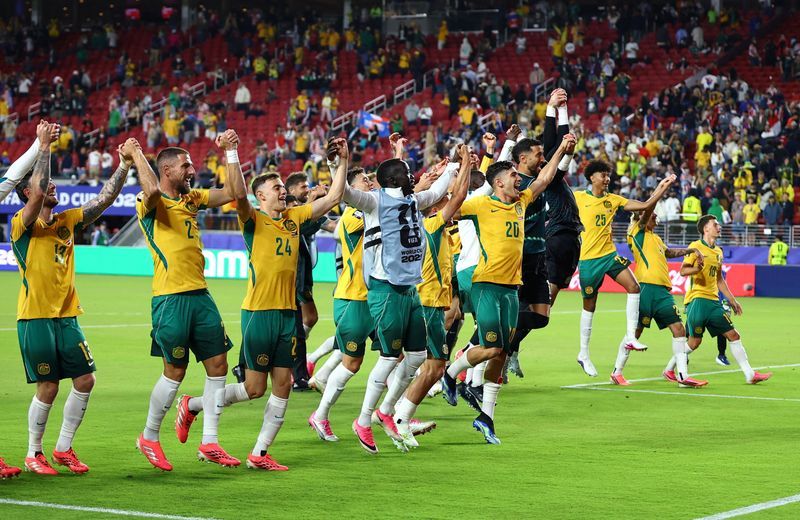
The Socceroos have secured their passage to the World Cup's round of 32 following a disciplined but ultimately fruitless encounter with Paraguay at San Francisco Bay Area Stadium on Thursday. The goalless stalemate saw Australia finish as runners-up in Group D, behind co-hosts the United States, and claim their ticket to the knockout phase for the third time in the nation's World Cup history—a repeat of their achievement four years earlier in Qatar.
The match itself reflected the high stakes involved, with neither side willing to take excessive risks in a physical, often scrappy affair that left little room for flowing attacking football. Australia's manager Tony Popovic had elected to freshen his lineup with six alterations to his starting eleven, a bold decision that signalled his desire to inject attacking momentum into the fixture. The inclusion of the energetic Nestory Irankunda and the addition of Cristian Volpato to the forward line demonstrated Popovic's intent to chase victory, though Paraguay's defensive resolve would ultimately frustrate those ambitions.
In the opening stages, the Australian side dominated territorial possession and created several opportunities to break the deadlock. The Socceroos' attacking play was particularly pronounced down the right flank, where Jordan Bos, who had been repositioned from left back to accommodate an injury absence elsewhere in the defensive line, orchestrated raids into dangerous areas. Within the early minutes, Volpato created space for Jackson Irvine in the penalty area, but Irvine's angled effort went straight at Paraguay goalkeeper Orlando Gill rather than testing the keeper's reflexes. Further chances emerged for both Bos and Volpato in the latter stages of the first half, though Gill remained untroubled by their efforts.
Paraguay presented a more subdued threat during the opening forty-five minutes, managing only a solitary shot as they absorbed Australia's pressure. The South American side's coach Gustavo Alfaro recognised the need for greater attacking impetus and introduced the Brazilian-born forward Mauricio at half-time, a substitution that immediately changed the dynamic of the contest. Within minutes of the restart, Mauricio demonstrated his presence with a long-range attempt that drifted harmlessly wide, signalling Paraguay's growing willingness to venture forward.
The introduction of Julio Enciso, Paraguay's energetic midfielder, coincided with a marked improvement in his team's attacking threat as the match progressed. Enciso's penetrative runs repeatedly exposed gaps in Australia's defensive shape, creating genuine moments of danger that had the South Americans sensing a potential breakthrough. With eight minutes remaining, Enciso orchestrated one of Paraguay's most promising opportunities of the evening, striking a low effort that narrowly escaped the far post by a considerable margin.
As the match entered its final stages, the contest became increasingly end-to-end in nature, with both sides trading attacks in what became a tactical chess match between caution and ambition. Australia's Bos had a late moment that stirred the partisan crowd when he breached Paraguay's defensive line from the right wing in the 89th minute, driving into the penalty box before dispatching his shot past the far post. Paraguay's Mauricio subsequently had an opportunity of his own moments before the final whistle, crafting a yard of space on the edge of the technical area but sending his tepid attempt directly at Australian goalkeeper Thomas Beach, who handled the effort without difficulty.
The result marks a significant achievement for Australian football on the continental stage, though the manner of the progression—via a stalemate rather than a convincing victory—offers mixed signals about the team's readiness for the challenges that lie ahead in the knockout rounds. Popovic's tactical acumen in managing the match and preserving the point, despite the attacking manpower at his disposal, suggests a pragmatic approach that values advancement over aesthetic football.
Paraguay, however, faces an anxious wait to determine their tournament fate. The 2010 quarter-finalists currently occupy four points and may have accumulated sufficient rewards to qualify as one of the eight best third-placed teams in the competition. Their advancement remains contingent on results in the final group-stage fixtures, with Egypt versus Iran and Belgium against New Zealand scheduled for Friday providing clarity on whether the South Americans have done enough to extend their World Cup campaign beyond the group stage.
For Australian football, the qualification represents a continuation of the nation's recent World Cup success and places them among the tournament's genuine competitors heading into the knockout phase. Their opponent in the round of 32 will be determined by the outcome of Group G, which remains wide open with several combinations still possible depending on results involving Egypt, Iran, Belgium, and New Zealand. The Socceroos' journey from the group stage onwards will test whether Popovic's squad possesses the quality to progress further in what remains an unpredictable tournament.

