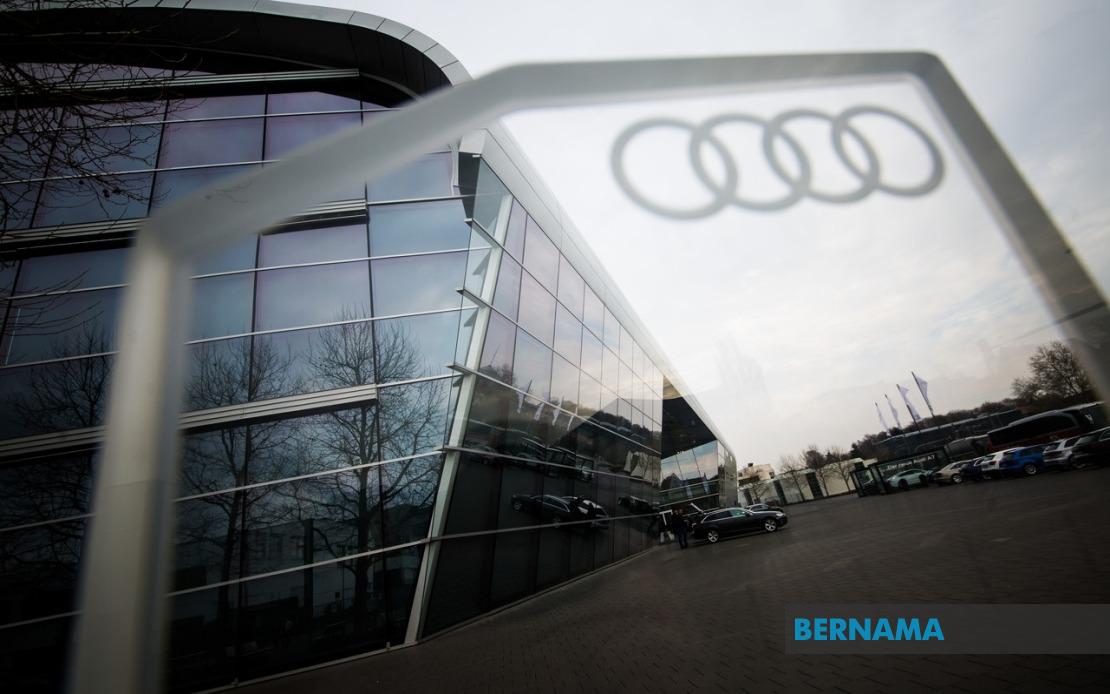
Audi has substantially downgraded its financial guidance for the year, signalling deepening troubles in key markets and broader economic headwinds facing the German automotive sector. The luxury carmaker, headquartered in Ingolstadt and owned by the Volkswagen Group, unveiled the revised outlook on Monday following a disappointing second-quarter performance, when after-tax profit tumbled by approximately one-fifth to €563 million (US$642 million).
The magnitude of the downward revision underscores the severity of challenges confronting the premium segment. Audi now anticipates full-year revenues between €58 billion and €63 billion, a considerable contraction from its prior projection of €63 billion to €68 billion. The company has also trimmed its return forecasts, effectively signalling lower overall profitability across the entire fiscal year. These projections encompass Audi's portfolio of prestige marques—Lamborghini, Bentley, and motorcycle brand Ducati—which typically command premium margins.
While the earnings decline is troubling, context matters significantly for investors assessing the severity of the predicament. Audi's deterioration, though substantial, appears comparatively moderate when measured against its parent company Volkswagen's outcome. The group-wide second-quarter profit plunged by nearly one-third, suggesting that Audi's relatively resilient performance may reflect its strong brand positioning despite adverse market conditions. However, this comparative advantage offers limited comfort given the challenging outlook ahead.
The primary culprit behind Audi's struggles is unmistakably the Chinese market, where the manufacturer has experienced sharp erosion of its competitive standing. China represents a critical revenue driver for European automakers, and Audi's inability to maintain sales momentum there carries implications extending beyond the company's annual figures. The contribution from Audi's Chinese business operations, structured through local joint ventures and reflected in financial income, collapsed dramatically during the first half to just €73 million—a decline of roughly 75 percent compared to the equivalent period twelve months earlier. This precipitous drop illustrates the intensity of competitive pressure and demand softness in the world's largest automotive market.
Beyond China-specific factors, Audi contends with a more generalised erosion of pricing power across the industry. Escalating price competition, particularly from Chinese electric vehicle manufacturers expanding aggressively into international markets, has compressed margins across the sector. Luxury automakers, historically accustomed to stable pricing environments, face unprecedented pressure as rivals undercut traditional pricing structures. For consumers in Southeast Asia and globally, this dynamic may eventually translate into more attractive vehicle pricing, though manufacturers themselves are enduring compressed profitability.
Geopolitical instability in West Asia compounds the company's difficulties, creating additional uncertainty in a region that has become increasingly important to global automotive supply chains and market access. The tensions affect not only direct sales in the region but also supply chain reliability and manufacturing cost projections. Carmakers dependent on complex international logistics face heightened risks when regional conflicts threaten transport corridors and component sourcing.
Management expressed cautious optimism regarding the second half of the financial year, with chief financial officer Jürgen Rittersberger indicating that improving conditions may emerge as fresh models reach dealerships and cost-reduction initiatives take hold. He pointed to the historical pattern whereby the latter half of calendar years typically deliver stronger performance for automotive manufacturers. However, such forward-looking statements must be weighed against deteriorating market fundamentals in China and the unpredictability of geopolitical developments.
The revised outlook arrives as parent company Volkswagen reportedly contemplates substantial workforce reductions across its operations, with Audi's manufacturing facility in Neckarsulm, Germany, among four plants facing potential job cuts. This prospective restructuring signals that leadership recognises deeper structural challenges requiring aggressive intervention. Manufacturing employment reductions of this magnitude would represent a significant shock to Germany's industrial sector, which has traditionally anchored European manufacturing competitiveness.
For Malaysian stakeholders and broader Southeast Asian observers, Audi's predicament carries instructive implications. The erosion of established premium brands in their largest market demonstrates how rapidly competitive advantage can evaporate when incumbents fail to match technological innovation and pricing competitiveness. The dominance of Chinese electric vehicle manufacturers in cost-competitive segments poses long-term questions about traditional automotive industry hierarchies. Additionally, regional supply chain dependencies mean that workforce reductions in Germany may cascade through global supplier networks, potentially affecting component manufacturers and logistics operators across Asia.
Audi's situation exemplifies the broader structural transformation confronting traditional automotive powerhouses. The combination of demand weakness in crucial markets, intensifying competitive rivalry from non-traditional competitors, and geopolitical uncertainties creates a complex environment where historical business models require fundamental rethinking. How successfully Audi navigates these challenges will likely influence competitive dynamics throughout the regional automotive sector and broader manufacturing ecosystem for years ahead.

