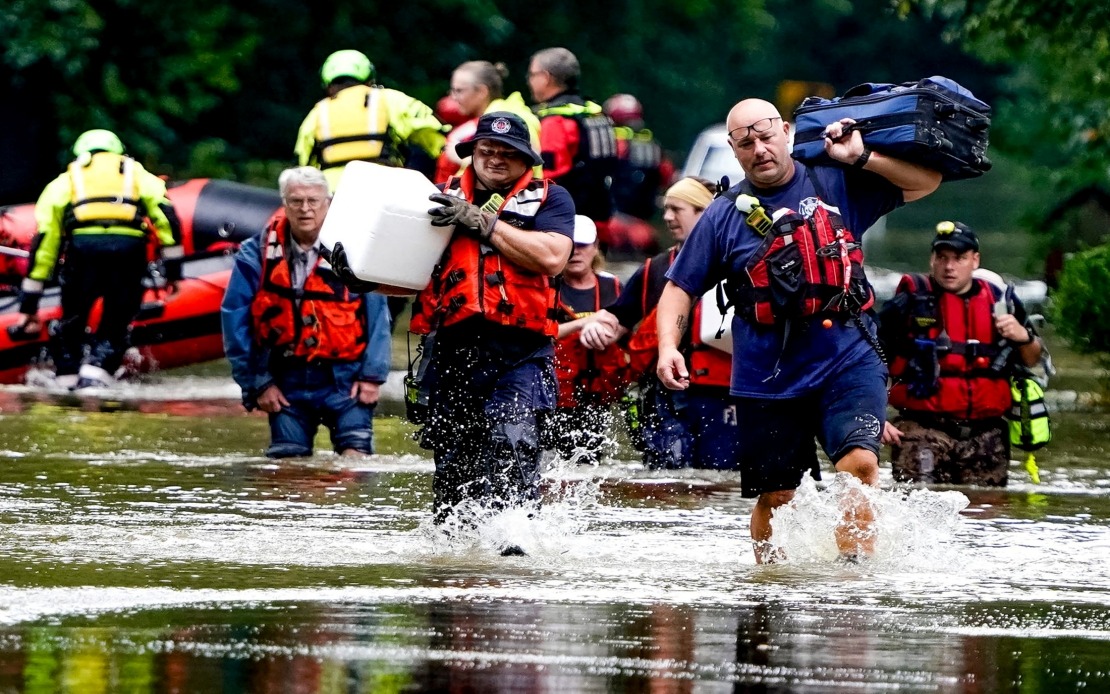
A devastating flood event is unfolding across Indiana following an intense storm system that deposited unprecedented rainfall across the American Midwest state, resulting in at least six confirmed deaths and widespread destruction that officials describe as a once-in-a-lifetime disaster. The atmospheric disturbance brought more than 11 inches of precipitation to portions of Indiana over a two-day period, overwhelming water infrastructure and transforming neighbourhoods into disaster zones where residents navigated submerged streets in kayaks and small boats.
The most severe impacts centred on communities along the White River corridor, stretching from Hamilton County through the suburban regions north of Indianapolis. Rescue operations proved massive in scale, with first responders successfully retrieving more than 90 people and 45 pets from flood-threatened areas as the situation deteriorated rapidly. The White River itself rose to catastrophic levels, exceeding 24 feet in both Anderson and Noblesville—readings that shattered records established more than a century earlier during the 1913 floods. Indianapolis Mayor Joe Hogsett responded to the escalating crisis by declaring a local emergency and ordering evacuations from riverside neighbourhoods after assessing the unprecedented threat.
In the Ravenwood neighbourhood of Indianapolis, the scale of inundation became graphically evident as floodwaters submerged vehicles entirely and reached the rooflines of residential properties. Residents improvised evacuation methods, employing personal watercraft to traverse streets that had transformed into temporary rivers. Jacob Spence, the director of Marion County Emergency Management, characterized the disaster as distinctly exceptional, noting that rescue teams and emergency planners were documenting conditions never before encountered in modern records. His assessment underscored the genuine shock experienced by experienced disaster management professionals confronted with water levels that obliterated historical benchmarks.
Governor Mike Braun moved swiftly to mobilize federal resources, establishing direct communication with President Donald Trump to expedite a Federal Emergency Management Agency declaration. The governor's intervention signalled recognition of the disaster's magnitude and the likelihood that state resources alone would prove inadequate to address recovery needs. Braun's public statements acknowledged both the human tragedy and the necessity of sustained caution, specifically warning residents against entering floodwaters that remained dangerously dynamic and unpredictable. The governor's emphasis on continued vigilance reflected concerns that flooding conditions persisted rather than diminishing, posing ongoing threats to survivors and rescue personnel alike.
The fatalities were distributed across multiple counties, indicating the storm system's broad geographical reach. A 58-year-old woman in Delaware County perished after attempting to drive through floodwaters—a scenario that emergency management officials consistently identify as among the most preventable flood-related deaths. Indiana Department of Homeland Security spokesperson Liz Woods confirmed additional fatalities recorded in Jennings, White, Porter, and La Porte counties, each representing individual tragedies within the broader disaster narrative. The diversity of locations affected underscored how thoroughly the precipitation event had saturated the region, triggering simultaneous crises across multiple jurisdictions with varying response capabilities.
The National Weather Service assessments demonstrated the meteorological severity underlying the catastrophe. Certain localities recorded rainfall totals exceeding 11 inches, translating to precipitation volumes that dramatically exceeded normal weather patterns and outpaced ground absorption and drainage system capacity. Such extreme rainfall events, once considered statistically unlikely, have become increasingly frequent across North America in recent years—a pattern climate researchers attribute to atmospheric changes affecting storm intensity and duration. Indianapolis' public works director Todd Wilson issued urgent reminders that water levels were still climbing, emphasizing that warnings deserved immediate compliance from residents unfamiliar with proper flood response procedures.
The disaster extended beyond Indiana's borders, with the same storm system triggering tornadoes, severe thunderstorms, and flash flooding across the broader Midwest region. Reported impacts stretched from the Chicago metropolitan area through to western Pennsylvania, indicating an atmospheric disturbance of continental significance. This wider geographical pattern suggested that the rainfall event represented a major weather system producing destructive effects across multiple states simultaneously, overwhelming emergency response networks across the affected territory. The multi-state dimension of the disaster complicated coordination and resource allocation, requiring federal involvement beyond standard state-level emergency management protocols.
For Malaysian and Southeast Asian observers, the Indiana flooding offers instructive lessons regarding climate resilience and disaster management at scale. While tropical monsoon systems regularly challenge Malaysian infrastructure and emergency services, the American experience reveals how even wealthy, technologically advanced nations can face overwhelming challenges when precipitation exceeds historical parameters. The 2013 floods in Malaysia, particularly in the east coast states, demonstrated comparable vulnerability despite different climatic contexts. Both regions confront the reality that historical flood records increasingly provide unreliable guidance for planning, as weather patterns shift and extreme precipitation events become more frequent.
The incident also highlights the importance of real-time emergency communication and community preparedness education. Indiana officials' repeated warnings about floodwater dangers reflect a recognition that public behaviour during floods dramatically affects survival outcomes. Malaysian experiences with annual flooding have similarly demonstrated that communities receiving clear, timely evacuation orders and understanding flood risks show significantly better outcomes. The emphasis placed by Indiana emergency managers on preventive evacuations rather than reactive rescues mirrors best practices increasingly adopted across Southeast Asia.
The federal response mechanism activated through President Trump's coordination offers another comparative dimension. Malaysia's disaster management framework, coordinated through the National Disaster Management Agency and state-level authorities, similarly depends on rapid federal engagement to mobilize resources exceeding local capacity. The speed with which Governor Braun sought presidential intervention reflects how modern major disasters invariably transcend individual state or regional jurisdictions, demanding coordinated national responses. This pattern recurs globally—whether in Indiana, Malaysia, or across Southeast Asia—suggesting that climate adaptation in the coming decades will require institutional frameworks capable of managing unprecedented weather events as routine occurrences rather than exceptional anomalies.

