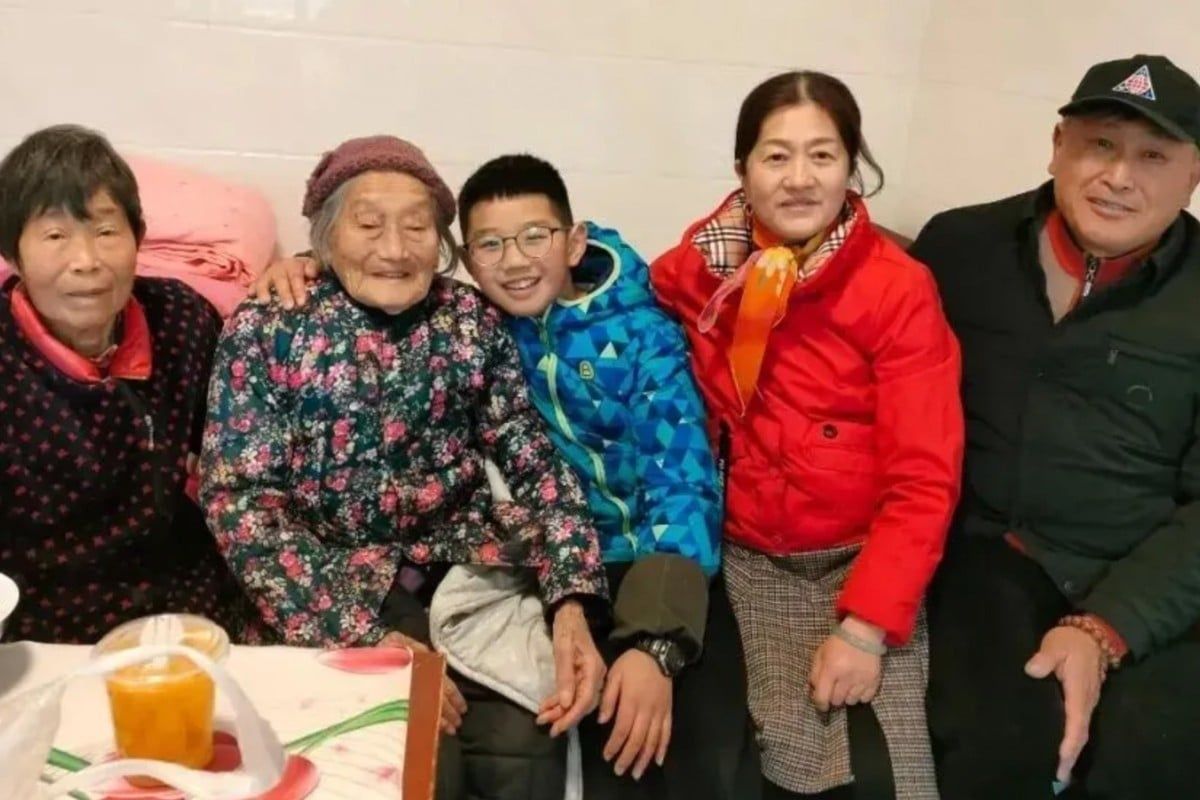
Wang Gaiying, a 111-year-old woman residing in Rugao, Jiangsu province in eastern China, has become an unexpected social media sensation by demonstrating that extraordinary longevity need not depend on elaborate wellness regimens. Instead, her remarkable lifespan appears rooted in unremarkable, everyday practices that prioritise movement, emotional equilibrium, and social connection. Living within a five-generation household, Wang embodies an approach to ageing that challenges modern assumptions about retirement and inactivity, offering a contrasting perspective to Western models of senior care that often emphasise rest over engagement.
Rugao itself warrants attention as a geographic phenomenon in the study of human longevity. The city holds distinction as one of China's established "longevity capitals," hosting 672 centenarians as of February according to local reporting. This concentration of exceptionally long-lived residents reflects conditions that extend beyond individual choice. Researchers at the Chinese Academy of Sciences' Institute of Soil Science in Nanjing have attributed Rugao's demographic pattern to the area's mineral-rich soil composition. The crops cultivated in these nutrient-dense conditions accumulate trace elements that contribute measurably to human health, suggesting that geography itself functions as a longevity determinant alongside personal behaviour.
Wang's approach to physical activity demonstrates how purposeful daily tasks can substitute for formal exercise. Rather than viewing housekeeping as a burden or obligation, she consciously treats activities such as table-wiping and clothes-folding as deliberate movement practices. Even into her second decade as a centenarian, she previously engaged in agricultural labour, harvesting peanuts and watermelons from family fields. While advancing age has necessarily moderated her physical output, she maintains what researchers might classify as consistent, moderate-intensity activity that keeps joints mobile and cardiovascular systems engaged. When family members suggest she rest, Wang articulates a philosophy increasingly validated by gerontological research: sustained physical engagement, regardless of intensity, correlates with cognitive sharpness and emotional vitality.
Dietary patterns form another pillar of Wang's longevity strategy, though her approach emphasises balance and moderation rather than restriction or specialised regimens. Her family deliberately rotates meal compositions, varying staples between dumplings, steamed buns, and other carbohydrate sources. Fish occupies a favoured position in her diet, likely due to its digestibility and omega-3 fatty acid content, though Wang's personal preference centres on its tender texture and ease of consumption. Critically, her eating philosophy resists the contemporary impulse toward excessive caloric intake. She maintains conscious awareness of portion sizes and consciously avoids overconsumption, a practice aligned with longevity research suggesting that moderate caloric intake without malnutrition correlates with extended healthspan. The family recently discontinued a previous practice involving rice soaked in baijiu, a traditional Chinese alcohol, recognising that falls and intoxication risks outweighed any potential benefits.
Beyond the physical dimensions of health, Wang attributes her longevity substantially to psychological and emotional practices. She adheres to a personal discipline of performing one small act of kindness daily, whether through offering compliments to family members or sending greetings to elderly friends. This systematic approach to prosocial behaviour reflects growing scientific understanding that social connection and purposeful engagement contribute measurably to mortality and morbidity outcomes. Her characteristically calm demeanour, maintained across more than a century, demonstrates emotional regulation capacities that likely buffered her against the cumulative stress that epidemiological studies identify as a significant contributor to age-related disease. Particularly revealing is her approach to frustration and worry: rather than ruminating, she consciously prioritises sleep, trusting that adequate rest provides perspective that transforms perceived problems into manageable concerns.
Sleep architecture forms a structured component of Wang's daily routine. She maintains a disciplined schedule of nocturnal sleep extending from 7pm through 7am, supplemented by one or two daytime naps. This pattern, totalling approximately 10 to 12 hours daily, exceeds contemporary Western sleep recommendations, yet the practice reflects traditional approaches common throughout East and Southeast Asia where afternoon rest remains culturally normalised. The consistency of her sleep timing, rather than irregular or fragmented rest patterns, likely contributes to circadian rhythm stability and the metabolic benefits associated with synchronised sleep-wake cycles. For Malaysian and regional readers accustomed to afternoon rest traditions, Wang's example validates sleep practices that Western-influenced health guidance often dismisses as excessive.
Social media documentation of Wang's life, including content produced by influencer Yaoqing Ge following a visit in December, has amplified her story beyond her immediate geographic and family context. Online responses reveal how her narrative resonates across generational and cultural boundaries. Observers noted that longevity in Rugao likely reflects a convergence of factors: genetic inheritance distributed across populations, environmental advantages including mineral-rich soil, and behavioural choices that individuals can actively adopt. The comments underscore a tension in longevity discourse: recognising both the immutable factors beyond individual control while simultaneously acknowledging how lifestyle choices, sustained across decades, accumulate into measurable health outcomes.
For Southeast Asian audiences, Wang's example carries particular relevance given the region's demographic transition toward ageing populations. Malaysia, Thailand, Vietnam, and Indonesia face increasing proportions of residents aged 60 and above, necessitating cultural and policy frameworks that support productive, engaged ageing. Wang's life demonstrates that longevity without purpose, activity, and social connection produces markedly different outcomes than longevity characterised by purposeful engagement. Her integration within a multi-generational household, her continued participation in household tasks, and her daily social interactions through acts of kindness suggest that traditional family structures and cultural practices supporting elder participation may offer advantages that modern institutional elder care sometimes undermines.
The implications of Wang's longevity pattern extend beyond individual inspiration toward broader public health consideration. Her story arrives amid global discussions about healthcare systems, preventive medicine, and the economic sustainability of ageing populations. If longevity results substantially from accessible practices—daily movement, emotional equilibrium, moderate nutrition, sleep discipline, and social engagement—then societies might address population ageing through relatively low-cost interventions emphasising behavioural and environmental modification rather than exclusively through pharmaceutical or institutional approaches. Wang's century-long life, sustained through the consistent application of practices available to ordinary people across varying economic circumstances, challenges narratives positioning longevity as dependent on expensive medical technology or exclusive wellness programmes.

