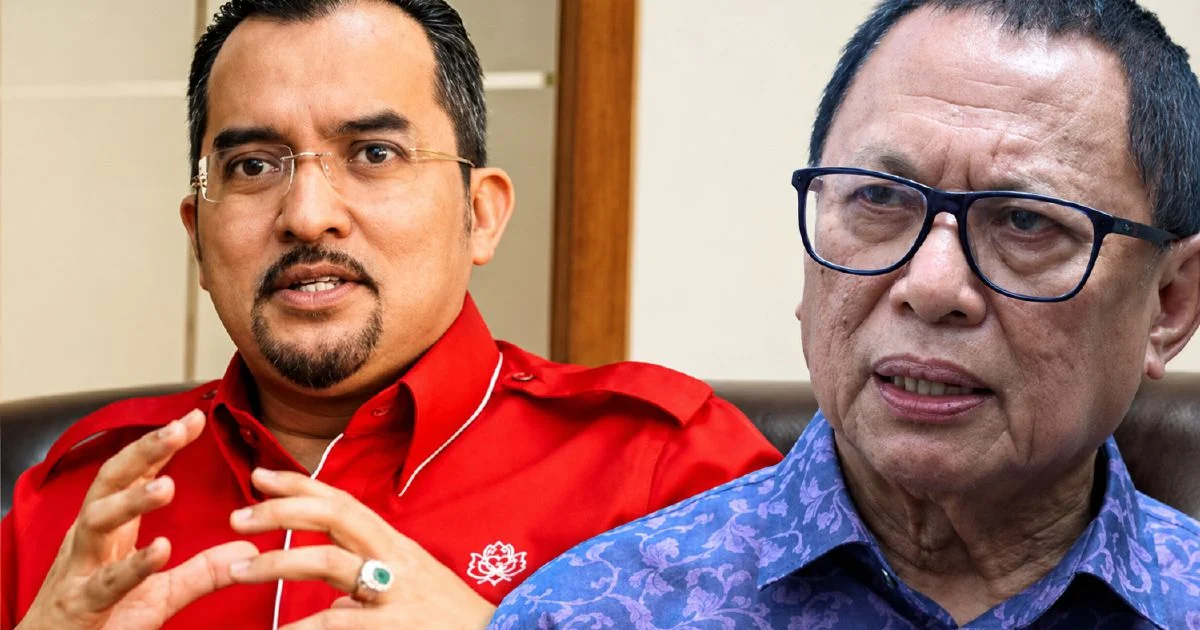
The internal tensions within Malaysia's dominant Malay-Muslim political party escalated sharply in Johor Baru this week when Umno's secretary-general Datuk Dr Asyraf Wajdi Dusuki mounted a forceful counter-attack against senior colleague Datuk Dr Mohd Puad Zarkashi, who recently announced his departure from the party and levelled serious claims touching on royal institutions.
The clash between the two prominent Umno figures underscores deepening factional divisions within a party that has long positioned itself as the custodian of Malay-Muslim interests and institutional stability. Puad Zarkashi's decision to quit the party and the accompanying allegations have triggered alarm bells among the party hierarchy, who view such public disputes as damaging to Umno's carefully cultivated image and cohesion at a time when internal discipline is considered paramount.
Ashyraf Wajdi's response, delivered in Johor Baru, represents more than a routine disagreement between party members. His forceful tone and apparent determination to challenge Puad Zarkashi's narrative publicly suggest that senior Umno leadership regards the resignation and accompanying claims as a significant threat requiring immediate and visible rebuttal. The manner in which Umno's second-ranking administrative officer has chosen to engage indicates this matter has moved beyond private correspondence into the realm of public party management.
Puad Zarkashi's departure carries particular weight because of his standing within Umno's intellectual circles and his historical prominence in the party's think-tank function. His decision to resign, coupled with allegations touching on the palace, has implications that extend beyond simple factional quarrelling. For many observers of Malaysian politics, such claims represent either legitimate grievances or fabricated narratives intended to embarrass the party, depending on one's perspective—a polarization that itself reflects Umno's current state of internal fragmentation.
The timing of this confrontation matters significantly for Malaysian politics more broadly. Umno remains the dominant component of the federal government coalition and maintains considerable influence over state administrations, particularly in Peninsular Malaysia. Internal discord at this level can reverberate through the entire political system, affecting policy coherence, administrative efficiency, and the party's ability to maintain the façade of unified leadership that has historically anchored its political strength.
For readers across Southeast Asia watching Malaysia's political dynamics, this dispute illustrates a broader pattern evident in established political parties throughout the region: the tension between institutional hierarchy and individual accountability, between party discipline and personal conscience. Whether Puad Zarkashi's allegations carry merit or represent exaggerated claims motivated by personal grievance, his willingness to go public and Umno's defensive response demonstrate that even powerful, long-established parties struggle to contain internal dissent in an increasingly transparent political environment.
Ashyraf Wajdi's counter-offensive reflects classical party management strategy: delegitimise the departing member's claims, reassert institutional authority, and attempt to frame the resignation within a narrative favourable to party leadership. However, such tactics carry inherent risks in contemporary politics, where audiences possess multiple information sources and greater capacity to scrutinise official party narratives. The secretary-general's aggressive response might contain the immediate damage but risks elevating the visibility and credibility of Puad Zarkashi's allegations among segments of the population predisposed to believe that Umno leadership functions without adequate accountability.
The invocation of palace-related matters adds a particularly sensitive dimension to this intra-party dispute. Malaysia's constitutional monarchy occupies a distinctive institutional position, and allegations involving the palace inevitably touch on matters that extend beyond ordinary political competition. The fact that such allegations have emerged from within Umno's own ranks, rather than from opposition sources, amplifies their potential significance and may constrain the party's response options, since overt criticism of palace-related claims can itself be politically fraught.
For Malaysian political observers, this episode provides a window into how Umno currently addresses internal dissent and reputational threats. The party's willingness to respond publicly and forcefully suggests confidence in its institutional position, yet also indicates consciousness that Puad Zarkashi's departure and allegations represent a threat worthy of senior-level attention. This calibration reveals something important about contemporary Umno: it remains sufficiently robust to manage public controversy without fragmenting, yet vulnerable enough that resignations by respected figures and attendant claims warrant immediate defensive action.
The broader implications for Malaysia's political system deserve consideration. A party of Umno's scale and influence experiencing visible internal conflict can affect governance effectiveness, administrative continuity, and policy implementation across multiple government tiers. When senior officials publicly exchange accusations, subordinate party members and government administrators receive mixed signals about priorities and preferred conduct, potentially degrading institutional performance regardless of which faction proves correct in the underlying disputes.
Moving forward, observers will watch whether Ashyraf Wajdi's rebuttal succeeds in isolating Puad Zarkashi politically or whether the former minister's allegations gain traction within broader party membership and the general public. The outcome will reveal much about the current balance of power within Umno and whether the party retains sufficient internal authority to manage this crisis without further defections or institutional damage.

