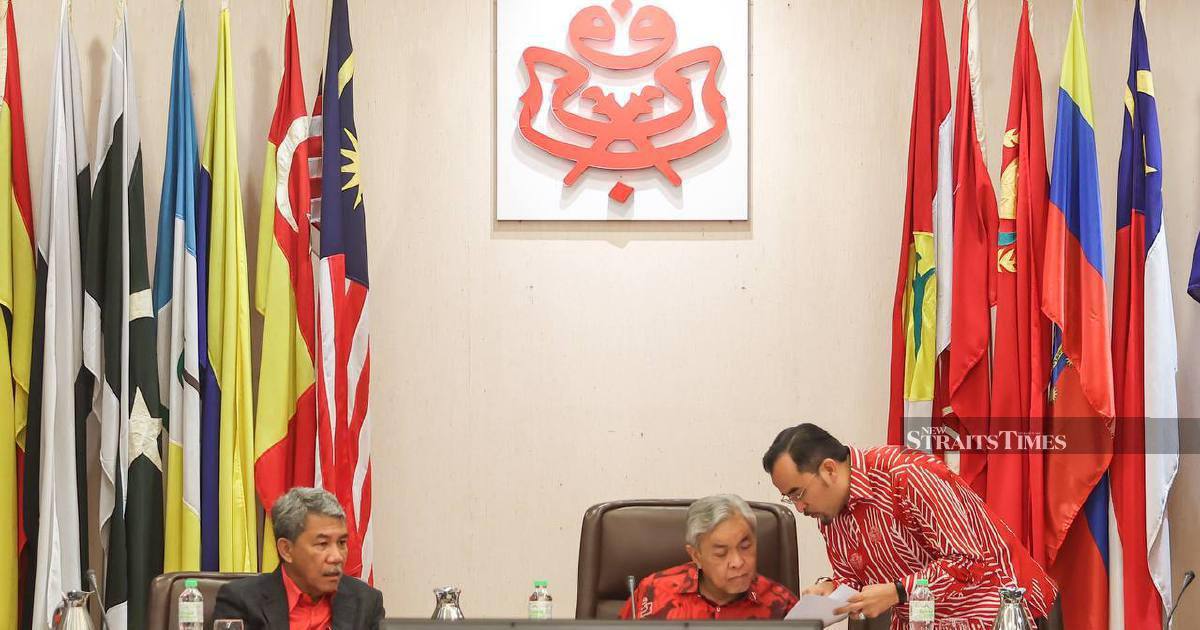
Datuk Dr Asyraf Wajdi Dusuki, the secretary-general of Umno, has underscored a cornerstone of Malaysia's legal system: those held in custody for investigative purposes must not be treated as culpable until formally tried and found guilty by the judiciary.
The senior political figure's assertion speaks to a critical distinction within criminal procedure—the separation between suspicion, investigation, and formal conviction. In Malaysia's legal framework, the detention of a person by enforcement authorities does not automatically indicate wrongdoing, nor does it render someone answerable for the allegations against them. This principle reflects the constitutional presumption of innocence that underpins the Federal Constitution and aligns Malaysia with international standards of due process.
Across Southeast Asia, the application of presumption of innocence varies significantly. Some neighbouring jurisdictions have faced international scrutiny for perceived erosions of this principle during high-profile cases. Malaysia's explicit reaffirmation of this doctrine, particularly from a prominent Umno figure, suggests an intention to maintain transparency around law enforcement procedures and judicial integrity during periods of heightened public scrutiny.
The timing of Asyraf's statement carries contextual weight. Malaysia has witnessed numerous high-profile investigations in recent years, some involving prominent political and business figures. Public discourse surrounding such cases has occasionally conflated investigation with culpability, with media coverage and social commentary sometimes rushing to judgment before trials conclude. Asyraf's intervention appears designed to recalibrate public expectations around investigative procedures and legal propriety.
For Malaysian citizens and businesses, understanding this distinction holds practical importance. Detention for investigation typically serves specific purposes: securing statements, gathering evidence, preventing flight, or maintaining investigation integrity. None of these operational necessities should be interpreted as proof of guilt. Similarly, individuals may be detained in connection with inquiries but subsequently released if evidence proves insufficient or alternative explanations emerge. The legal system's efficiency depends partly on public acceptance that investigation is an information-gathering phase distinct from judgment-making.
Umno's articulation of this principle may also reflect internal positioning within Malaysia's political landscape. As the country navigates questions about governance standards and institutional credibility, major political parties face incentives to defend established legal norms. By emphasising the presumption of innocence, Asyraf signals that his party endorses judicial independence and due process—foundational elements that benefit the entire political system regardless of which party faces investigation at any given moment.
The broader implication extends to institutional trust. When high-ranking politicians publicly reaffirm legal fundamentals, they create accountability mechanisms. Should any enforcement agency subsequently violate these principles—subjecting detainees to trial by media, leaking prejudicial information, or manipulating investigative procedures—such statements become benchmarks against which public conduct can be assessed. This mechanism of political commitment to legal norms operates invisibly but meaningfully within democratic systems.
International observers monitoring Malaysia's governance standards regard the presumption of innocence as a key indicator of rule-of-law compliance. Countries that consistently protect this principle, even when politically inconvenient, demonstrate institutional maturity. Conversely, jurisdictions where detention becomes a de facto punishment or where investigations become political theatre risk damaging their reputation for impartial justice. Asyraf's statement positions Malaysia within the former category.
For the business community, particularly multinational corporations and foreign investors considering Malaysian operations, clarity around investigative procedures provides reassurance. Companies contemplating expansion in any jurisdiction naturally weigh the risks of legal uncertainty. When political leaders publicly commit to due process protections, this reduces perceived risk and facilitates capital allocation decisions. In Malaysia's competitive positioning within Southeast Asia's investment landscape, such assurances matter materially.
The practical enforcement of this principle depends on multiple actors: police investigators, prosecutors, judicial officers, and indeed media practitioners. Investigators must distinguish between gathering evidence and pronouncing judgment; prosecutors must present cases on evidentiary merit alone; judges must resist external pressure or prior assumptions; and journalists must report investigative developments without editorial commentary suggesting guilt. Asyraf's statement, by addressing the public conscience, indirectly appeals to each actor's professional responsibility.
Moving forward, this articulation of principle may influence how Malaysian institutions handle future high-profile investigations. Political statements affirming legal fundamentals establish benchmarks. If violations subsequently occur, they become more difficult to dismiss as procedural technicalities—they become betrayals of explicitly stated commitments. This mechanism of political accountability, though subtle, reinforces institutional discipline.
Ultimately, Asyraf's emphasis on the presumption of innocence reflects global best practice in criminal procedure. The principle protects individuals against arbitrary state power, maintains public confidence in judicial systems, and ensures that verdicts carry genuine moral and legal weight because they emerge from genuine evidence rather than prejudicial assumptions. For Malaysia, this restatement from a senior political leader serves as both reminder and commitment.

