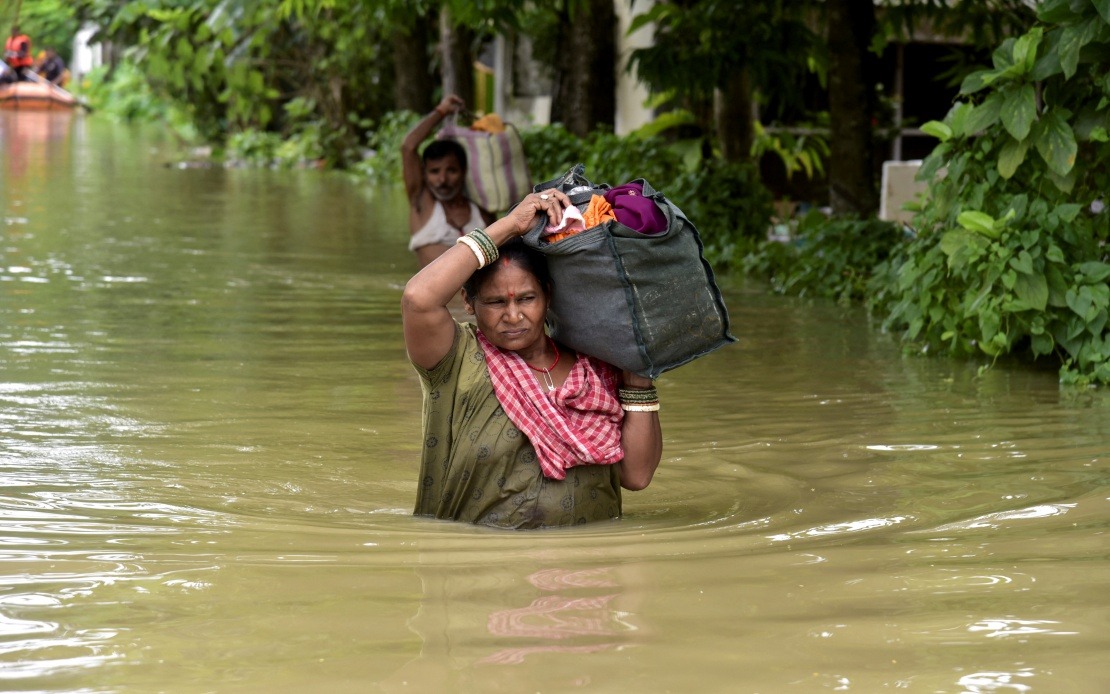
The monsoon-driven flooding ravaging India's northeastern state of Assam has claimed at least 62 lives with eight persons still unaccounted for, according to Chief Minister Himanta Biswa Sarma. The disaster has expanded across the state's entire administrative expanse, now touching all 25 districts and displacing more than 1.1 million residents from their homes and livelihoods.
The scale of the inundation is stark. State authorities report that 2,101 villages lie submerged beneath floodwaters, transforming entire communities into temporary islands cut off from essential services. This territorial spread represents one of the more comprehensive flooding events in recent years, as the waters show little sign of receding despite ongoing relief efforts.
Emergency response mechanisms have swung into action across the affected region. State authorities have activated 170 dedicated relief camps and established 1,304 distribution centres where immediate assistance is being channelled to survivors. So far, these facilities have provided food and shelter to approximately 45,004 people, though this number represents only a fraction of those requiring urgent humanitarian aid.
The underlying hydrological crisis stems from severe inundation of the Brahmaputra River system. The Central Water Commission has confirmed that multiple tributaries feeding into the Brahmaputra are flowing well above danger thresholds, transforming what are normally seasonal waterways into torrential channels that breach embankments and overwhelm local drainage infrastructure. This hydrogeological cascade creates compounding risks as water backs up in different regions, flooding previously safe areas.
Beyond the immediate human toll, the flooding has devastated Assam's agricultural heartland. The Assam State Disaster Management Authority reports that 56,606 hectares of cropland remain waterlogged, representing significant losses for farming communities whose livelihoods depend on seasonal harvests. For a state where agriculture remains central to the economy and food security, these submerged fields translate into reduced yields, elevated food prices, and economic hardship extending well beyond the flooding season.
The intensity of rescue and relief operations has been ramped up considerably by local authorities coordinating across all 25 impacted districts. Teams are working to locate the eight missing persons while simultaneously managing the immediate needs of displaced populations. The logistical challenge is immense—coordinating supplies, medical assistance, and shelter across such a vast geography with compromised road networks and communication infrastructure strains even well-resourced administrations.
What makes this situation particularly pressing for Southeast Asian observers is the predictable recurrence of such disasters. Assam's geography and monsoon patterns make flooding an annual certainty rather than an anomaly. Yet despite decades of experience managing such events, the death tolls and displacement figures remain consistently high, pointing to persistent gaps in early warning systems, evacuation protocols, and long-term disaster mitigation infrastructure. Regional nations facing similar monsoon hazards—including Bangladesh, Thailand, and parts of Malaysia—would find instructive lessons in how (or whether) Assam manages structural resilience improvements.
For Malaysian and Southeast Asian policymakers, the Assam situation underscores the transnational nature of river system management. The Brahmaputra's tributaries originate in Tibet and flow through multiple Indian states before reaching Bangladesh, making coordinated upstream-downstream management essential. Any regional flooding in South Asia reverberates through monsoon patterns affecting the broader Asian landmass, including Southeast Asia's own precipitation cycles and flood risks.
The relief infrastructure mobilized here—170 camps and over 1,300 distribution points—represents substantial logistical coordination but also reveals the challenge of reaching dispersed rural populations across 25 districts simultaneously. The relatively modest number of people reached so far (45,004) against a displaced population exceeding one million suggests that many affected persons remain beyond the current safety net, relying on local community networks or informal assistance.
Assam's administrative response will likely face sustained pressure in coming weeks. Beyond immediate rescue operations, authorities must manage disease prevention (waterborne illnesses typically surge post-flood), ensure adequate food supplies for relief camps, and begin preliminary damage assessment. The eight missing persons create additional urgency, as extended search operations divert resources from broader relief efforts while adding emotional weight to the crisis narrative.
The longer-term challenge facing Assam extends beyond current emergency management toward fundamental questions of climate adaptation and infrastructure investment. Annual flooding of this magnitude, affecting over one million people consistently, suggests that incremental adjustments to existing systems prove insufficient. Comprehensive solutions would require major investments in embankment systems, early warning networks, and land-use planning that prioritizes flood resilience—commitments that strain state budgets already stretched across multiple competing priorities.
For neighboring Southeast Asian nations, particularly those sharing major river systems like the Mekong, Assam's recurring floods serve as a cautionary reminder of what occurs when disaster preparedness and structural resilience lag behind actual environmental risks. The humanitarian costs—measured in deaths, displacement, and agricultural losses—accumulate year after year, creating cycles of vulnerability that regional cooperation and long-term planning might substantially reduce.

