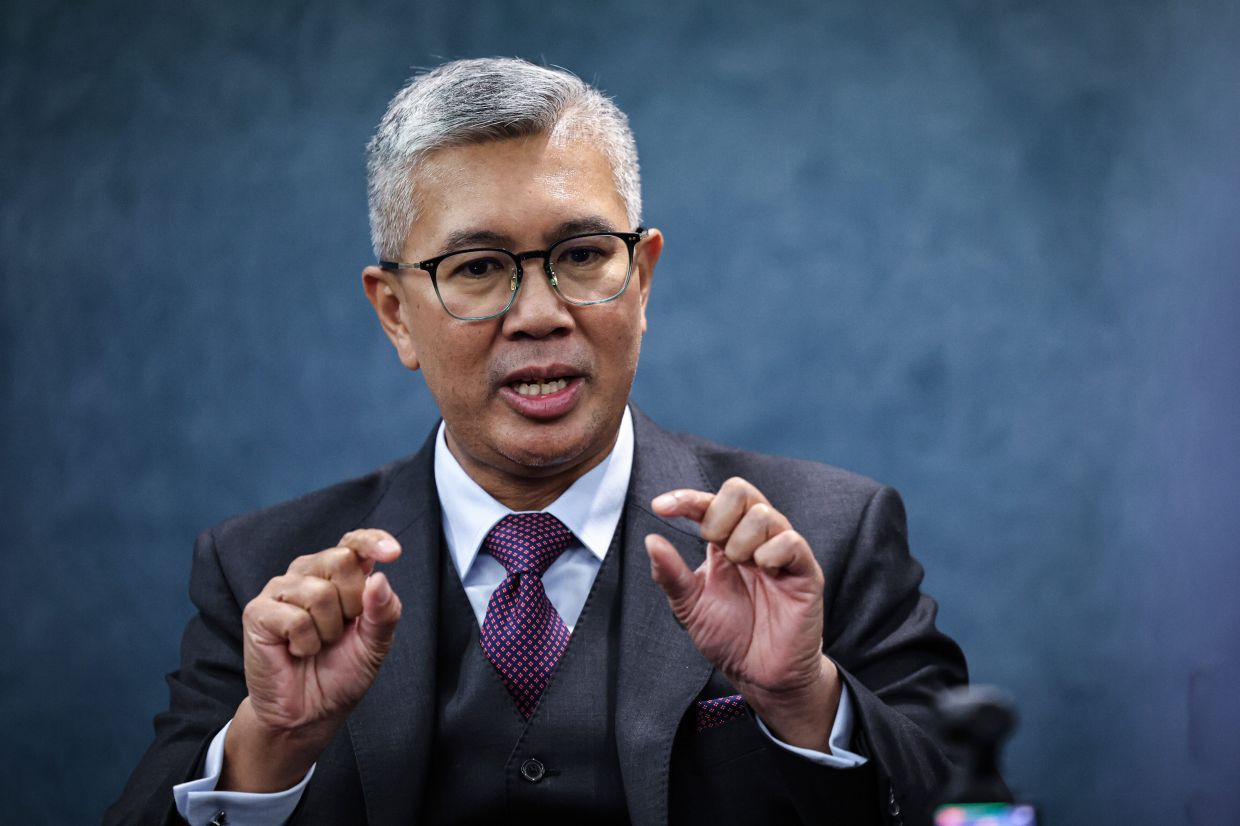
The challenge facing Southeast Asia's energy future is not one of political will but rather of financial coordination, according to Tengku Datuk Seri Zafrul Abdul Aziz, who leads the Malaysian Investment Development Authority. Speaking at the 7th International Sustainable Energy Summit in Kuala Lumpur, the MIDA chairman identified a critical distinction that strikes at the heart of the region's decarbonisation struggle: virtually every ASEAN member state has pledged net-zero commitments, yet the mechanisms to fund and execute these ambitions remain fragmented and inadequate.
The scale of the financing challenge is staggering. ASEAN economies need approximately US$200 billion annually through 2030 to successfully transition their energy systems away from fossil fuels—a sum that represents both the scale of opportunity and the depth of the coordination problem. Without this investment flowing at the required pace, the region risks falling behind on climate targets while simultaneously becoming more vulnerable to energy shocks and price volatility in global markets. For Malaysia and other ASEAN states competing for foreign direct investment and seeking to maintain industrial competitiveness, the implications are profound: a fragmented energy transition could undermine manufacturing attractiveness and economic resilience.
Tengku Zafrul's diagnosis of why projects flounder despite commitments points to systemic obstacles that transcend national boundaries. Development timelines stretch inordinately long before projects achieve bankability, regulatory frameworks remain inconsistent across borders, cross-border financing mechanisms are underdeveloped, and risk-sharing arrangements lack sophistication. These obstacles create a vicious cycle: investors hesitate to commit capital when frameworks are unclear, which delays project deployment, which in turn reduces confidence in the transition narrative itself. The Malaysian official's framing of this as a "capital coordination problem" rather than an ambition deficit suggests the solution lies not in rhetorical commitment but in institutional innovation and regional architecture.
To address these coordination failures, Tengku Zafrul proposed the ASEAN Power Grid as the foundation for deeper integration. Scheduled for full realisation by 2045, the integrated grid would transform the region's energy economics by allowing resource-rich economies to supply their neighbours efficiently. Laos's substantial hydropower potential, Indonesia's geothermal advantages, Vietnam's emerging wind capacity, and Malaysia's solar resources could work in concert rather than in isolation, creating a resilient regional energy system less vulnerable to individual country shocks or seasonal fluctuations. This approach mirrors successful integration models elsewhere and would require significant infrastructure investment but promises substantial returns in terms of system reliability and cost efficiency.
Complementing the physical grid infrastructure, Tengku Zafrul advocated for an ASEAN Green Investment Facility designed to aggregate capital from multiple sources—sovereign wealth funds, pension schemes, and private investors—to de-risk major energy projects across the region. By pooling capital at the regional level, such a facility would distribute risk more evenly than requiring individual national treasuries to finance their own transitions in isolation. This mechanism acknowledges that energy transition is fundamentally a collective regional challenge where one economy's success or failure affects neighbours' energy security and economic stability. The model would need careful governance to ensure equitable access and effective capital deployment, but the principle represents a pragmatic recognition of how Southeast Asian economies are genuinely interdependent.
Beyond investment mechanisms, Tengku Zafrul highlighted the necessity for enhanced regional preparedness protocols. Shared emergency response procedures, jointly maintained fuel reserves, coordinated crisis communication channels, and regional supply-chain monitoring systems would create buffers against future disruptions. His reference to the region being "caught flat-footed" by previous shocks—likely alluding to both the 2022 energy crisis and pandemic-related supply disruptions—underscores how energy security increasingly depends on collective response capacity rather than individual national stockpiles. ASEAN economies, many of which are energy importers or depend on intra-regional trade flows, are inherently vulnerable to cascading crises unless coordination mechanisms exist to mitigate contagion.
Malaysia's proposed role in advancing this agenda reflects both its economic capacity and strategic position within ASEAN. The country's New Industrial Master Plan 2030, National Energy Transition Roadmap, and Green Investment Strategy provide domestic policy frameworks that could serve as blueprints for regional coordination. However, Tengku Zafrul's repeated emphasis that "leadership is about who brings everyone else along" signals awareness that Malaysia's influence depends on demonstrating how regional cooperation benefits all members, not merely the largest or most developed economies. This inclusive framing is essential for building the consensus necessary to implement binding regional mechanisms.
The urgency in Tengku Zafrul's closing remarks reflects genuine concerns about momentum. Each year of delayed transition investment translates into increased carbon lock-in, stranded assets, and vulnerability to future energy shocks. For Malaysian policymakers and businesses, the timeline is particularly pressing: the region's competitive advantage in manufacturing and services depends partly on reliable, affordable energy supply and on meeting investor expectations regarding climate commitments. A fragmented ASEAN energy transition could disadvantage the region relative to other manufacturing hubs pursuing more coordinated approaches.
The structural impediments Tengku Zafrul outlined—regulatory fragmentation, capital scarcity, inadequate risk-sharing—are not uniquely Southeast Asian, but ASEAN's particular composition of middle-income and emerging economies makes coordination especially challenging. Unlike the European Union or other integrated blocs, ASEAN members retain significant policy autonomy and varying levels of institutional capacity. Yet the proposal for stronger cooperation acknowledges that unilateral action has demonstrable limits: no single ASEAN economy possesses sufficient capital to independently achieve rapid energy transition while maintaining growth, and no individual country can insulate itself from regional energy market dynamics.
Moving forward, the success of these proposals will depend on translating rhetoric into binding institutional commitments and sustained political will. The ASEAN Power Grid, Green Investment Facility, and emergency protocols require member states to cede some policy flexibility and share financial risk in ways that domestic politics may resist. However, the alternative—proceeding with fragmented national transitions while facing mounting global climate pressures and energy market volatility—may ultimately prove more costly than the coordination challenges ahead.

