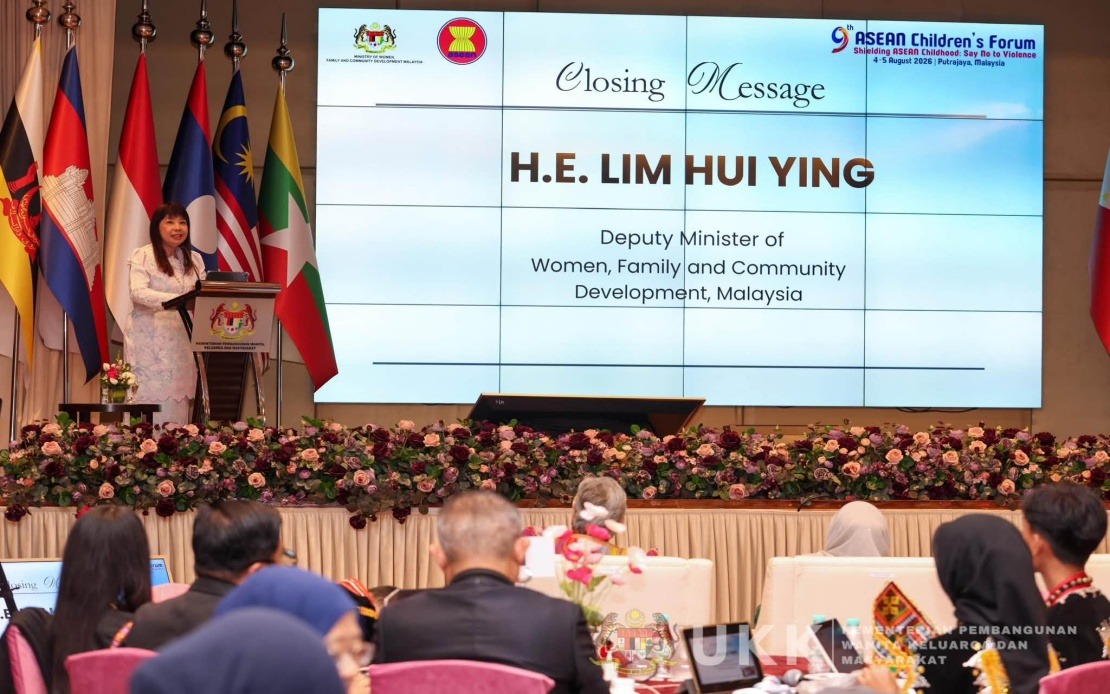
Regional policymakers must act on recommendations emerging from the 9th ASEAN Children's Forum held in Putrajaya, where child participants from across Southeast Asia called for comprehensive measures to shield young people from violence and abuse. The forum, which concluded on August 6, brought together youth representatives to discuss the multifaceted problem of violence against children in its various forms—physical, emotional, psychological and sexual. Their collective voice has produced a roadmap that transcends national borders, offering concrete pathways for governments and regional bodies to follow.
Deputy Women, Family and Community Development Minister Lim Hui Ying stressed that the recommendations should not be treated as mere suggestions but as genuine expressions rooted in the lived experiences of children themselves. She emphasised that when young people articulate what they need to feel safe, their words carry particular weight and authority. The participants' recommendations reflect authentic concerns derived from their daily realities, not abstract policy discussions. This grounding in real experience makes the forum's output invaluable for legislators seeking to design laws that actually address the problems children face rather than theoretical dangers.
The recommendations span four critical environments where children spend substantial time: their homes, schools, digital spaces and broader communities. This comprehensive approach recognises that threats to child safety are not confined to single locations but pervade multiple spheres of a young person's life. A child may be protected at school yet vulnerable online; safe in public spaces yet at risk in the family home. ASEAN member states therefore need legislation that protects children holistically rather than piecemeal protection that leaves dangerous gaps.
Strengthening child protection laws emerged as a priority, with participants advocating for legislation that more effectively deters and punishes violence while providing robust frameworks for prevention. Current laws across ASEAN vary significantly in scope and enforcement rigour. Some nations have comprehensive statutes while others rely on older frameworks inadequate for contemporary challenges. Harmonising standards across the region would prevent perpetrators from exploiting jurisdictional differences and would facilitate cooperation in transnational cases. Malaysia and other ASEAN members should examine whether existing laws contain sufficient penalties for offenders and sufficient protections for child witnesses and victims.
The forum highlighted the necessity of child-friendly reporting mechanisms, recognising that existing channels often fail young people who fear authority figures, lack trust in institutions or struggle to articulate abuse in formal language. Children frequently remain silent not because violence did not occur but because available reporting systems seem inaccessible, intimidating or ineffective. Establishing hotlines staffed by trained counsellors, creating simplified online reporting portals and training police and social workers to interact sensitively with child victims would lower barriers to disclosure. These mechanisms must also protect children from retaliation and ensure their privacy is respected.
Anti-bullying policies in schools demand particular attention given that harassment damages both immediate wellbeing and long-term educational outcomes. The forum recognised this by specifically calling for stronger enforcement of existing anti-bullying measures and development of new ones where gaps exist. Bullying has evolved with technology; cyberbullying campaigns can follow children home from school, persisting during what should be safe time. School policies must therefore address both physical and digital harassment while teaching students about respect and consent from early ages.
Psychosocial support represents another critical pillar identified by participants. Children who have experienced violence require trauma-informed care from counsellors and mental health professionals trained specifically in working with abuse survivors. Many ASEAN nations face shortages of such specialists, particularly in rural areas. The forum's emphasis on broadening these services implicitly calls for investment in training, recruitment and accessibility of mental health infrastructure across the region. Without adequate psychological support, children may struggle with lasting effects of trauma throughout their lives.
The forum also underscored that creating protective environments requires multi-stakeholder engagement. Parents, teachers, private sector actors, civil society organisations, media outlets and peer networks all shape whether children experience safety or vulnerability. This ecological approach recognises that no single actor—whether government, NGO or family—can alone ensure child protection. Parents need education and support to create nurturing homes; teachers need training to recognise signs of abuse; media outlets bear responsibility for ethical coverage that does not sensationalise violence against children; businesses must ensure their platforms and products do not facilitate exploitation.
Particularly significant is the forum's emphasis on services tailored for vulnerable children. Street children, those in institutional care, trafficking survivors, children from ethnic minorities and disabled children often face amplified risks because mainstream systems overlook their specific needs. Policymakers must ensure that child protection frameworks recognise and address these populations' circumstances rather than applying generic solutions that leave the most exposed unprotected. This requires disaggregated data collection, targeted programme design and adequate resourcing.
The pledge by participants to support one another and foster mutual respect signals an understanding that child protection ultimately rests partly with young people themselves. Peer-led initiatives, youth ambassadors and student-driven campaigns often achieve outcomes that adult-directed programmes cannot. When children see peers standing against bullying or abuse, they recognise it is abnormal and that resistance is possible. ASEAN member states should therefore create space for youth leadership in protection efforts rather than treating children solely as passive recipients of adult protection.
For Malaysia specifically, the forum's recommendations offer a standard against which to assess current child protection policy. The nation has made progress through legislation like the Child Act and various amendments addressing specific harms. Yet the ACF recommendations suggest opportunities for enhancement: expanding reporting channels beyond traditional police and social services; reviewing whether anti-bullying enforcement in schools matches the forum's benchmarks; evaluating whether psychosocial support reaches all child victims; ensuring vulnerable populations receive tailored services. Regional cooperation through ASEAN mechanisms could enable member states to learn from one another's innovations and avoid duplicating failures.
Implementing these recommendations will require sustained political commitment and adequate budgeting. Child protection is sometimes framed as a burden rather than an investment, yet evidence demonstrates that preventing violence protects not only individual children but also generates broader social benefits through reduced crime, better educational outcomes and improved public health. ASEAN governments should reframe child protection spending as investment in human capital and social stability. The forum participants have provided the blueprint; now comes the harder work of translating their words into policies, programmes and cultural change that genuinely protects the region's young people from violence and creates the safe environments they deserve.

