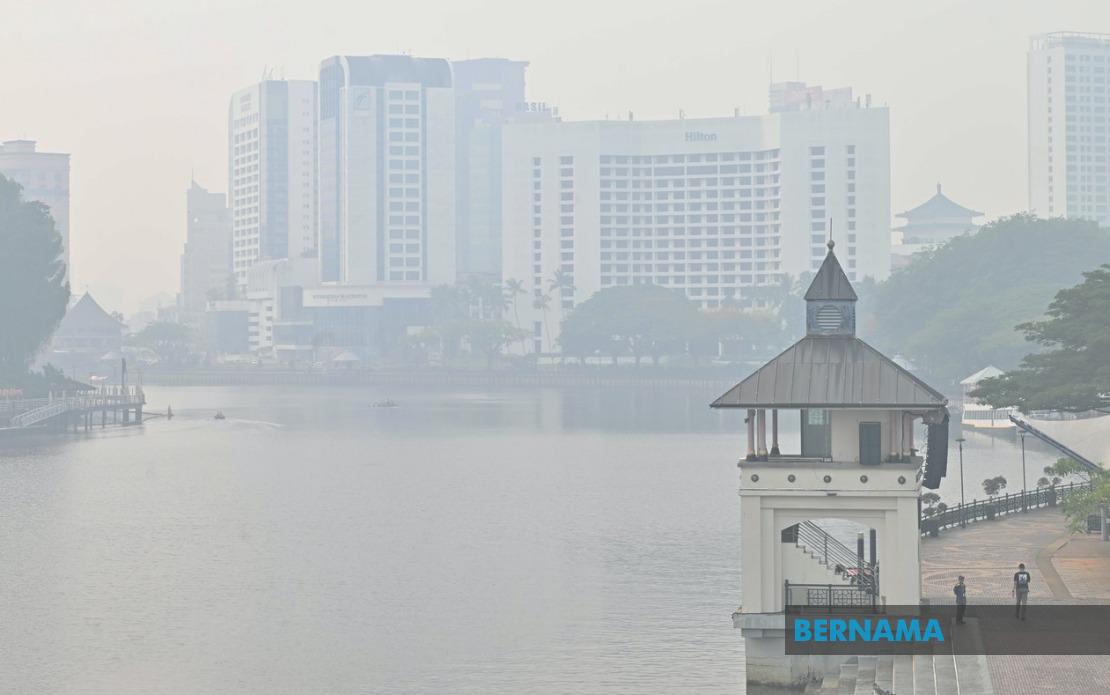
The recurring transboundary haze crisis that blankets Southeast Asia each year demands far more than incremental adjustments to existing frameworks, according to social activist Tan Sri Lee Lam Thye, who has issued a direct call for ASEAN leaders to conduct a comprehensive high-level review of the regional haze agreement and implement a substantially strengthened action plan with binding enforcement mechanisms. Speaking in Kuala Lumpur on August 25, Lee argued that after more than two decades of the current arrangement, the region's persistent struggle with cross-border smoke and deteriorating air quality represents a fundamental failure of regional cooperation that can no longer be dismissed as a seasonal inconvenience.
The ASEAN Agreement on Transboundary Haze Pollution, which was signed in Kuala Lumpur on June 10, 2002 and took effect in 2003, has provided the legal scaffolding for regional coordination efforts, yet recurring fire seasons continue to demonstrate the inadequacy of voluntary compliance and reactive responses. Lee's intervention signals growing frustration among regional stakeholders that the agreement lacks the necessary teeth to compel member states to take preventive action before fires spiral into transnational disasters. His statement reframes the haze problem beyond its conventional characterization as a meteorological or seasonal issue, instead positioning it squarely within the domains of governance, environmental stewardship, public health, and collective regional responsibility.
While the ASEAN Specialised Meteorological Centre has sounded fresh alarms about strengthening El Niño conditions, below-normal rainfall patterns, and prevailing winds that could increase hotspot activity and haze risk across southern ASEAN territories, Lee cautions against allowing climate dynamics to serve as a convenient scapegoat. El Niño and other natural phenomena create vulnerability, certainly, but human activities—particularly unregulated open burning and illegal land clearing operations—transform these dry conditions into full-scale transnational crises. This distinction carries profound implications for policy design, because it suggests that significant mitigation remains possible through domestic enforcement rather than requiring ASEAN nations to wait passively for more favorable weather patterns.
Among Lee's concrete recommendations is the establishment of clear, measurable targets embedded within a revised agreement, with specific benchmarks for fire prevention, hotspot reduction, and the systematic elimination of recurring pollution sources that cross borders. Such quantifiable goals would create accountability where the current framework relies heavily on good intentions and voluntary cooperation. The proposal extends to much stricter accountability mechanisms for corporate entities and individuals engaged in open burning or illegal land conversion, coupled with formal protocols for investigation, evidence-sharing, and coordinated enforcement action when fires demonstrably cause cross-border damage. This represents a fundamental shift from a model based on dialogue and diplomatic persuasion toward one grounded in consequences and legal liability.
Lee has also proposed the establishment of a permanent regional haze response infrastructure that moves beyond ad-hoc coordination to institutionalized crisis management. This would incorporate real-time satellite monitoring capabilities accessible across ASEAN nations, rapid-alert systems for sharing hotspot data, joint firefighting resources deployable across borders during emergencies, and clearly delineated responsibilities during serious haze episodes. Such a mechanism would require substantial institutional investment and political will, but would transform ASEAN's capacity to detect and suppress fires before they metastasize into regional disasters. The current system lacks these coordination capabilities, meaning valuable response time is routinely lost to bureaucratic communication delays and information asymmetries.
Prevention-focused measures deserve equal emphasis alongside emergency response systems. Lee advocates for the development of coordinated early-warning frameworks that activate during pre-season periods when conditions favor fire activity, combined with enhanced cooperation on peatland restoration and forest management across member states. These proactive interventions target the underlying conditions that create vulnerability to fire, rather than merely managing the symptoms. Additionally, he calls for substantially improved transparency in sharing information about hotspots, fire sources, and enforcement actions—a recommendation that implicitly acknowledges that some ASEAN nations have historically been reluctant to disclose information about fires within their territories, thereby hampering regional understanding of causation and prevention opportunities.
The political dimensions of Lee's intervention deserve careful analysis, as he explicitly frames transboundary haze not as an issue of national sovereignty or interference in domestic affairs, but rather as a collective health and security matter requiring forthright discussion at the highest levels of ASEAN governance. This framing is strategically important because transboundary haze has traditionally been treated delicately within ASEAN forums due to sensitivity around national sovereignty. By emphasizing that addressing the crisis serves the wellbeing of all Southeast Asians rather than targeting any particular nation, Lee attempts to redefine the issue as a legitimate subject for firm diplomatic engagement rather than a taboo topic requiring diplomatic silence. This represents a subtle but significant recalibration of how the problem should be discussed within multilateral institutions.
Malaysia's particular interest in driving this agenda forward reflects its position as one of the most severely impacted nations during major haze episodes, when air quality indices regularly spike to hazardous levels affecting millions of residents and creating public health emergencies. The country has consequently developed both the experience and the political incentive to push for stronger regional frameworks. Yet the success of any revised agreement will ultimately depend on whether ASEAN's largest economies and the nations most frequently implicated as haze sources—particularly those with extensive peatlands and palm oil operations—prove willing to accept binding obligations and enforcement mechanisms that could constrain economic activities or require significant investments in prevention infrastructure.
The fundamental tension underlying Lee's call for reform involves the competing priorities that typically animate ASEAN decision-making: the organization's founding commitment to non-interference in member states' internal affairs versus the mounting public health and economic costs of transnational environmental degradation. Previous attempts to strengthen environmental governance have often encountered resistance from nations concerned about infringement on their developmental autonomy. A successful revision of the haze agreement would therefore require ASEAN to establish new precedents for regional enforcement that could potentially extend to other transboundary environmental challenges, making this debate significant far beyond the immediate question of haze management.
The timeline and mechanism for conducting such a comprehensive review remain uncertain. While Lee's intervention provides a clear statement of objectives and proposed reforms, translating these recommendations into revised binding agreements requires consensus across all ASEAN member states and the political commitment to establish enforcement institutions. The diplomatic groundwork for such a major institutional overhaul typically unfolds slowly within ASEAN's consensus-based decision-making culture. Nevertheless, growing concern about air quality impacts on public health, combined with expanding scientific documentation of transboundary pollution patterns, may create conditions more favorable for substantive reform than have existed during previous haze episodes. The coming months will reveal whether ASEAN leaders treat this intervention as a serious blueprint for institutional transformation or as yet another call for incremental adjustments that leave fundamental structural deficiencies intact.

