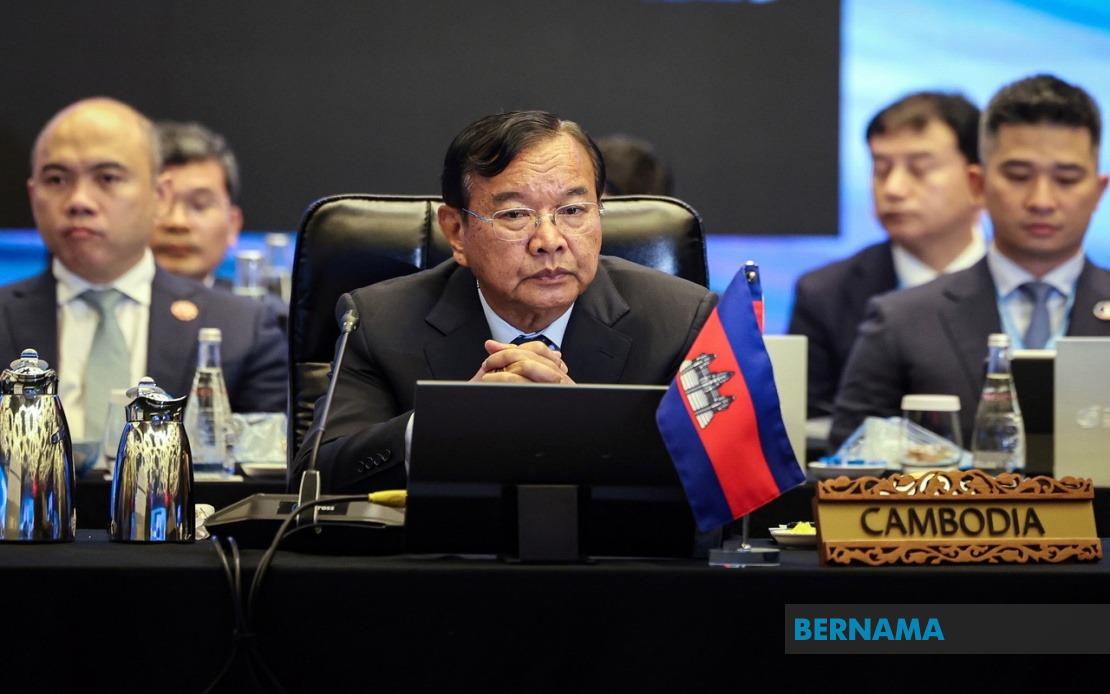
Cambodia's top diplomat has underscored the enduring importance of ASEAN as a stabilizing force for Southeast Asia, even as the region confronts an increasingly turbulent international landscape. Foreign Affairs and International Cooperation Minister Prak Sokhonn delivered the message during commemorations of the bloc's 59th anniversary, emphasizing that the ten-member organization cannot simply await developments but must proactively navigate the complex challenges ahead.
Sokhonn, who holds the rank of deputy prime minister, traced ASEAN's transformative impact over nearly six decades, describing how the association has fundamentally reshaped the political character of Southeast Asia. What was once a region fractured by competing interests, ideological divides, and armed tensions has evolved into a space increasingly characterized by structured dialogue, coordinated action, and mutual economic benefit. This transformation represents one of the developing world's most successful integration experiments, creating frameworks through which smaller and medium-sized nations can exercise meaningful influence on the international stage.
The Cambodian minister's remarks reflect growing anxiety among regional capitals about the deteriorating global security environment. Across multiple continents, dormant conflicts have reignited with alarming intensity, while powerful nations joskey for strategic advantage in ways that threaten established international norms. This shifting context directly affects Southeast Asia, where the shadow of great-power competition looms ever larger. The region faces pressure from multiple directions—maritime disputes in contested waters, competing economic blocs, and diplomatic maneuvering that could undermine the carefully constructed consensus that has underpinned ASEAN's success.
Central to Sokhonn's message was a call for ASEAN to abandon any temptation toward passive acceptance of external pressures. Instead, he argued, the bloc must become an architect of regional destiny, actively shaping outcomes rather than merely responding after circumstances have shifted beyond its control. This framing acknowledges a fundamental vulnerability: without collective assertiveness, individual ASEAN members could find themselves divided and manipulated by outside powers, eroding the very unity that constitutes their primary diplomatic asset.
The minister specifically referenced the ASEAN Charter and the Treaty of Amity and Cooperation as foundational documents that should guide the bloc's conduct. These instruments embody principles of non-interference, peaceful settlement of disputes, and respect for sovereignty—concepts that were revolutionary when ASEAN adopted them but remain remarkably relevant. The Charter, adopted in 2008, represented ASEAN's first codification of institutional rules and decision-making procedures, marking evolution from an informal association toward a more structured organization. The TAC, established in 1976, has provided a mechanism through which dialogue partners engage with the bloc on terms respectful of Southeast Asian autonomy.
Cambodia's emphasis on these founding principles carries particular significance given its own position within ASEAN. The Kingdom joined the association in 1999, following the restoration of political stability after years of civil conflict. Cambodia's accession completed ASEAN's expansion to encompass all major Southeast Asian states, theoretically strengthening the bloc's collective weight. However, Cambodia's experience also highlights tensions within ASEAN—the organization's commitment to consensus and non-interference sometimes limits its ability to address serious governance challenges or human rights concerns affecting member states.
Sokhonn's affirmation of Cambodia's contributions since 1999 should be understood in this context. The nation has participated in ASEAN frameworks and initiatives, though its development trajectory and domestic political trajectory have diverged significantly from several fellow members. Cambodia's presence nonetheless remains symbolically important to ASEAN's claim to represent the entire region, and Phnom Penh has invested in positioning itself as a constructive voice within regional forums.
The bloc's current composition reflects both ASEAN's success and its limitations. Eleven countries now participate—the original five founding members (Indonesia, Malaysia, the Philippines, Singapore, and Thailand) plus Cambodia, Laos, Myanmar, Vietnam, Brunei, and Timor-Leste. This expanded membership provides ASEAN greater claim to regional comprehensiveness but also complicates consensus-building. Myanmar's military coup in 2021 particularly tested ASEAN's principles, exposing the tension between the non-interference doctrine and members' desire to address serious governance crises.
For Malaysia and other regional readers, Sokhonn's message carries implications worth considering carefully. ASEAN's continuing relevance depends on whether member states can sustain the political will to prioritize collective interests over individual advantages. Regional tensions—whether involving maritime disputes, refugee flows, or economic competition—threaten to erode the consensus that has prevented ASEAN from fragmenting into competing alignments. The minister's call for ASEAN to shape rather than react suggests recognition that passive approaches will prove inadequate.
The challenge ahead involves balancing competing imperatives: maintaining the non-interference principle that protects smaller members while developing capacity to address transnational challenges that no single nation can manage alone; preserving consensus mechanisms that ensure inclusivity while allowing timely decision-making; and deepening integration while respecting legitimate diversity in development levels and political systems. How ASEAN navigates these tensions will largely determine whether it remains the region's primary organizing framework or gradually diminishes in relevance as external powers fill the space ASEAN vacates.
Sokhonn's reaffirmation of Cambodia's commitment to ASEAN unity and global relevance also signals Phnom Penh's own stakes in the bloc's success. For a country with limited great-power status and regional military capabilities, ASEAN membership provides crucial diplomatic cover and institutional frameworks through which to engage with much larger neighbors and distant powers. This mutual dependence—ASEAN needing the participation of all members, and members needing ASEAN for protection of their interests—constitutes both the organization's greatest strength and its persistent vulnerability.

