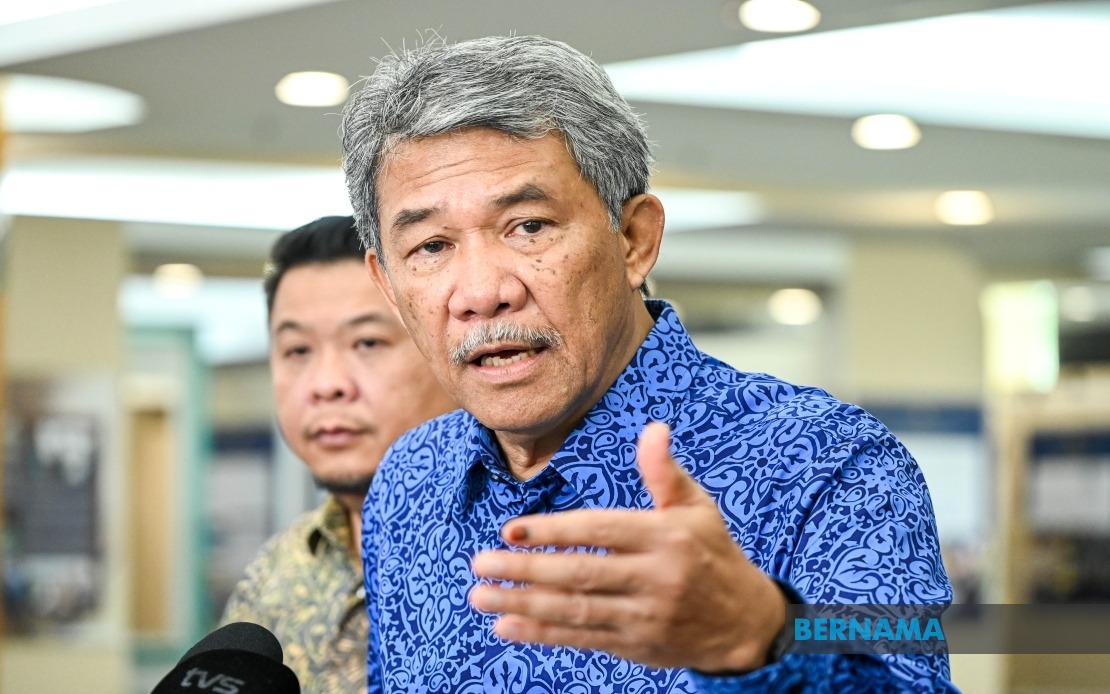
ASEAN's ambitious vision of emerging as the world's fourth-largest economic bloc by 2030 hinges on a critical weakness: the region's member nations trade far too little with each other. Foreign Minister Datuk Seri Mohamad Hasan highlighted this deficiency at the 59th ASEAN Day celebration in Putrajaya on Monday, underscoring that intra-ASEAN commerce currently represents less than 25 per cent of the regional bloc's overall trade activity. This structural imbalance reveals both the magnitude of the challenge ahead and the untapped potential that remains within ASEAN's borders.
The minister's remarks signal a notable strategic pivot within ASEAN's institutional thinking. While the association has historically concentrated on political coordination and dispute resolution, policymakers now recognise that economic integration must become the primary vehicle for advancing regional interests and influence. Mohamad framed this shift explicitly, noting that ASEAN's leadership recognises the bloc can no longer rely on political consensus alone to secure its position in an increasingly competitive global economy. Instead, fostering robust commercial networks among the ten member states represents the pathway to meaningful development and geopolitical relevance.
The disparity between current intra-regional trade levels and what ASEAN could theoretically achieve reflects longstanding structural barriers within Southeast Asia's economies. Despite geographic proximity and cultural connections, ASEAN members continue to depend heavily on trade relationships with external powers—particularly China, the United States, and Japan—rather than developing deeper commercial partnerships with neighbouring nations. This pattern creates inefficiencies and leaves substantial economic potential unrealised, as producers and consumers across the region remain unnecessarily separated by tariff walls, logistical constraints, and regulatory divergences that could be addressed through coordinated action.
ASEAN possesses several established frameworks designed to address these impediments and accelerate intra-regional commercial growth. The free movement of goods mechanism, which the foreign minister specifically highlighted, represents a cornerstone of this architecture. Yet its implementation across diverse economies with varying levels of development and institutional capacity has proven uneven. Malaysia, which held the ASEAN chair during the previous year, advanced multiple initiatives and resolutions aimed at strengthening this economic agenda, establishing foundations upon which subsequent chairs could build. The Philippines, assuming the chair role this year, has committed to continuing this momentum by implementing proposals outlined in the Kuala Lumpur Declaration.
Malaysia's strategic positioning within ASEAN's institutional framework provides it with particular leverage in advancing trade integration objectives. The nation has been entrusted with the role of Permanent Shepherd, or Permanent Auditor, of the ASEAN Community 2045 vision—a designation that grants Malaysia responsibility for monitoring progress toward long-term regional goals and ensuring that commitments made during various chairmanships translate into sustained implementation. Mohamad articulated this responsibility clearly, emphasising Malaysia's determination to strengthen the foundation of intra-ASEAN trade and ensure that initiatives gain traction across multiple years rather than fading once a particular nation's chairmanship concludes.
The significance of moving beyond 25 per cent intra-regional trade extends well beyond abstract economic metrics. For Malaysia specifically, deeper ASEAN integration could unlock opportunities in manufacturing, services, digital commerce, and supply chain development. Malaysian companies currently operating within the region could expand operations with reduced barriers, while consumers would benefit from increased competition and product variety. Similar logic applies across all ASEAN members, though benefits would vary depending on each nation's particular economic structure and comparative advantages. Vietnam's manufacturing sector, Thailand's agricultural exports, Indonesia's natural resources, and Singapore's financial services all stand to gain from deeper regional integration.
The pathway toward achieving this transformation, however, remains complex and contested. Member states harbour competing interests regarding intellectual property protection, labour standards, investment rules, and dispute resolution mechanisms. Some nations fear that rapid trade liberalisation could disadvantage domestic producers, while others push for faster implementation of agreed frameworks. The diversity of ASEAN's economies—ranging from wealthy Singapore to less developed Laos, Cambodia, and Myanmar—means that uniform policies risk leaving poorer members behind unless carefully designed transition mechanisms and capacity-building support systems accompany liberalisation efforts.
Regional geopolitical dynamics further complicate the integration agenda. As great powers compete for influence across Southeast Asia, ASEAN members must navigate pressures to align with external powers while simultaneously pursuing internal cohesion. China has consistently positioned itself as a champion of ASEAN integration through mechanisms like the Regional Comprehensive Economic Partnership, which includes ASEAN members alongside China, Japan, South Korea, Australia, and New Zealand. This broader framework carries both opportunities and risks, as dependence on a single powerful trading partner could undermine regional autonomy in future negotiations.
The 2030 timeline invoked by Mohamad reflects aspirational planning rather than predetermined destiny. Achieving the fourth-largest economy status requires not merely incremental improvements to existing trade agreements but fundamental transformation in how ASEAN members view economic cooperation. This means investing in cross-border transportation infrastructure, harmonising technical standards, facilitating labour mobility, and building shared digital payment systems. Such integration demands sustained political commitment that transcends individual chairmanships and resists short-term pressures. The role assigned to Malaysia as Permanent Auditor represents an attempt to institutionalise this commitment, creating mechanisms that persist beyond electoral cycles and leadership transitions.
For Malaysian policymakers and business communities, Mohamad's statements carry practical implications. The government has signalled its intention to champion regional trade deepening even after its chairmanship concludes, suggesting that Malaysian companies should anticipate—and prepare for—a future characterised by reduced barriers to regional commerce. Sectors from manufacturing to financial services to agriculture stand to benefit from an ASEAN market of over 650 million people operating with lower transaction costs and friction. However, this opportunity requires Malaysian businesses to strengthen competitiveness and innovation capabilities rather than relying solely on preferential access within the region.
The foreign minister's emphasis on building consensus and incrementally advancing trade agreements reflects a realistic assessment of ASEAN's consensus-based decision-making processes. Unlike hierarchical trading blocs, ASEAN operates through negotiation and voluntary agreement, meaning that ambitious targets can only be met through patient diplomacy and genuine commitment from all ten members. Progress will likely prove slower than optimists desire but more durable than outcomes imposed from above, as nations maintain ownership of agreements and incentives to implement them in good faith.
Moving forward, ASEAN faces a critical period during which it must demonstrate that regional integration delivers tangible benefits to member populations. Economic success in deepening intra-regional trade could strengthen ASEAN's cohesion, increase its collective bargaining power with external partners, and provide a model for regional cooperation that transcends traditional security concerns. Conversely, failure to meaningfully expand the 25 per cent figure risks reinforcing perceptions that ASEAN functions primarily as a diplomatic discussion forum rather than a genuine economic bloc capable of driving meaningful development across Southeast Asia.

