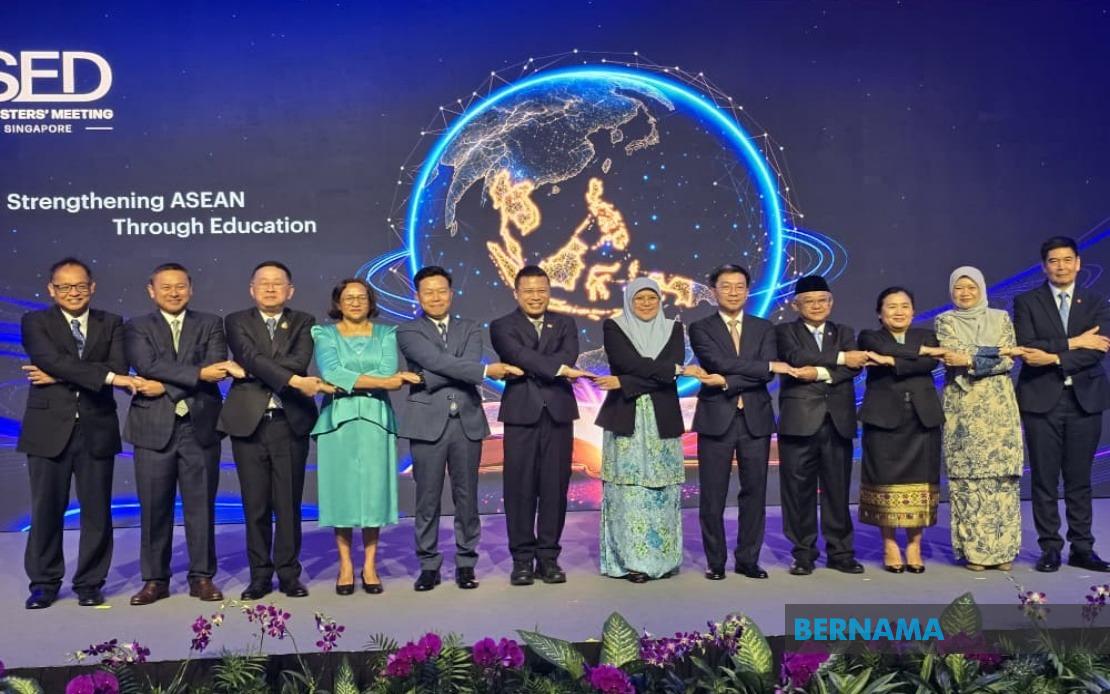
The Association of Southeast Asian Nations has formally adopted an ambitious education roadmap designed to transform learning systems across the region over the next five years. Unveiled during the 14th ASEAN Education Ministers Meeting in Singapore on Wednesday, the Five-Year Work Plan on Education 2026-2030 represents a collective commitment by member states to create educational ecosystems that balance academic excellence with social cohesion and cultural identity. The initiative comes at a critical juncture as Southeast Asian economies grapple with rapid technological change and shifting labour market demands.
At the heart of this regional strategy lies a multifaceted approach to educational development that extends beyond traditional classroom instruction. The framework aims to cultivate individuals who are not only academically competent but also emotionally resilient and socially conscious, capable of contributing meaningfully to their societies and the broader ASEAN community. Simultaneously, the plan prioritises the development of a highly skilled and competitive workforce equipped to participate in the regional and global economies. This dual emphasis on personal development and economic preparedness reflects recognition among policymakers that sustainable progress requires both individual flourishing and collective prosperity.
Singapore Education Minister Desmond Lee articulated the underlying rationale for this comprehensive approach, emphasising that modern education systems must remain nimble and responsive to technological innovation while maintaining relevance to contemporary global challenges. The work plan explicitly addresses three interconnected domains that are reshaping educational practice worldwide: the integration of artificial intelligence into teaching and learning processes, the strengthening of Science, Technology, Engineering and Mathematics instruction, and the cultivation of holistic development encompassing intellectual, emotional, physical and moral dimensions. Lee's framing suggests that Singapore, which assumes the ASEAN Education Sector chairmanship for 2026-2027, envisions education not merely as knowledge transmission but as a transformative process.
The artificial intelligence component carries particular significance for Malaysian and Southeast Asian policymakers. As AI technologies increasingly permeate educational systems globally—from adaptive learning platforms to automated assessment tools—the region faces both opportunities and challenges in managing this transition. The regional focus on AI in education acknowledges that Southeast Asian nations cannot afford to lag in preparing educators and students to work effectively with these technologies. Yet it also reflects awareness that uncritical adoption of AI-driven learning systems could exacerbate existing inequalities if implementation remains uneven across urban and rural areas, or among different socioeconomic groups.
The STEM emphasis represents continuity with priorities articulated by previous ASEAN education initiatives, but the inclusion within a comprehensive five-year framework signals intensified commitment. For Malaysia specifically, which has invested substantially in STEM education through various national initiatives, this regional coordination offers opportunities for curriculum harmonisation and teacher capacity-building. Regional cooperation on STEM education could facilitate student exchange programmes, create shared learning resources, and establish benchmarks for educational quality across member states. Such collaboration potentially strengthens the entire region's competitiveness in fields critical to twenty-first-century economies.
Crucially, the work plan incorporates language emphasising equitable access to quality education, addressing a persistent challenge across Southeast Asia where educational disparities reflect broader socioeconomic and geographic divisions. In many ASEAN countries, including Malaysia, urban students enjoy substantially better resourced schools and more diverse learning opportunities than their rural counterparts. A regional framework that prioritises equity signals commitment to closing these gaps, though success will ultimately depend on the determination of individual governments to allocate resources and political capital to disadvantaged communities. The explicit inclusion of equity considerations distinguishes this plan from earlier frameworks that sometimes implicitly assumed a privileged subset of students.
Student well-being emerges as another priority area, reflecting global recognition that mental health, social connection, and psychological resilience profoundly influence educational outcomes and life success. This focus proves particularly timely given evidence that Southeast Asian young people face mounting pressures from academic competition, social media, and family expectations. By elevating well-being to strategic importance at the regional level, ASEAN education ministers signal that learner welfare should not be treated as secondary to academic performance but rather as foundational to sustainable educational achievement. This reframing carries implications for how schools are designed, how teachers are trained, and how educational success is measured.
The Singapore Centre for Character and Citizenship Education will spearhead regional research focused on values education, establishing a platform for member states to exchange approaches and best practices. This initiative acknowledges that values education manifests differently across national and cultural contexts; what constitutes appropriate citizenship education in one ASEAN nation may differ from another due to distinct constitutional frameworks, religious contexts, and historical experiences. By creating a research network rather than imposing standardised curricula, the framework respects national sovereignty while facilitating mutual learning. For Malaysia, which places substantial emphasis on character development and moral education within its national curriculum framework, this platform offers opportunities to showcase approaches while learning from peers.
The presence of Malaysian Education Minister Fadhlina Sidek at the launch, alongside other ASEAN education ministers and ASEAN Socio-Cultural Community representatives, underscores Malaysia's central role in advancing this regional agenda. Malaysia's education system, serving a diverse, multilingual population of approximately thirty million people across peninsula and East Malaysia, faces distinctive challenges that the five-year plan must address. The country's experience managing education in a multicultural, multi-religious context could contribute valuable insights to regional discussions about inclusive education and shared values.
Implementation of the Five-Year Work Plan will require sustained political commitment and substantial resource allocation from member states operating under varying fiscal constraints. Success metrics remain somewhat undefined in the initial framework, raising questions about how progress will be measured and accountability established. Additionally, the plan's emphasis on technological integration raises infrastructure concerns for less developed ASEAN economies where broadband penetration remains uneven and many schools lack basic facilities. These practical challenges, while not diminishing the ambition of the strategic framework, will significantly influence whether the plan achieves transformative impact or remains primarily aspirational.
The education roadmap also reflects broader ASEAN aspirations regarding regional integration and identity formation. By explicitly fostering an ASEAN identity alongside national identities, the framework encourages younger generations to perceive themselves as members of a broader regional community bound by shared values and common interests. This soft power dimension of education policy carries geopolitical implications as ASEAN nations seek to strengthen regional cohesion amid great power competition and strategic pressures from external actors. Education, historically viewed as a domestic policy matter, increasingly serves as an instrument for advancing regional integration objectives.
Looking forward, the Five-Year Work Plan on Education 2026-2030 establishes an important foundation, but implementation will determine whether it catalyses meaningful transformation in Southeast Asian classrooms or becomes archived as another aspirational policy document. The framework's success hinges on whether member states prioritise education funding within constrained budgets, whether teachers receive adequate preparation and support for implementing new approaches, and whether regional mechanisms for cooperation prove substantive rather than symbolic. For Malaysia and other ASEAN nations, the next five years will reveal whether shared regional commitment translates into tangible improvements in educational quality, equity, and student well-being.

