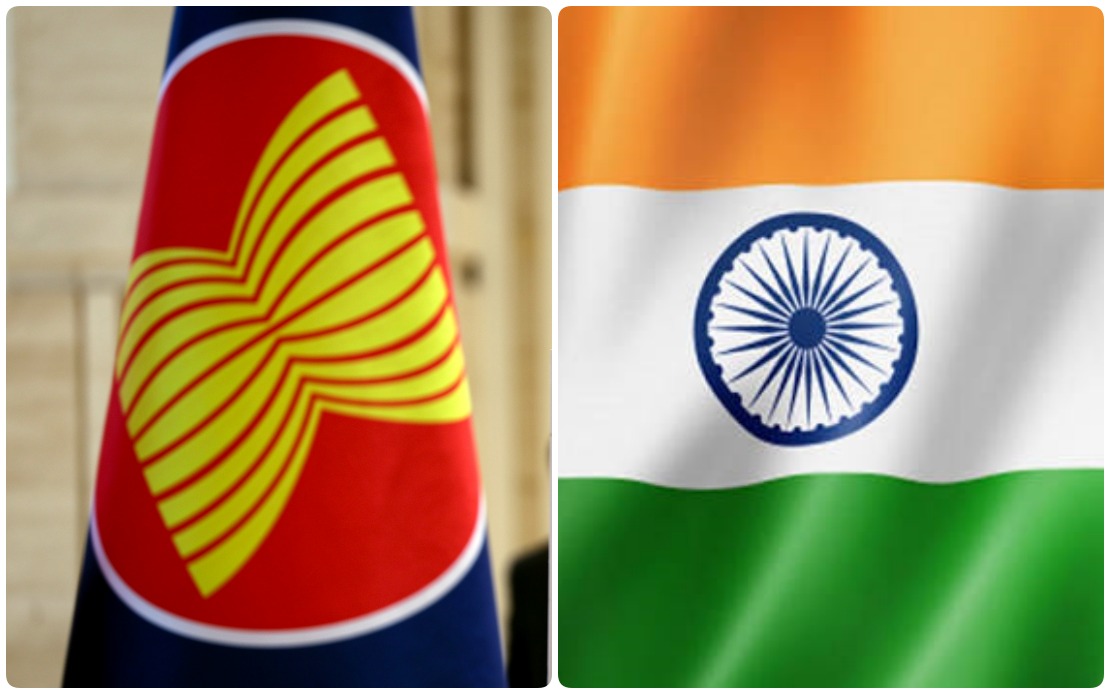
The regional bloc and South Asian giant have signalled renewed determination to deepen their relationship, with officials from both sides emphasising the practical benefits and mutual interests binding them together. At the Post-Ministerial Conference held during the 59th ASEAN Foreign Ministers' Meeting in Manila, representatives stressed that three decades of diplomatic engagement have matured into one of ASEAN's most substantive partnerships with an external power, capable of addressing the region's most pressing challenges.
Philippine Foreign Affairs Secretary Theresa P. Lazaro underscored the trajectory of ASEAN-India relations since their formalisation 34 years ago, noting that the relationship has continuously evolved beyond ceremonial exchanges into a framework for tangible cooperation. The 2022 elevation to comprehensive strategic partnership status marked a watershed moment, recognising that both groupings—comprising nations predominantly from the developing world—share common vulnerabilities and aspirations. This elevation reflected a deliberate shift toward treating the partnership not as a symbolic arrangement but as a vehicle for addressing real economic and security concerns affecting both regions.
The focus on maritime cooperation emerged as a central pillar of the renewed commitment, with officials designating 2026 as the ASEAN-India Year of Maritime Cooperation. This initiative addresses growing anxieties about freedom of navigation, sea lane security, and the protection of vital trade routes upon which Southeast Asian economies depend heavily. The region, through which roughly one-third of global maritime trade transits, faces mounting pressures from geopolitical tensions and competing territorial claims. India's participation in formalising maritime cooperation reflects New Delhi's own strategic interests in maintaining open and secure sea routes, particularly through the Strait of Malacca and the Indian Ocean, which remain vital to Indian trade and energy security.
Lazaro outlined a comprehensive agenda encompassing workshops, training programmes, and capacity-building initiatives spanning marine bioprospecting, ocean engineering, marine energy development, and maritime law enforcement cooperation. These practical measures move beyond rhetorical commitments to establish concrete mechanisms for knowledge transfer and institutional strengthening. For Southeast Asian nations, this represents an opportunity to enhance their maritime governance capabilities and develop blue economy opportunities—a rapidly growing sector that encompasses sustainable fisheries, renewable ocean energy, and marine biotechnology. The engagement with India brings technical expertise and alternative perspectives on managing maritime challenges without dependency on traditional security partners.
India's External Affairs Minister Subrahmanyam Jaishankar articulated a broader geopolitical rationale for intensified cooperation, emphasising that no single nation or regional bloc can effectively navigate the complexities of contemporary global affairs in isolation. His statement reflects India's strategic doctrine of building coalitions and diversifying partnerships rather than relying on any single alliance framework. This approach resonates particularly well with ASEAN's long-standing doctrine of strategic autonomy and non-alignment, creating natural convergence between Indian and Southeast Asian policy preferences.
Jaishankar highlighted the interconnected nature of modern security threats, specifically identifying energy security, food security, and health security as domains where disruption in one region cascades into broader instability. This framing acknowledges Southeast Asia's vulnerability to supply chain disruptions, volatile energy markets, and transnational health emergencies—concerns that became acute following the COVID-19 pandemic and continue to shape regional policymaking. The explicit recognition of these vulnerabilities suggests both ASEAN and India see their partnership as a hedge against external shocks and as a platform for collective self-reliance in critical sectors.
The emphasis on maritime security and the rule of law in ocean governance carries particular significance for ASEAN members, several of which are locked in territorial disputes in the South China Sea. By anchoring cooperation in international law frameworks—including the United Nations Convention on the Law of the Sea—the partnership provides diplomatic cover for smaller nations to advance their interests without appearing to target any specific power. India's role as an external security stakeholder that respects ASEAN's centrality in regional affairs offers strategic reassurance during a period of intense great power competition in the Indo-Pacific.
Tourism cooperation initiatives under the ASEAN Tourism Year demonstrate that the partnership extends beyond security and geopolitics into human-to-people connections and economic prosperity. These soft engagement mechanisms foster mutual understanding, boost intra-regional trade, and create constituencies within civil society that support closer ties. For Malaysian readers, enhanced tourism flows and people-to-people exchanges have direct economic implications, particularly for the tourism and hospitality sectors, while also strengthening cultural bridges that can buffer against misunderstandings during periods of strategic tension.
The partnership's emphasis on being "practical, people-orientated, and anchored in delivering benefits to both our regions" reflects a maturation of ASEAN-India relations beyond diplomatic formalities. Both sides appear cognisant that sustained partnership requires demonstrable dividends for ordinary citizens and businesses, not merely symbolic gestures at ministerial meetings. This pragmatic approach suggests the relationship has moved beyond aspirational statements into a phase where outcomes and concrete improvements matter increasingly to its credibility and longevity.
Jaishankar's acknowledgement of global turbulence and his call for optimism despite uncertainties appears calibrated to reassure regional partners that India intends long-term commitment despite fluctuations in international relations. The positioning of the ASEAN-India partnership as a force for stability in an unpredictable world addresses concerns about whether New Delhi might prioritise other relationships or withdraw from Southeast Asian engagement during periods of strategic tension elsewhere. For ASEAN members seeking to balance multiple great power interests while maintaining their own strategic flexibility, India's steady presence and emphasis on rules-based frameworks provides a valuable counterweight to other sources of influence.
The outcome of these discussions signals that both ASEAN and India view their relationship as increasingly central to regional stability and prosperity in the coming years. Rather than remaining confined to traditional diplomatic protocols, the partnership is expanding into domains—maritime security, energy, food systems, health—that directly impact development trajectories and quality of life for citizens across both regions. As geopolitical competition intensifies in the Indo-Pacific, the ASEAN-India partnership offers a model of strategic alignment based on shared interests rather than rigid alliance structures, providing Southeast Asian nations with the flexibility they require while enabling meaningful cooperation with an increasingly important Asian power.

