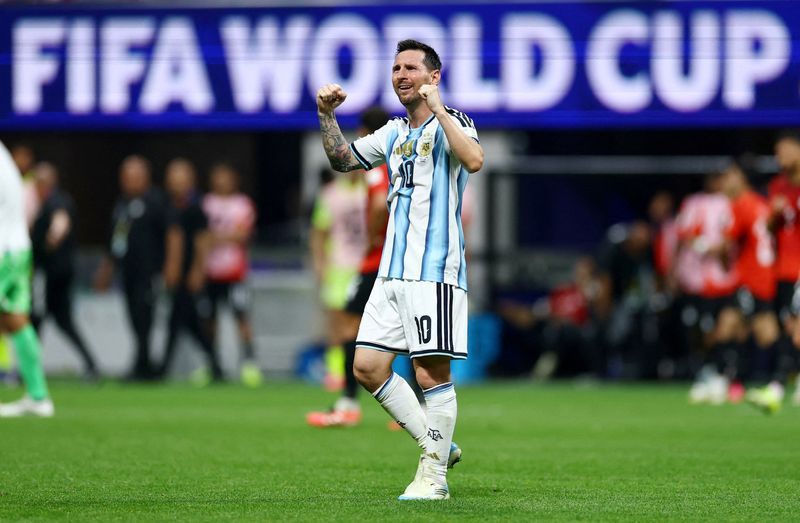
Argentina's path through the World Cup knockout stages has been markedly different from their commanding group-phase performance, yet the defending champions remain alive and advancing toward Saturday's quarter-final against Switzerland in Kansas City. The South Americans entered the tournament as favourites following their group-stage dominance, but two successive nail-biting encounters have revealed the tournament's unforgiving nature and exposed defensive frailties that were absent during their passage past Algeria, Austria and Jordan.
The most dramatic moment came in Atlanta on Tuesday when Argentina recovered from a seemingly insurmountable 2-0 deficit against Egypt with just eleven minutes remaining in regular time. Lionel Messi orchestrated a remarkable turnaround that ultimately secured a 3-2 victory in extra time, a performance that may well be regarded as a pivotal juncture in their tournament trajectory. The match represented the kind of character-defining moment that championship teams often need, transforming what appeared to be a catastrophic collapse into a testament of unwavering determination and psychological resilience under extreme pressure.
Coach Lionel Scaloni's squad faced another obstacle in their previous knockout tie against Cape Verde, requiring additional time to advance from that encounter as well. Yet rather than viewing these close matches as cause for concern, some observers within Argentina's football community have suggested that adversity in knockout football can serve as valuable preparation for the tournament's latter stages. The pathway to championship glory rarely remains smooth, and accumulating match fitness and mental fortitude through difficult contests occasionally proves beneficial when facing elite opposition.
Former Argentina striker Carlos Tevex emphasized this perspective following Tuesday's drama, highlighting on ESPN Argentina that the team's most important attribute was not technical perfection but the emotional strength demonstrated throughout the encounter. The quality of character and refusal to accept defeat became the defining narrative, with players repeatedly stressing their collective commitment to battling until the final whistle. This mindset appears deeply embedded within Scaloni's squad, transcending the natural tendency toward resignation when facing substantial deficits.
Messi himself captured this ethos during post-match commentary, remarking that such compressed, high-stakes encounters have become the reality of World Cup football at its most consequential stage. The veteran forward acknowledged the suffering that accompanies knockout football but emphasized that the team maintains unwavering belief in its collective capacity to turn matches around. Midfielder Leandro Paredes similarly articulated this psychological framework, describing the emotional journey of facing adversity without ever genuinely surrendering hope or commitment.
The defensive vulnerabilities exposed during the knockout rounds demand acknowledgment, however. Argentina conceded four goals across two matches in this phase, a stark contrast to their miserly defensive record during group play when only one goal was surrendered—that coming against Jordan when Scaloni deliberately rotated his starting lineup to rest several key players. This defensive slippage represents an area requiring immediate attention as the tournament progresses and opponents increase in quality and potency.
Scaloni's assessment of Argentina's performance against Egypt offered a more nuanced perspective than the scoreline alone suggested. The coach argued that his team actually created substantial scoring opportunities, particularly during the first half, and executed considerable portions of their intended tactical approach. He notably referenced a penalty miss by Messi as an instance where clinical finishing rather than overall strategy failed them. This suggests that Argentina's underlying approach remained sound despite the emotional turbulence surrounding the scoreline itself.
The coach's emphasis on unwavering commitment until the final whistle reflects Argentina's playing philosophy and has become increasingly central to their tournament narrative. Rather than tactical or technical breakdowns, Scaloni has stressed that his team's fundamental commitment to pressing forward and maintaining intensity throughout entire matches constitutes their primary strength. This mentality-first approach provides psychological scaffolding during moments when tactical solutions alone prove insufficient.
Argentina's preparation for the upcoming Switzerland encounter began Wednesday evening in Kansas City, where Scaloni immediately turned attention toward a formidable opponent. Switzerland brings significant World Cup pedigree and tournament experience, characteristics that Scaloni specifically identified as noteworthy. The Swiss squad has historically proven difficult, organized, and resilient in major competitions, presenting a different type of challenge than the African nations Argentina has faced during this tournament phase.
The quarter-final matchup represents a critical juncture where Argentina's capacity to tighten defensively while maintaining attacking intensity will face serious examination. Switzerland's attacking talent and tactical discipline could present genuine difficulties for a side that has shown vulnerability at the back during knockout football. Yet Argentina's demonstrated psychological resilience and established pattern of late-game recoveries suggest they remain dangerous opponents despite their recent defensive shakiness.
As Argentina prepares for this next test, the narrative arc of the tournament has shifted from expectations of dominance to appreciation of character and determination. For Malaysian and Southeast Asian followers of international football, Argentina's journey illustrates a fundamental principle: World Cup success often depends less on seamless group-stage performances and more on a team's capacity to weather storms and maintain conviction when circumstances appear bleakest. The defending champions have demonstrated this quality repeatedly throughout their knockout campaign, suggesting that underestimating their tournament prospects would be premature despite the defensive concerns evident against Cape Verde and Egypt.

