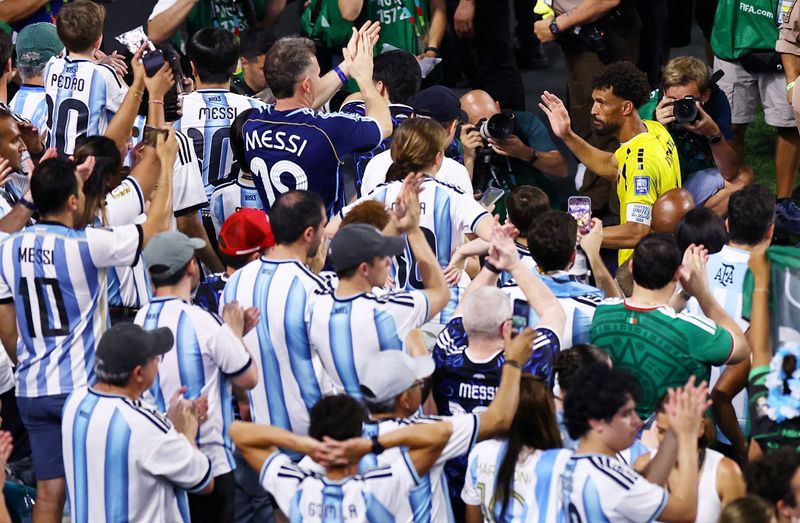
Argentina's progression to the World Cup knockout phase came at a price far steeper than their dominance of the group stage suggested it should be. The reigning champions required extra time to overcome Cape Verde 3-2 in Kansas City, Missouri on July 4, securing passage to the last 16 largely through the intervention of their own defenders rather than any scintillating attacking display. Cristian Romero's header, which careened off Cape Verde's Diney Borges into the net, proved the decisive moment, but the manner in which the match unfolded revealed uncomfortable truths about Argentina's current state of preparedness for the tournament's more demanding phases.
The significance of this result extends beyond the mere mathematics of group-stage progression. Cape Verde, making their maiden World Cup appearance, demonstrated they could compete tactically against one of world football's most storied sides. The African nation staged two remarkable comebacks, drawing level after falling behind on both occasions, before Argentina finally prevailed in the additional thirty minutes. Such resilience from tournament debutants typically suggests either catastrophic underperformance from their opponents or, more troublingly, systemic weaknesses that had previously gone unexamined. For Argentina, the latter explanation appears increasingly plausible given the context of their earlier matches.
Argentina's journey through the group stage had been almost without blemish, featuring convincing victories over Algeria (3-0), Austria (2-0), and Jordan (3-1). These results bred a sense of invincibility that obscured critical questions about the quality of opposition encountered. Coach Lionel Scaloni had explicitly cautioned the media that Cape Verde possessed genuine danger, pointing to their draws against Spain and Uruguay as evidence of their capability. Yet the warning seemed to generate little immediate concern until the match itself laid bare the defensive vulnerabilities that would haunt Argentina moving forward. The absence of sustained defensive pressure during the group stage meant that flaws in Argentina's shape and positioning had remained largely dormant, waiting to be exposed when confronted with opponents willing to impose physical demands.
Scaloni's pre-tournament preparation reflected these underlying concerns. Iceland, whom Argentina faced in June as part of their warm-up schedule, represented their first encounter with a European side since winning the 2022 World Cup. This four-year gap in meaningful competitive opposition against top-tier nations created a gap in preparation that the Cape Verde match brutally exposed. The team's pressing game, which should have suffocated opponents attempting to build from the back, instead proved disjointed and ineffective. Lionel Messi, who extended his World Cup goal tally to a record twenty in the first half, recognised the fundamental problem after the match. The 39-year-old captain acknowledged excessive fatigue and identified a critical failing: Argentina's inability to regain possession in advanced positions. The gap between Argentina's defensive line and midfield stretched too far, allowing Cape Verde to dictate tempo rather than being forced into constant retreat.
Former River Plate manager and 1998 and 2002 World Cup participant Marcelo Gallardo offered a perspective informed by experience at football's highest level. He suggested Argentina should view the Cape Verde encounter as a corrective moment rather than a failure. Speaking on ESPN Argentina, Gallardo emphasised that the narrow escape carried pedagogical value, noting that the team would respond with necessary adjustments before facing Egypt. His optimism, grounded in Argentina's demonstrated ability to overcome adversity, provides some comfort, yet the underlying issues require more than mere motivation to resolve. Defensive organisation, pressing intensity, and positional discipline represent systemic problems that typically demand tactical recalibration rather than emotional rallying.
The approaching round-of-sixteen encounter with Egypt in Atlanta on Tuesday looms as a crucial test of Argentina's capacity for immediate improvement. Egypt would presumably offer similar challenges to Cape Verde in terms of physical approach, though potentially with greater technical refinement. The matchup creates an early elimination danger if Argentina fails to correct the defensive deficiencies exposed in Kansas City. Previous World Cups have demonstrated that tournament momentum matters profoundly; teams that enter knockout phases burdened by doubt often struggle to recover confidence, particularly when faced with opponents aware that weaknesses exist.
Two of Argentina's outfield players emerged as unlikely heroes despite the overall defensive fragility. Lisandro Martinez, who had suffered an anterior cruciate ligament injury in early 2025, scored Argentina's second goal, marking a remarkable return to match fitness after what typically represents a lengthy recovery process. Similarly, Cristian Romero, having recently overcome knee problems that had sidelined him earlier in the tournament, delivered the decisive contribution in extra time. Their physical and psychological resilience—demonstrated through their willingness to engage fully despite incomplete match preparation—provided Argentina with critical insurance when their tactical plan faltered. Martinez expressed profound gratitude to Argentina's medical and coaching staff, underscoring the remarkable efforts required to rehabilitate players to tournament-competitive standard within compressed timeframes.
The psychological dimension of Argentina's victory deserves careful consideration. A team possessing championship experience and global superstardom in Messi demonstrated the character to overcome a serious test, rallying when falling behind and ultimately prevailing when circumstances demanded resilience. Scaloni stressed this resilience as the match's most important takeaway, suggesting that his side's willingness to seize control during difficult moments represented a strength transcending the quality of football displayed. Yet in football, resilience alone insufficient for tournament success. The defensive vulnerabilities evident against Cape Verde will only intensify against opponents with superior technical ability and tactical sophistication. Argentina's Egyptian opponents, while not possessing Cape Verde's surprising resilience, might nonetheless exploit gaps that African opposition successfully exposed.
As Argentina returns to training in Miami on Saturday, the immediate challenge facing Scaloni involves implementing tactical corrections without destabilising team confidence or disrupting the defensive partnerships that, despite their failings against Cape Verde, have ultimately delivered progress. The balance between constructive self-criticism and preserving winning momentum will determine whether the Cape Verde match represents a learning opportunity that strengthens Argentina's tournament challenge or the first sign of a vulnerable period that better-organised opponents will ruthlessly exploit. The knockout stage offers no room for incremental improvement; Argentina must emerge from their Miami training camp demonstrating the defensive discipline and tactical cohesion that their group-stage dominance suggested they possessed all along.

