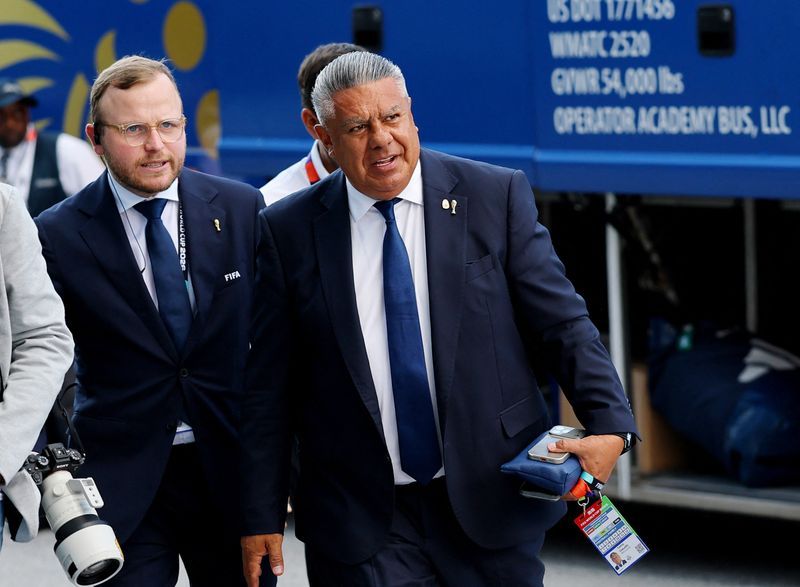
Argentina's football association moved swiftly on Wednesday to counter mounting media reports that its highest-ranking officials had been called to testify in United States courts, issuing a categorical denial of what it characterized as misinformation about the leadership's legal standing. The assertion by the AFA came amid growing scrutiny of commercial dealings within Argentine football and represented an attempt to contain fallout from widely circulated accounts of federal agents questioning senior officials at New York's JFK Airport during the national team's departure following the World Cup final.
The association's statement carefully distinguished between what it flatly rejected and what it acknowledged had occurred. While vehemently denying that either Tapia or Toviggino had received summonses or faced any compulsory legal obligation from American courts, the AFA conceded that a third party had been ordered to appear before a US grand jury to provide testimony potentially implicating various individuals connected to the organization. This nuanced position suggested the leadership was attempting to minimize reputational damage while maintaining a veneer of transparency about legitimate investigative processes.
The JFK Airport encounter at the centre of the controversy involved federal agents detaining both officials for approximately half an hour aboard a vehicle parked on the airport tarmac as the Argentine squad prepared for departure. According to eyewitness accounts from the scene, the questioning was conducted in private, raising questions about the nature and scope of the federal interest in the two men. Local media outlets subsequently reported that authorities had requested access to electronic devices belonging to Tapia, a claim the AFA explicitly rejected in its statement.
The broader investigative landscape encompassing Argentine football has become increasingly complex in recent months. According to reporting from the news organisation Infobae, United States federal authorities have opened inquiries into more than $300 million in commercial contracts associated with the AFA. This scrutiny forms part of a wider examination of financial irregularities within Argentine football, an effort that intensified following coordinated raids conducted in Argentina in December as part of a money-laundering investigation.
The timing of the federal agents' presence at JFK Airport could hardly have been more conspicuous, occurring as Argentina's victorious World Cup squad prepared to return home following their triumph in Qatar. The incident immediately attracted intense media attention across Argentina and internationally, with reports framing the encounter as evidence of potential legal jeopardy facing the football association's senior management. Such publicity would have posed immediate challenges for the AFA's leadership in controlling the narrative surrounding their organization.
The AFA's formal rebuttal addressed each allegation with specificity. The association's legal statement emphasized that no document had been issued against Tapia or Toviggino imposing personal sanctions, requiring their appearance before any tribunal, or establishing any procedural obligation binding on either official. Furthermore, the statement rejected claims that electronic devices or any other property belonging to the two men had been confiscated or seized by American authorities.
For Malaysian and Southeast Asian observers, this situation reflects broader patterns of financial scrutiny now extending to major sporting organizations globally. As regional football confederations themselves face increasing international oversight, particularly regarding commercial contracts and financial transparency, the Argentine case illustrates how investigations can extend beyond national borders when allegations involve transnational financial dealings. The scale of the alleged financial irregularities—exceeding $300 million—demonstrates the substantial sums that competitive international football can generate and the corresponding risks of financial misconduct.
The distinction between a summons against specific individuals and a subpoena requiring testimony from third parties about those individuals represents a legally significant difference that the AFA appeared keen to emphasize. By stressing that no direct legal process had been served against its leadership, the association attempted to position itself as a cooperative subject of an investigation rather than an organization whose top officials faced potential personal legal consequences. However, the presence of a federal investigation into AFA-connected contracts inevitably cast a shadow over the organization's governance and financial management practices.
The acknowledgment that a third party had received a grand jury summons raised its own questions about the nature of that person's involvement with the AFA and what evidence or testimony they might provide. Grand jury proceedings in the United States typically precede potential criminal charges, suggesting that the investigation may be in preliminary stages of determining whether sufficient evidence exists to justify formal accusations. The involvement of a third party rather than direct summonses against leadership could indicate an investigative approach focused on gathering testimony from those with knowledge of potentially improper transactions rather than targeting executives directly.
The incident highlighted the complex intersection of international sports governance, commercial dealings, and criminal investigation that now characterizes modern professional football. As the sport has evolved into a multibillion-dollar industry attracting institutional investment and commercial partnerships at unprecedented scales, regulatory authorities across multiple jurisdictions have begun examining whether the financial mechanisms underlying major football organizations comply with anti-corruption and money-laundering prevention requirements. The AFA's situation exemplifies how prominent sporting institutions can suddenly find themselves subject to international law enforcement attention.
For the Argentine football association, the reputational challenge extends beyond the immediate legal questions raised by the federal investigation. The organization must simultaneously maintain public confidence in its governance while cooperating with authorities examining its financial practices. The World Cup victory that created the context for the airport encounter represented a triumphant moment for Argentine football, one that the leadership would naturally seek to preserve from association with financial impropriety allegations. Managing this balance between cooperation with investigators and public messaging about organizational integrity will likely occupy the AFA's attention for the foreseeable future.

